
The Journal · Vieux-Lyon guide
Traboules of Vieux-Lyon: passing through the Renaissance city
Secret passages that cut through the buildings from courtyard to courtyard, the traboules are the hidden soul of Vieux-Lyon. Here's what they are, where they come from, how to spot them and walk them without disturbing those who live there.
In short
A traboule is a covered passage that cuts through one or more buildings to link two streets via private courtyards and alleys. The word comes from the Latin trans-ambulare, 'to pass through'. Vieux-Lyon has several hundred, some forty open to the public, marked by a small round plaque bearing a lion's head. First used to reach the Saône for water, they later served merchants, the silk weavers and the Resistance. Visit them for free, on foot, by day, quietly and closing doors behind you: these are homes. The most famous, the Longue Traboule, links 54 rue Saint-Jean to 27 rue du Bœuf. End the walk at a table in a local bouchon, such as Aux Trois Maries, on rue des Trois-Maries.
Contents
What you'll find in this guide
What exactly is a traboule?
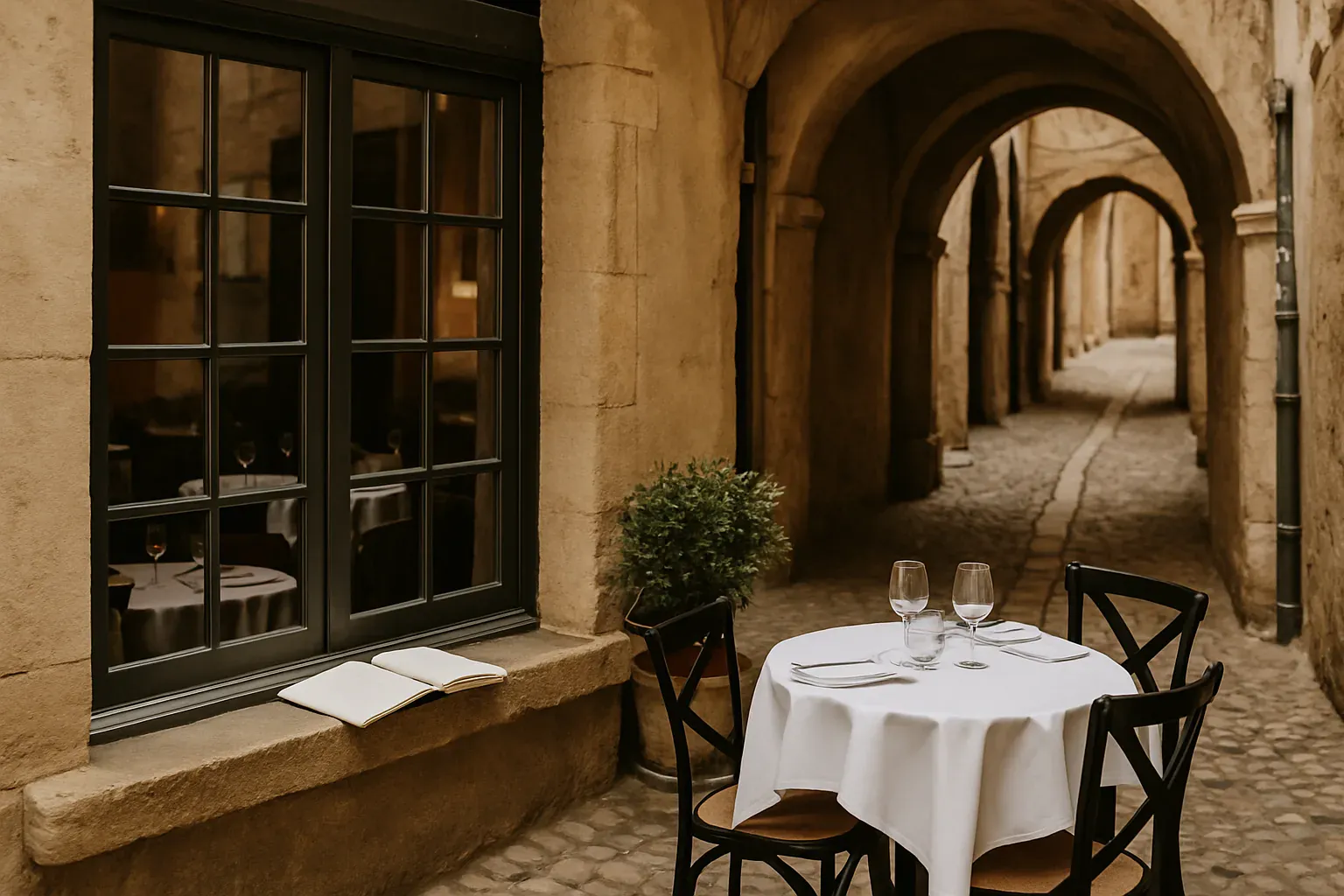
The traboule is Vieux-Lyon's most singular curiosity, and its most discreet: nothing marks it from the street but a door, sometimes ajar. Behind that plain threshold hides a covered passage that cuts right through a building, chaining courtyards, vaulted alleys and stairways to emerge on another street, often a parallel one. You step into a private maze and come out at the far end of the block.
These are neither tunnels nor mere porches: a traboule genuinely links two public streets by crossing the private space of the buildings. The longest cross several courtyards and buildings in a row, opening unexpected views of light wells, Italianate galleries and Renaissance stair-towers the street never hints at.
Lyon is the city of traboules — you also find them in the Croix-Rousse — but it's in Vieux-Lyon, Europe's largest Renaissance quarter and a UNESCO site, that they are densest and best preserved. To walk them is to read the city from within, at a resident's height, away from the flow of rue Saint-Jean.
Where does the word 'traboule' come from?
The word sounds like a Lyonnaise secret, and it is one. 'Traboule' is thought to derive from the Latin trans-ambulare, literally 'to walk through'. From it came the verb 'trabouler', still used in Lyon today: to traboule is to cut through a building to reach the next street, a shortcut only the initiated know.
The language thus preserves the memory of a very concrete use. Before it was a tourist curiosity, the traboule was an everyday tool: a way to save time in a dense urban fabric squeezed between Fourvière hill and the Saône, where the streets follow the river but you constantly need to cross from one to another.
One even distinguishes the traboule proper, linking two streets, from the 'miraboule' — sometimes called a cour-traboule — which opens onto a courtyard without coming out the other side. A nuance of vocabulary, but one that matters if you truly want to cross the quarter rather than stop at a charming dead end.
A history reaching back to the Middle Ages
The first traboules are said to have appeared as early as the 4th century, when those at the foot of the hill needed direct access to the Saône to draw water, the only resource before piping. Reaching the river by the shortest path, through the buildings rather than around the blocks: the traboule was born of that simple necessity.
Over the centuries, and above all at the Renaissance, Vieux-Lyon grew denser as trade prospered. With no room to open new streets down to the river, the Lyonnais multiplied these passages within the built fabric. The grand houses of merchants, bankers and printers — Lyon was then a European capital of books and fairs — were organised around linked courtyards.
The result is a maze both vertical and horizontal, where you climb a spiral stair-tower, cross a loggia, come down a vaulted alley. This exceptional heritage nearly vanished in the 20th century; it was its UNESCO listing in 1998, with the whole district, that sealed its protection.
The traboules, the silk weavers and the silk
The story of the traboules is inseparable from that of silk, which made Lyon's fortune. Though the canuts' workshops clustered mainly on the Croix-Rousse slopes, the passages played a vital role: they let the precious bolts of cloth be carried from workshop to merchant sheltered from the rain, sparing the silk the damp that would have spoiled it.
In Vieux-Lyon as on the slopes, the traboules formed a protected network of movement, a genuine merchant infrastructure invisible from the street. Bundles were brought down, deliveries sheltered: the covered passage wasn't picturesque, it was useful, almost industrial in its way.
That working and merchant memory still surfaces when you push a door: the worn steps, the width sized for a laden man, the gentle slope of an alley. It's said these passages, known only to the Lyonnais, served the Resistance well during the Second World War, offering escape routes impossible to follow for anyone who didn't know the city by heart.
The emblematic traboules not to miss
If you keep just one, make it the Longue Traboule: the most famous in Vieux-Lyon, linking 54 rue Saint-Jean to 27 rue du Bœuf through four courtyards and four buildings. You lose your bearings, then come out into the light almost surprised to have walked so far under cover. It's the fullest experience of traboulage.
Nearby, the courtyard of the Tour rose is another gem: tucked away on rue du Bœuf, its ochre-pink Renaissance stair-tower rises at the back of a courtyard, hidden from the street. Enthusiasts should also head to place du Change and its mansions, or to the courtyards with stacked galleries along rue Saint-Jean and rue Juiverie.
On the Croix-Rousse slopes, the cour des Voraces and its monumental six-storey staircase complete the picture for those keen to continue beyond Vieux-Lyon. Each passage has its own character: here a low vault, there a light well, elsewhere a run of courtyards — no two traboules are ever quite alike.
How to recognise an open traboule
The trouble, when you set out to traboule, is that nothing looks more like a building's door than a traboule's door. The right reflex: look for the small round enamelled-lava plaque, bearing a lion's head, placed by the City of Lyon at the entrance of passages open to the public. It's the official, discreet but reliable, key.
Some forty traboules are accessible in Vieux-Lyon alone, thanks to agreements between the City and the co-owners: the council maintains the passages and guarantees daytime opening, in exchange for which residents tolerate the curious. A fragile balance, resting entirely on visitors' respect.
In practice the door is often heavy: you must push it, sometimes press a button or a latch, then close it behind you. Passages are generally open from late morning to early evening. Outside those hours, or if the lion plaque is missing, better to give up: you don't enter people's homes on a misunderstanding.
A route to traboule without getting lost
For a first discovery, the simplest is to start from place Saint-Jean, at the foot of the cathedral, and head up rue Saint-Jean, the quarter's backbone. That's where the easiest traboule entrances cluster, including the Longue Traboule at number 54, which will bring you out on rue du Bœuf before you saw the transition coming.
From rue du Bœuf, continue to place Neuve-Saint-Jean then rue Juiverie, further north, whose mansions hide some of the finest courtyards in the area. Zigzagging from street to street through the passages, you cover the essence of Vieux-Lyon Saint-Jean in a good hour and a half, never walking the same lane twice.
Allow plenty of time: the charm of traboulage lies precisely in the wandering, the pauses in courtyards to look up at the loggias, the back-and-forth when a passage is closed. A guided tour can be precious for a first contact — guides hold the keys to passages closed to the public and know the anecdotes the stones don't tell on their own.
The golden rules for visiting the traboules
The traboules aren't monuments: they are inhabited buildings, opened through the goodwill of their occupants. Access rests on a pact of respect. Three simple rules are enough to preserve it for those who come after you.
Silence above all
Keep your voice down, don't call from one courtyard to another, avoid noisy groups in the evening. Sound carries in the stairwells: what seems quiet to you may wake a resident two floors up.
Close up, don't photograph windows
Push the door gently and close it behind you, for the safety of the place. Photograph the architecture, the courtyards, the stairs — but never the windows or the interiors of the homes: these are private residences.
By day, on foot, leaving nothing
Visit during the day, don't linger in the evening, enter only through doors marked with the lion plaque. Leave no litter: a soiled traboule is a door that, tomorrow, will stay closed.
A food stop between two courtyards
Traboulage sharpens the appetite, and Vieux-Lyon is the birthplace of the bouchon: the convivial table where you regain your strength without fuss, between two passages. Here, without leaving the quarter, are three tasty moments to slot into your route.
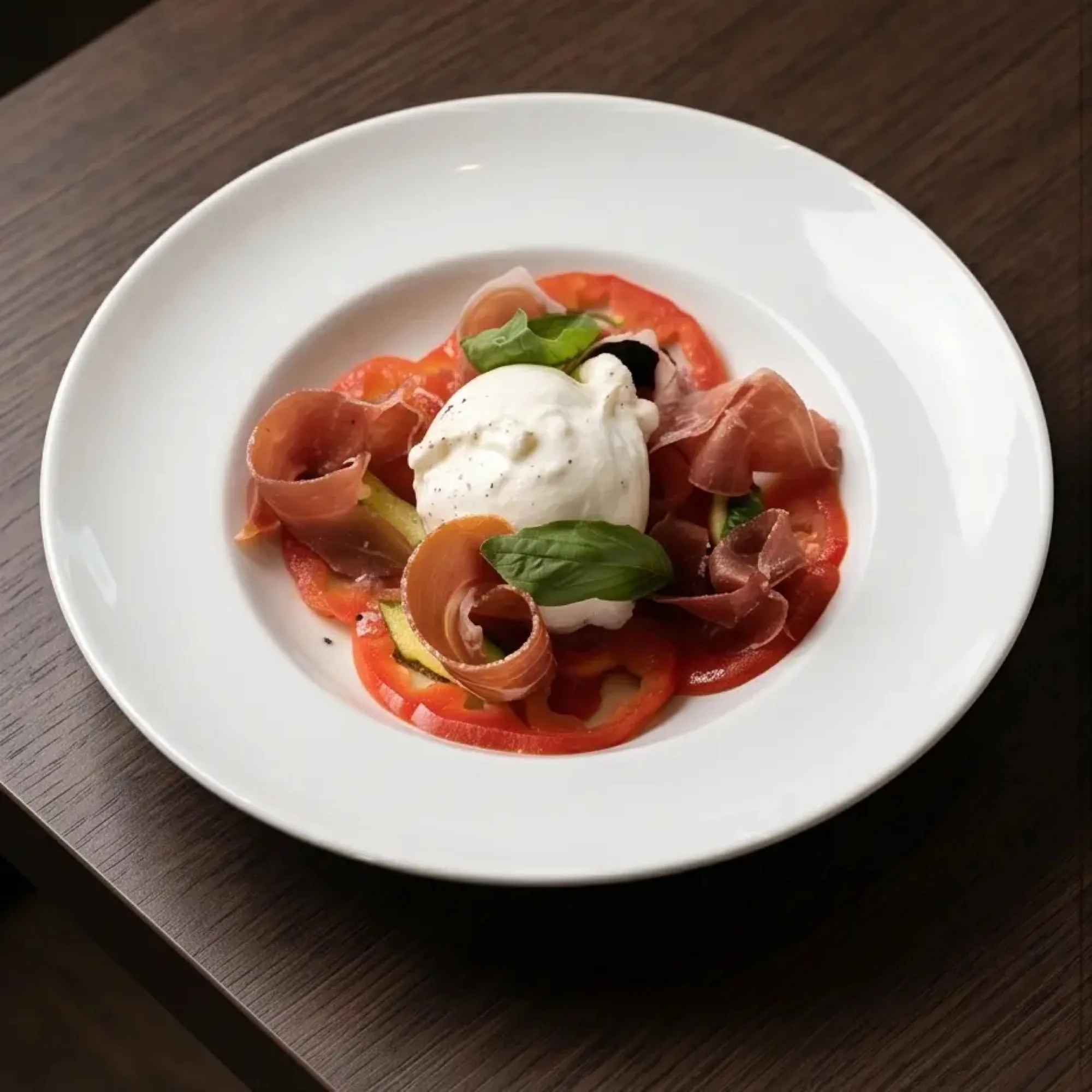
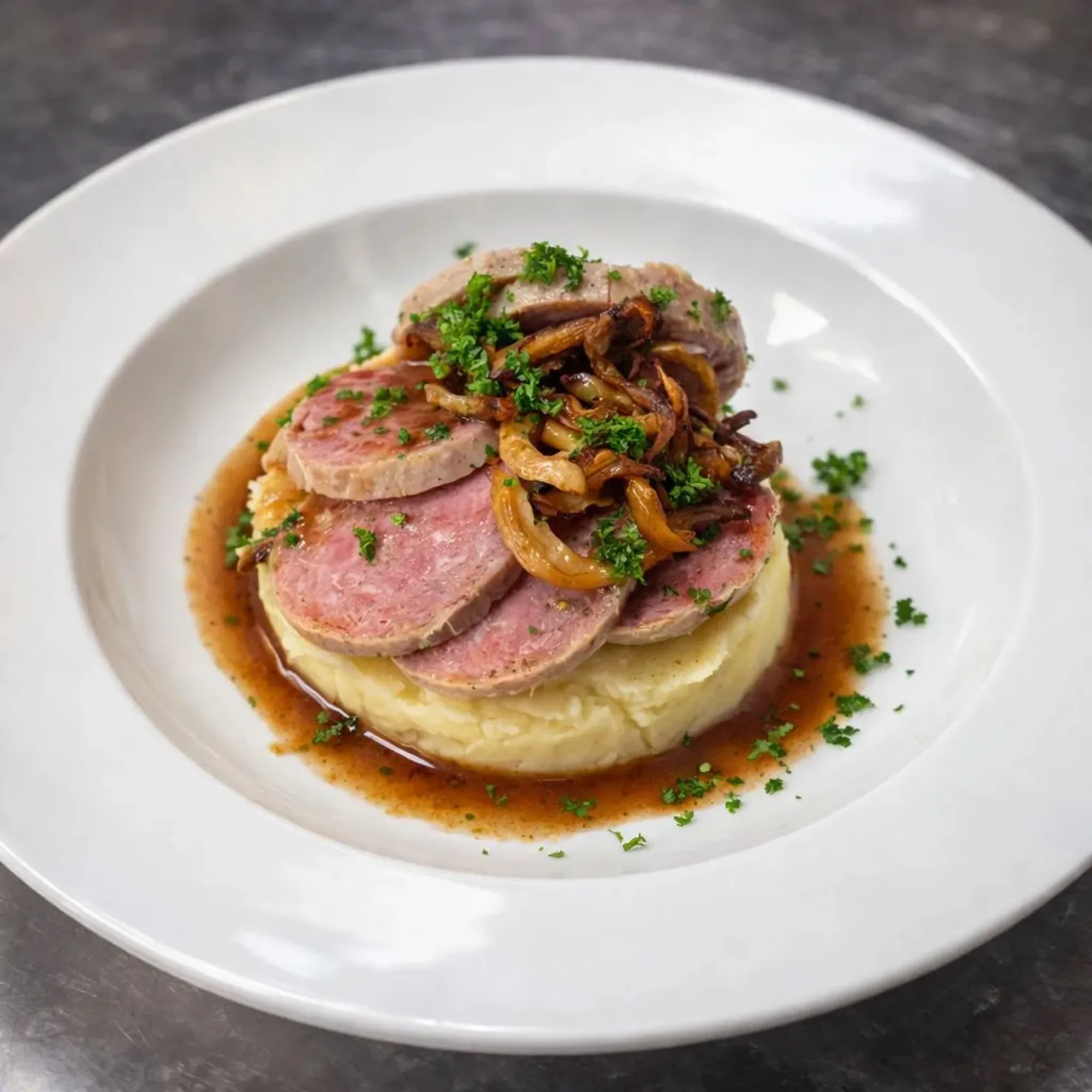
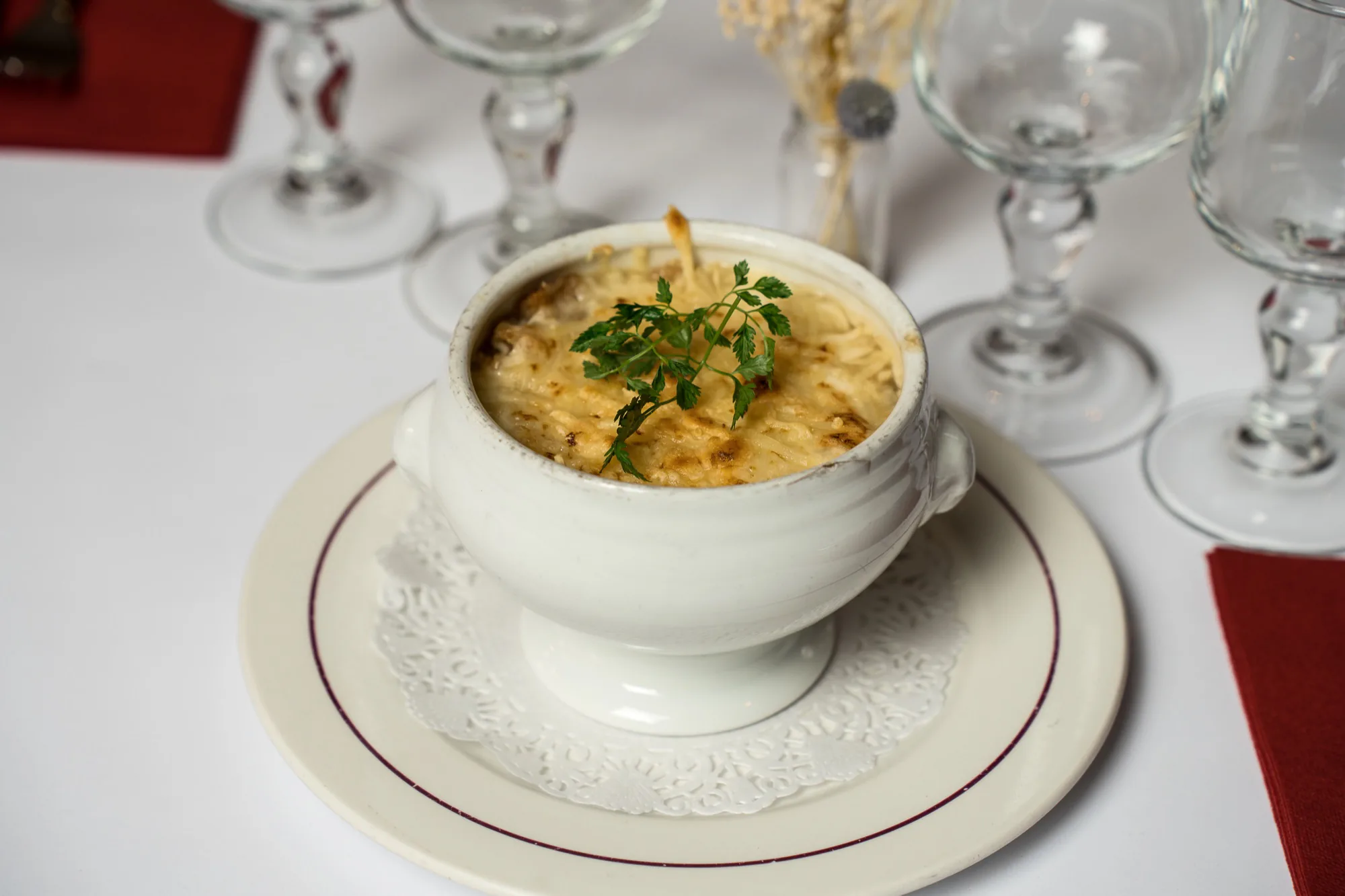
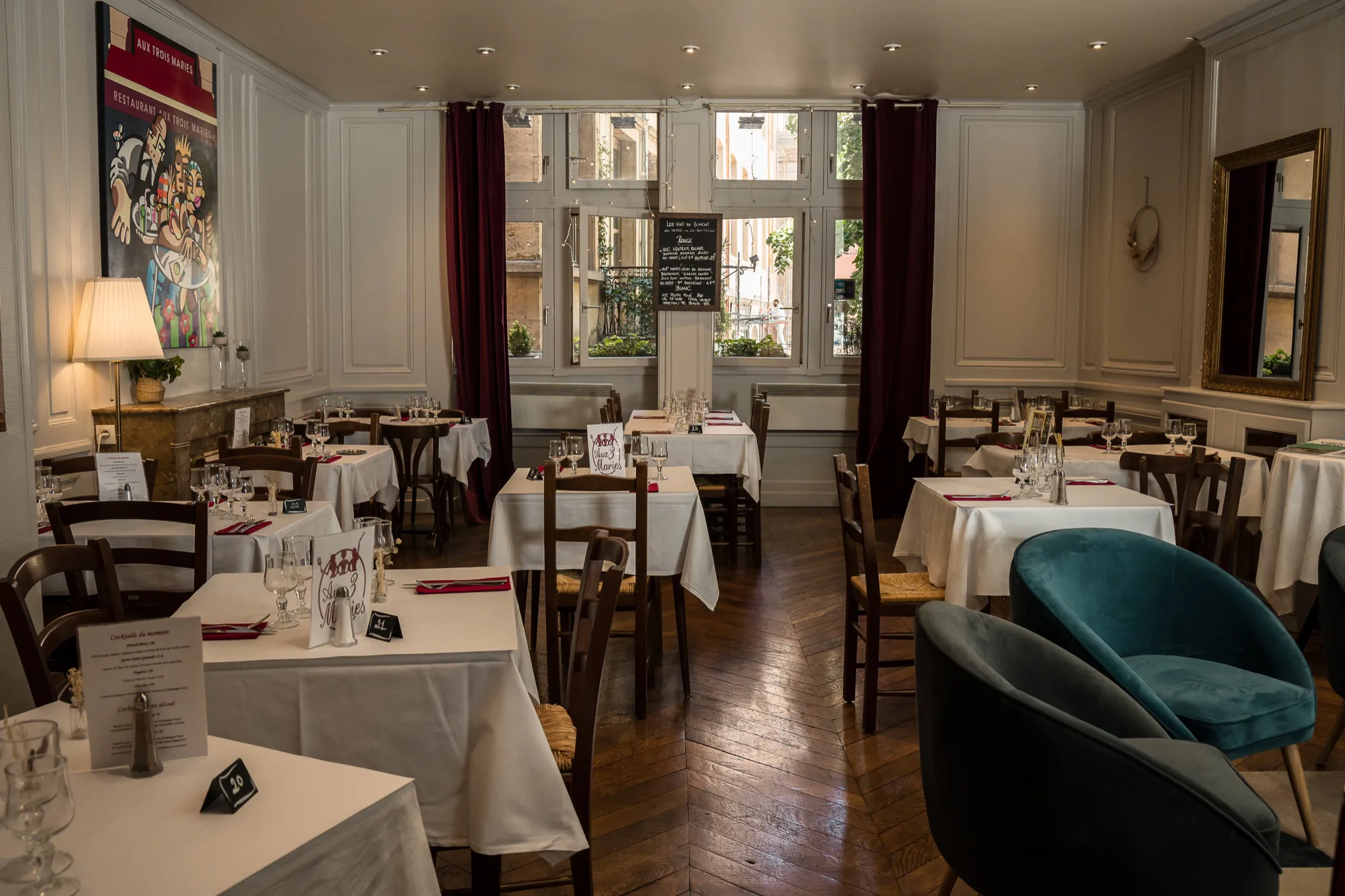
Traboule your way to rue des Trois-Maries
Along the passages you'll surely cross rue des Trois-Maries, a quiet parallel to rue Saint-Jean. It owes its name to a 17th-century sign honouring the three Marys of the Gospel — Marie-Salomé, Marie-Jacobée and Marie-Madeleine — and is among the calmest in the area, steps from the crowds of the main street.
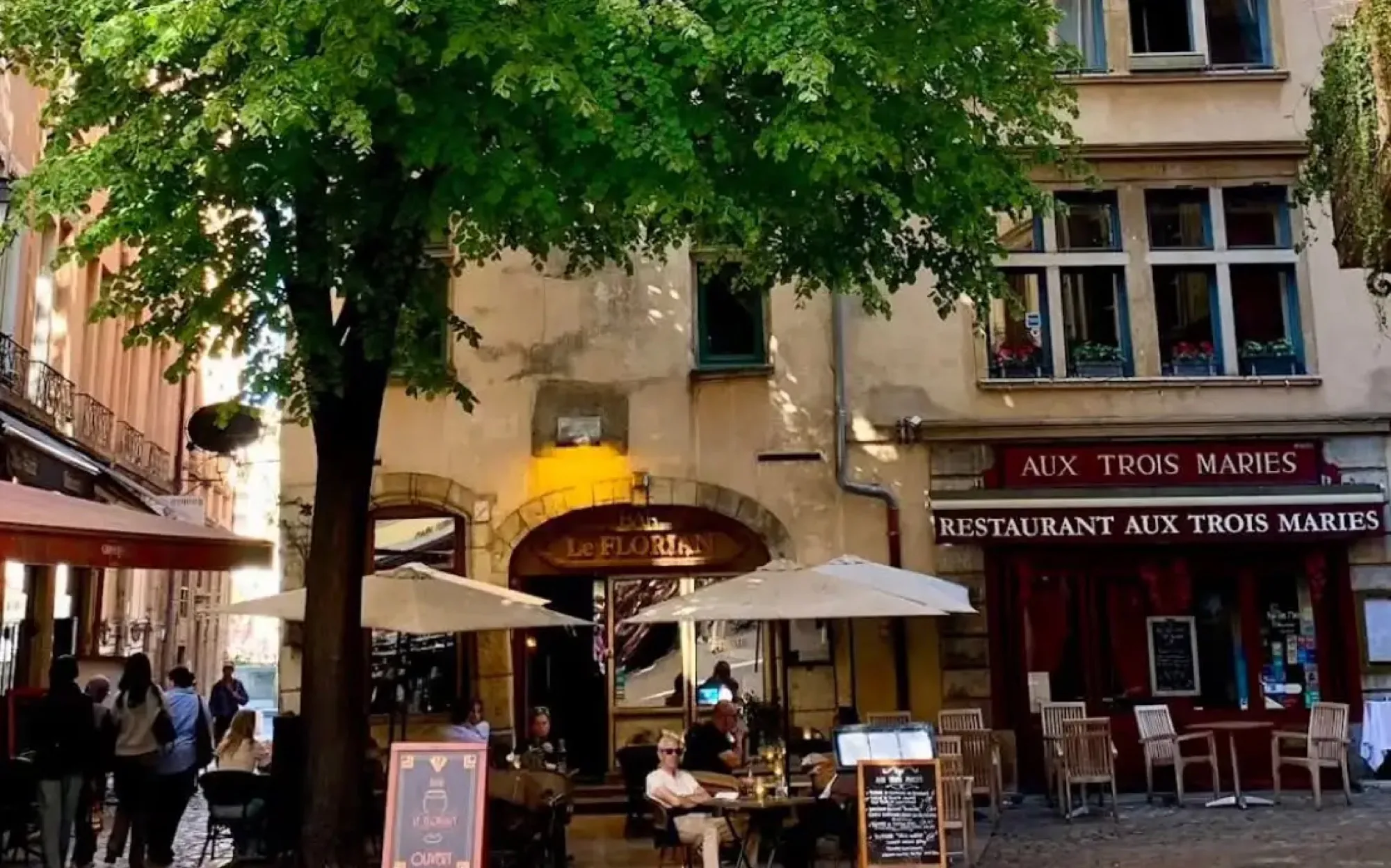
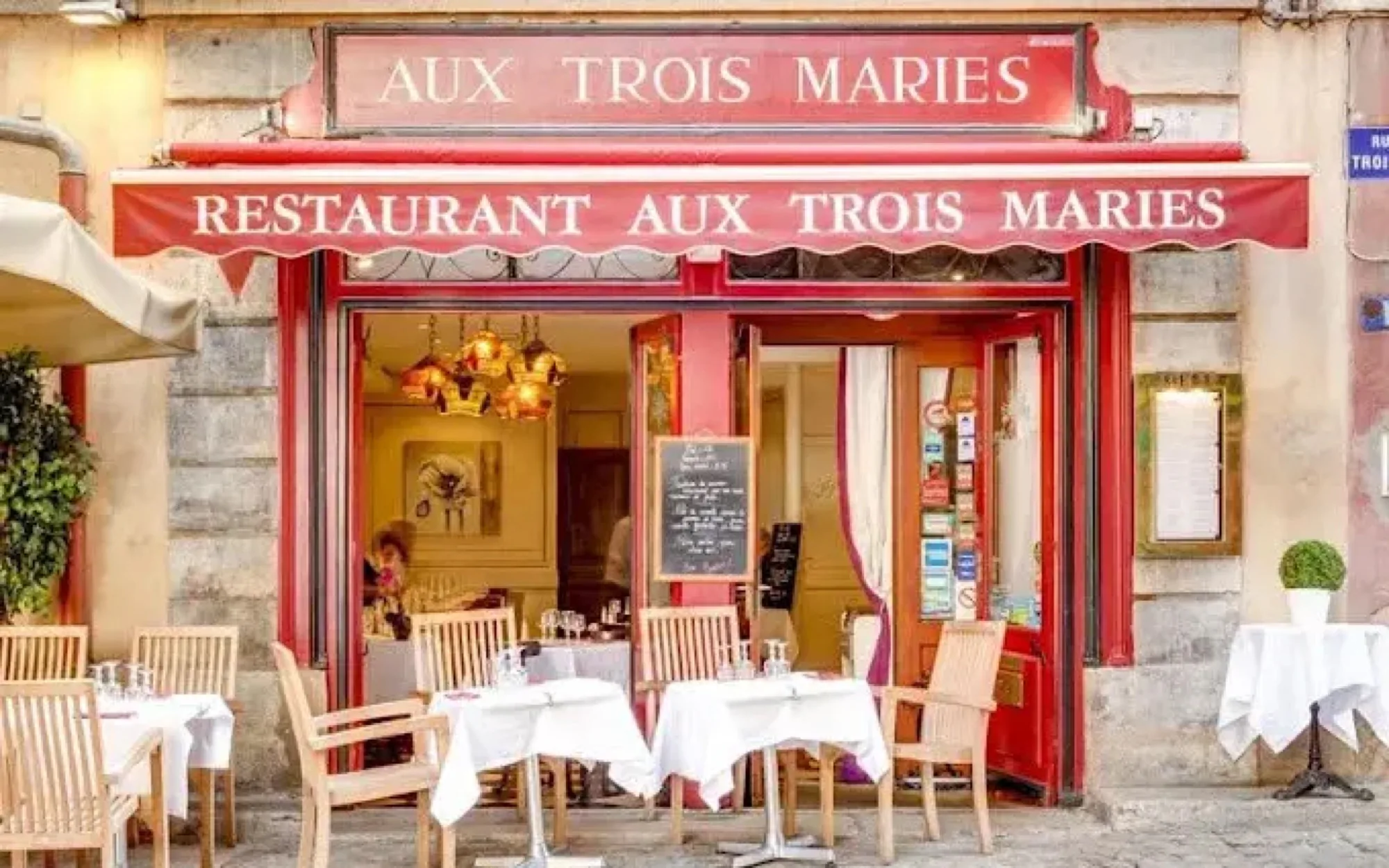
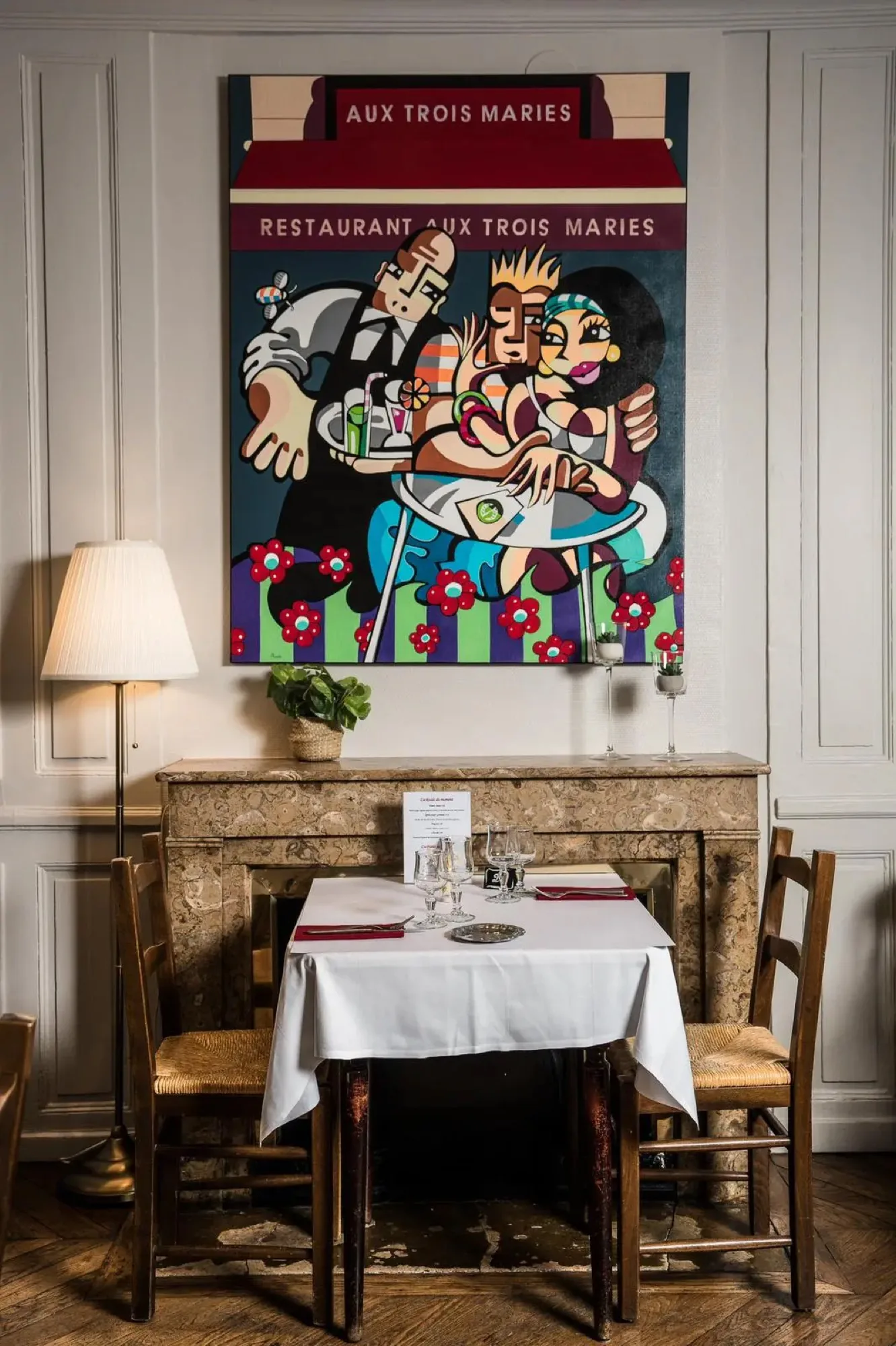
Here stands Aux Trois Maries, one of the oldest bouchons in the city, where the 'café des primeurs' once faced the Saône quay market. After traboulaging from courtyard to courtyard, there's no better stop: old stone outside, white linen within, and Lyonnaise cooking as reward.
The street itself is worth pausing on: away from the bustle, it gives a true sense of daily life in the Vieux-Lyon of before tourism. To sit down here is to extend the heritage walk onto the plate, in a place that crosses time as the traboules cross the buildings.
Practical tips for your visit
Reach Vieux-Lyon by metro, line D, Vieux-Lyon station: it drops you in the heart of the quarter, at the foot of the cathedral and steps from the first traboules. As the area is pedestrian, leave the car in a covered car park nearby or on the Presqu'île rather than hunting for a spot along the quays.
Wear good shoes: the cobbles, steps and stair-towers test the calves, and some courtyards are dark and cool even in summer. Weekday mornings out of school holidays offer the best compromise: the passages are open, the quarter is calm, and you meet more locals than groups.
Finally, book your lunch table, especially at weekends: the bouchons of Vieux-Lyon fill fast. A call is enough to secure the pause that will close your walk. Traboule in the morning, lunch on rue des Trois-Maries, set off again in the afternoon: the ideal rhythm to savour the quarter without rushing it.
Frequently asked
The traboules of Vieux-Lyon: your questions
What is a traboule?
A traboule is a covered passage that cuts through one or more buildings to link two streets via private courtyards, alleys and stairs. The word comes from the Latin trans-ambulare, 'to pass through'. Vieux-Lyon has several hundred, some forty open to the public.
Are the traboules of Vieux-Lyon free?
Yes, the traboules open to the public are free and can be visited on foot, by day. They remain inhabited buildings: access rests on respect for the residents. Only some guided tours, which open private passages, are paid.
How do you recognise a traboule open to the public?
Look for the small round enamelled-lava plaque bearing a lion's head, placed by the City of Lyon at the entrance of accessible passages. The door is often heavy: push it, then close it behind you. Without the plaque, don't enter.
What is the most famous traboule in Vieux-Lyon?
The Longue Traboule, linking 54 rue Saint-Jean to 27 rue du Bœuf through four courtyards and four buildings. It's the longest and most spectacular in the quarter, ideal for a first experience of traboulage.
How long do you need to visit the traboules?
Allow a good hour and a half for a first route between rue Saint-Jean, rue du Bœuf and rue Juiverie, more if you linger in the courtyards. The quarter is explored entirely on foot, never taking the same path twice.
Can you enter the traboules at any time?
No: the passages are generally open from late morning to early evening, to protect residents' peace. Visit by day, quietly, without lingering in the evening, and always close the doors behind you.
Where can you eat after visiting the traboules?
In a local bouchon, to taste Lyonnaise cooking on the spot. Aux Trois Maries, at 1 rue des Trois-Maries, is one of the oldest tables in Vieux-Lyon, steps from the traboules of rue Saint-Jean.
Explore the house
Also worth reading and visiting
Read on
Want to dig deeper into the Lyon table? Find all our articles in our blog cuisine lyonnaise.
Your table is waiting on rue des Trois-Maries
Book online, or call us directly.