
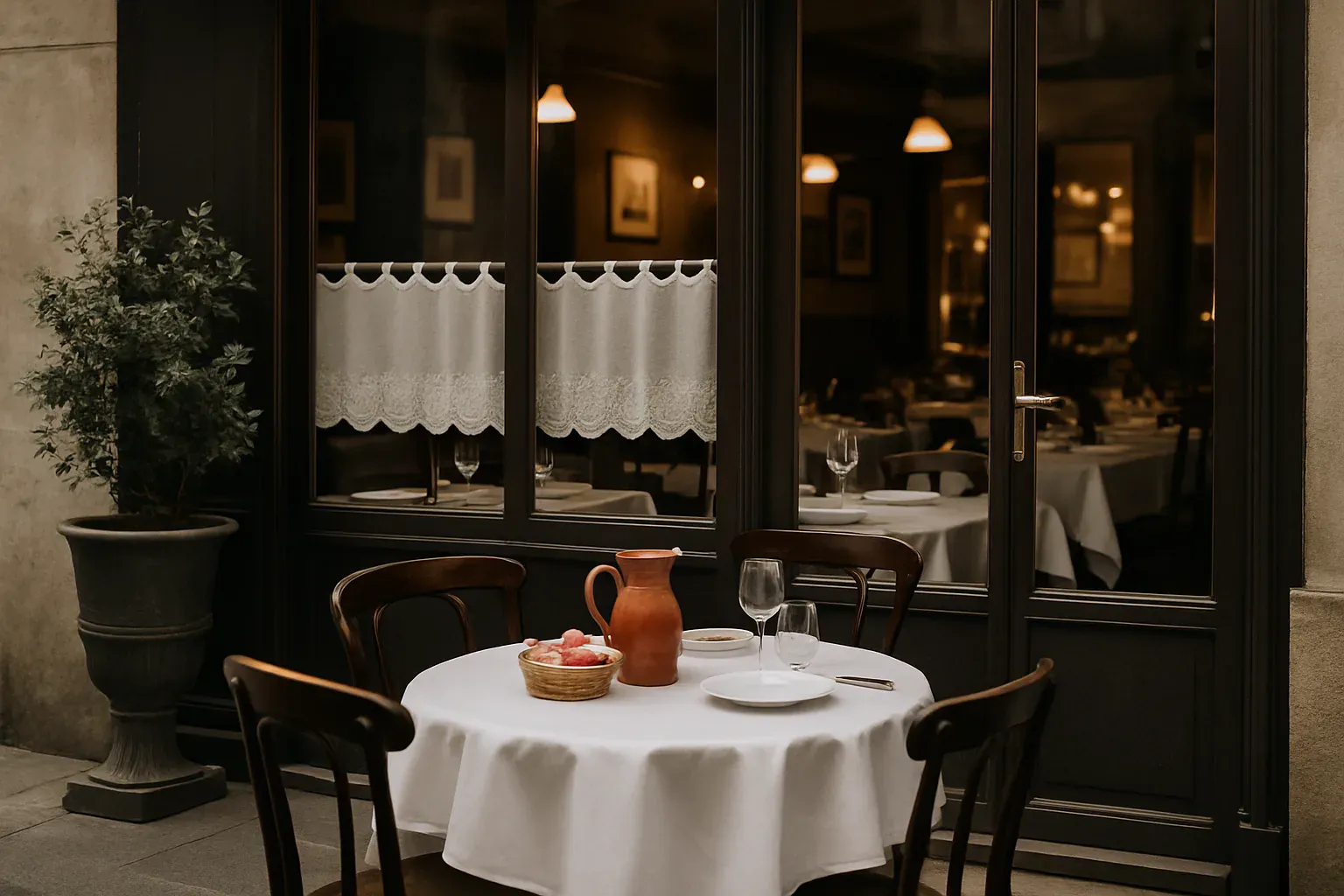
In short
A Lyonnaise bouchon is a small traditional Lyon restaurant, heir to the weavers' mâchons, serving generous, unfussy terroir cooking: charcuterie, pike quenelle, gratinée, cervelle de canut, in a convivial room often with a chequered floor. This guide explains where the word comes from, which specialities to look for, how a bouchon differs from a brasserie or bistro, and how to tell an authentic address from a tourist trap.
What exactly is a Lyonnaise bouchon?
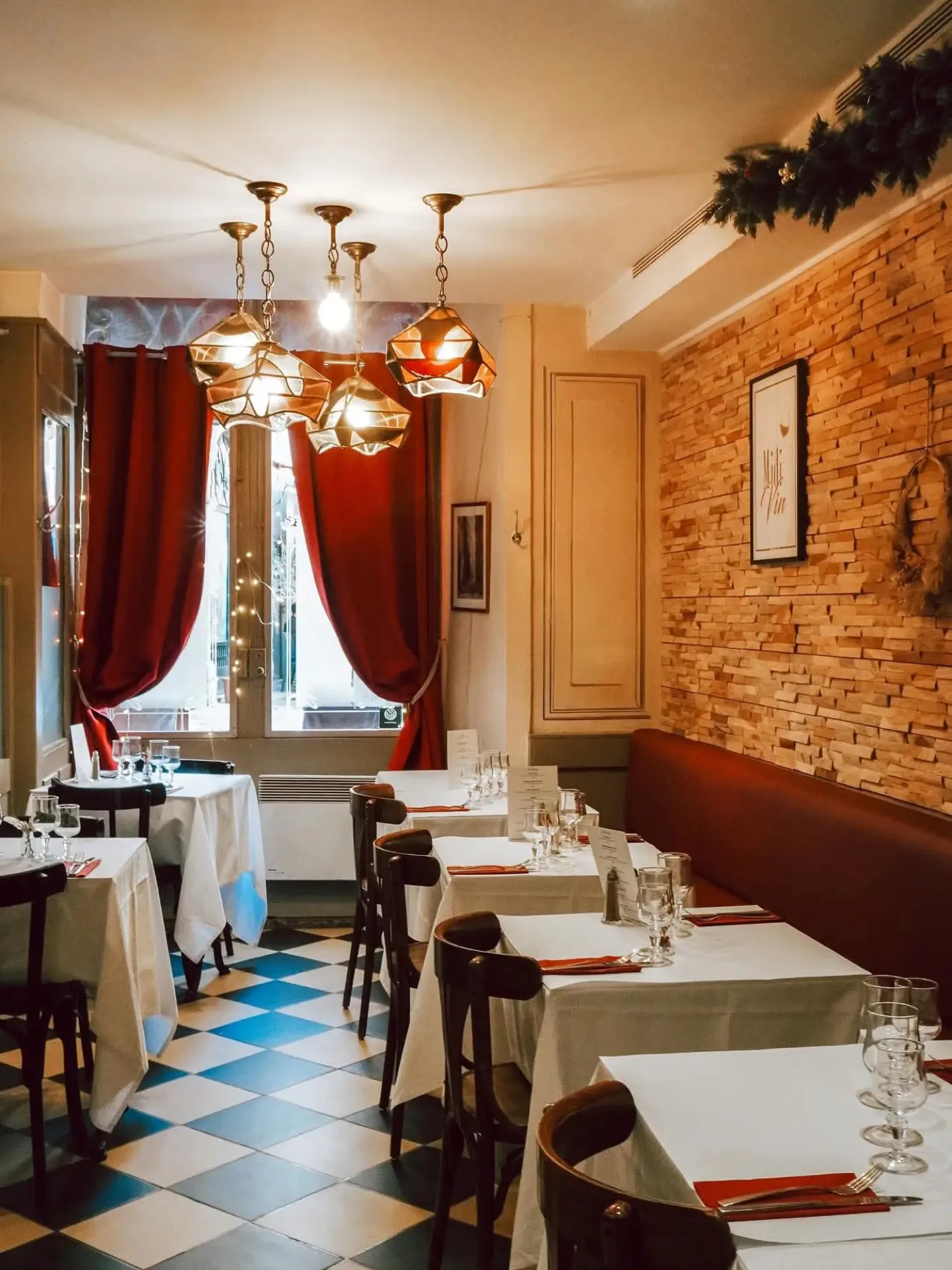
A Lyonnaise bouchon is not merely a restaurant serving local food: it is an institution, a Lyon way of hosting. The name covers a small neighbourhood table with a tight dining room, where you eat elbow to elbow a hearty, home-made terroir cuisine served without ceremony. The menu is short, often seasonal, and the owner knows the regulars by name.
What defines a bouchon is not a décor or a sign, but a state of mind. You come for generous portions, honest produce and a convivial room, not for a sophisticated staging. Historically the bouchon fed silk workers and market labourers; it has kept from those working-class roots a direct, almost family-like bond with its guests.
In Lyon, a recognised gastronomic capital, the bouchon holds a singular place: it embodies everyday cooking — that of the 'mères' and home cooks — as opposed to the haute cuisine of great chefs. This sharing cuisine of offal, charcuterie and slow-cooked dishes built the city's reputation as much as its starred tables.
Where does the word « bouchon » come from?
The origin of the word is debated, and that is part of its charm. The most common theory goes back to old inns that hung a bouchon of branches — a handful of foliage or twisted straw — on their door to tell travellers that food and drink were served. The verb 'bouchonner' also meant rubbing down a horse with a twist of straw: the relays where travellers' mounts were tended may have lent their name to these wayside tables.
The bouchon as we know it truly emerged in the 19th century, with the rise of the silk industry. Lyon then counted tens of thousands of canuts, the weavers based on the Croix-Rousse slopes. Between two spells at the loom they took a robust snack called a 'mâchon': charcuterie, tablier de sapeur, a glass of beaujolais, eaten early in the morning to keep the pace.
It was often the 'mères lyonnaises' — former cooks of bourgeois households turned restaurateurs — who set the repertoire and raised this popular cooking to an art of living. The bouchon is the direct heir of that double lineage: the workers' table of the mâchon and the domestic know-how of the mères. This is why it remains, still today, a cuisine of memory as much as of taste.
Pour remonter à l'origine des bouchons, notre article retrace leur évolution depuis les canuts jusqu'à aujourd'hui.
On the plate
The dishes that make a real bouchon
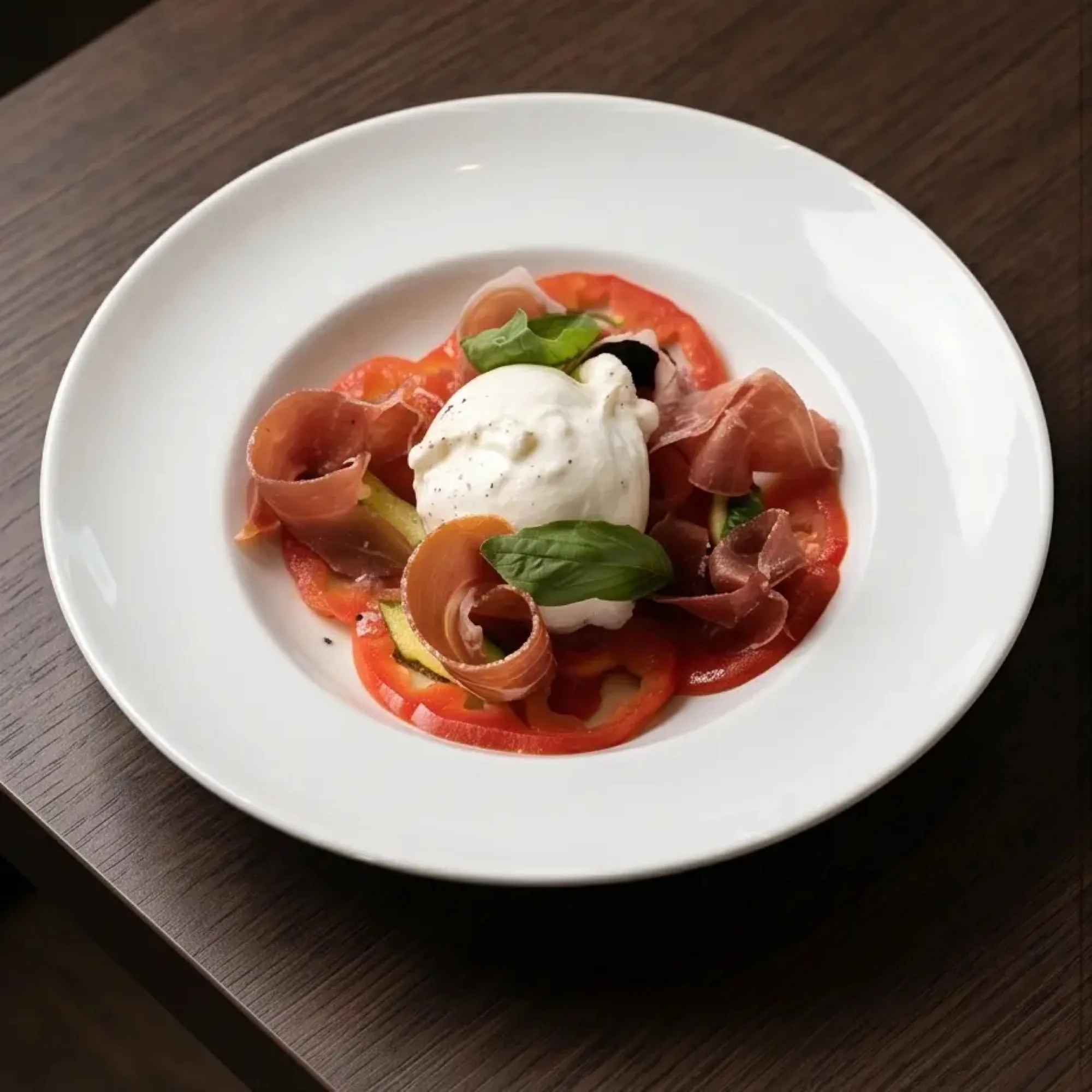
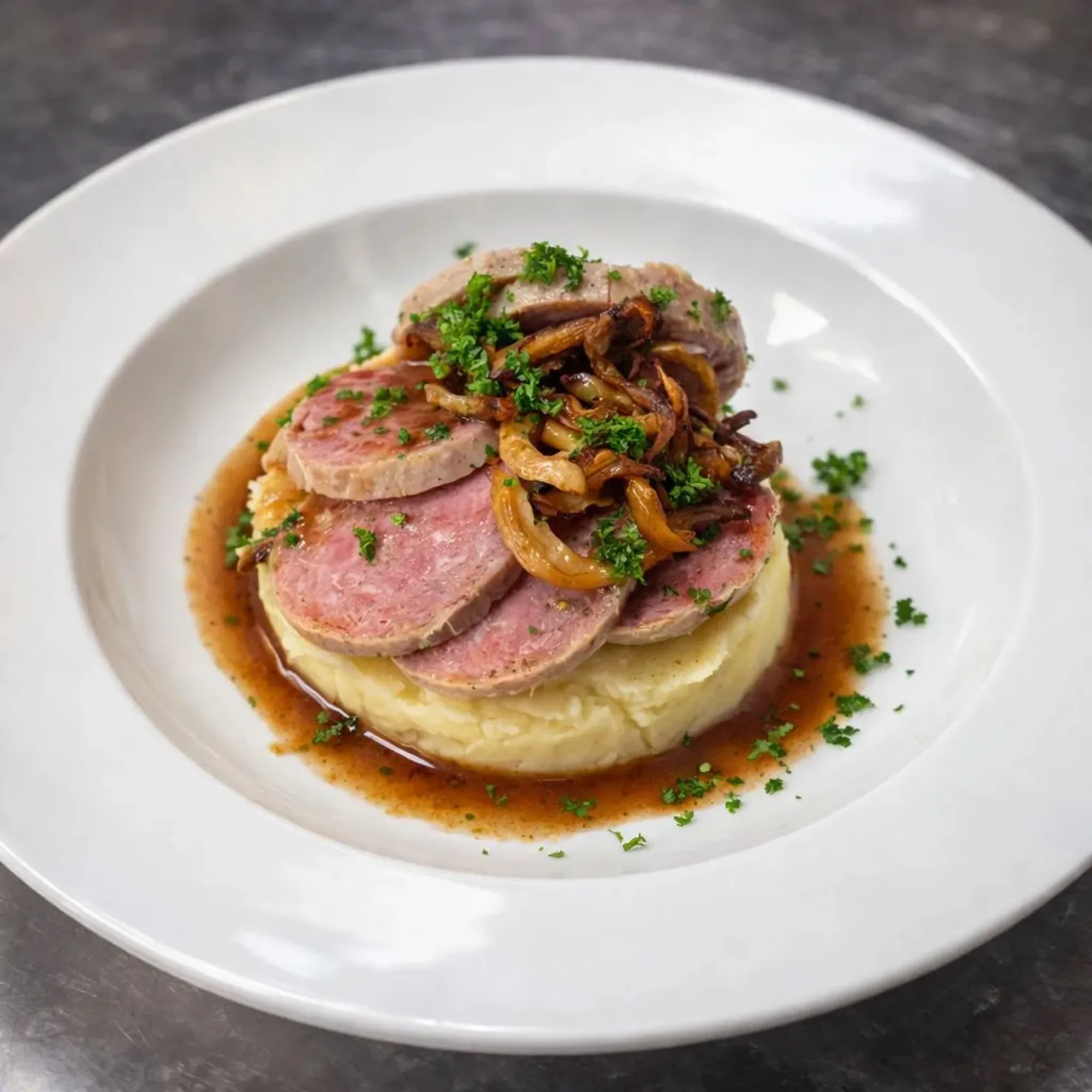
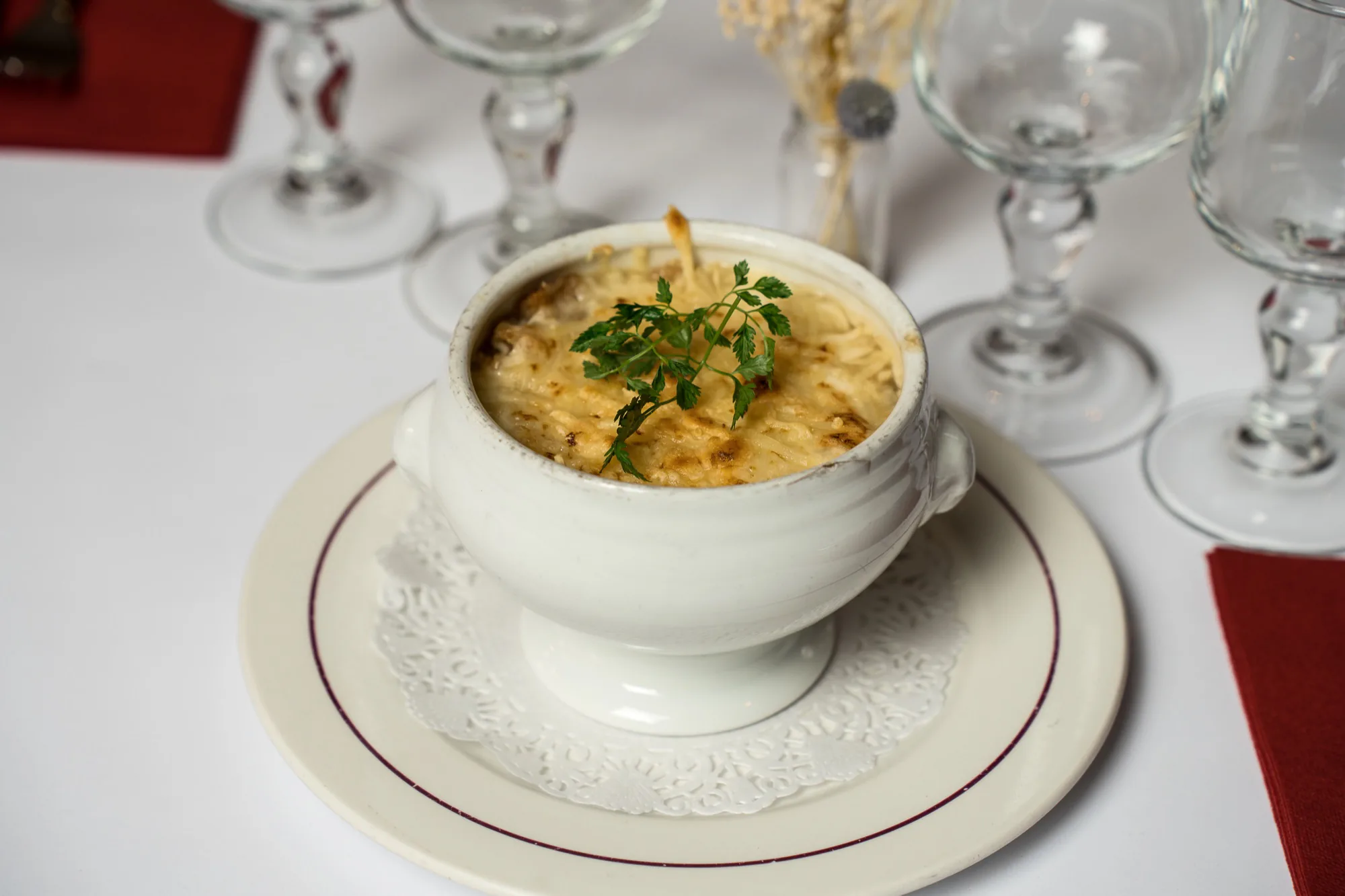
A bouchon is judged first by what it puts on the plate. The Lyonnaise repertoire is rich and unapologetic: it makes room for charcuterie, offal and slow-cooked dishes. Here are the staples, made in-house, found on a good bouchon menu.
The atmosphere and the art of hosting
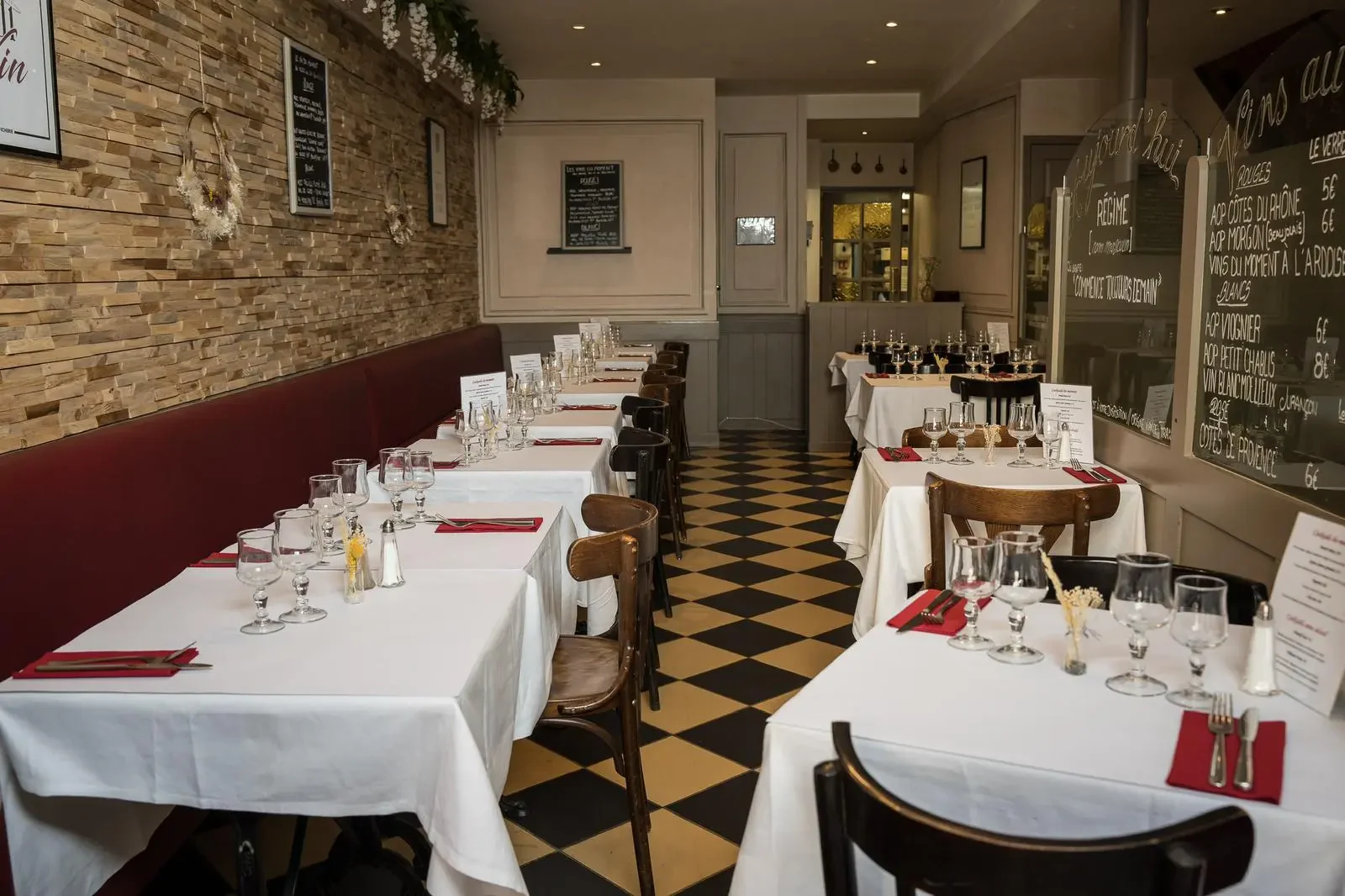
A bouchon is felt before it is tasted. The room is small, the tables close, the hum of conversation fills the space. You speak loudly, gladly share a dish, toast the neighbouring table. This unashamed conviviality is no reconstructed folklore: it is the direct extension of the workers' table, where people ate together, quickly and well.
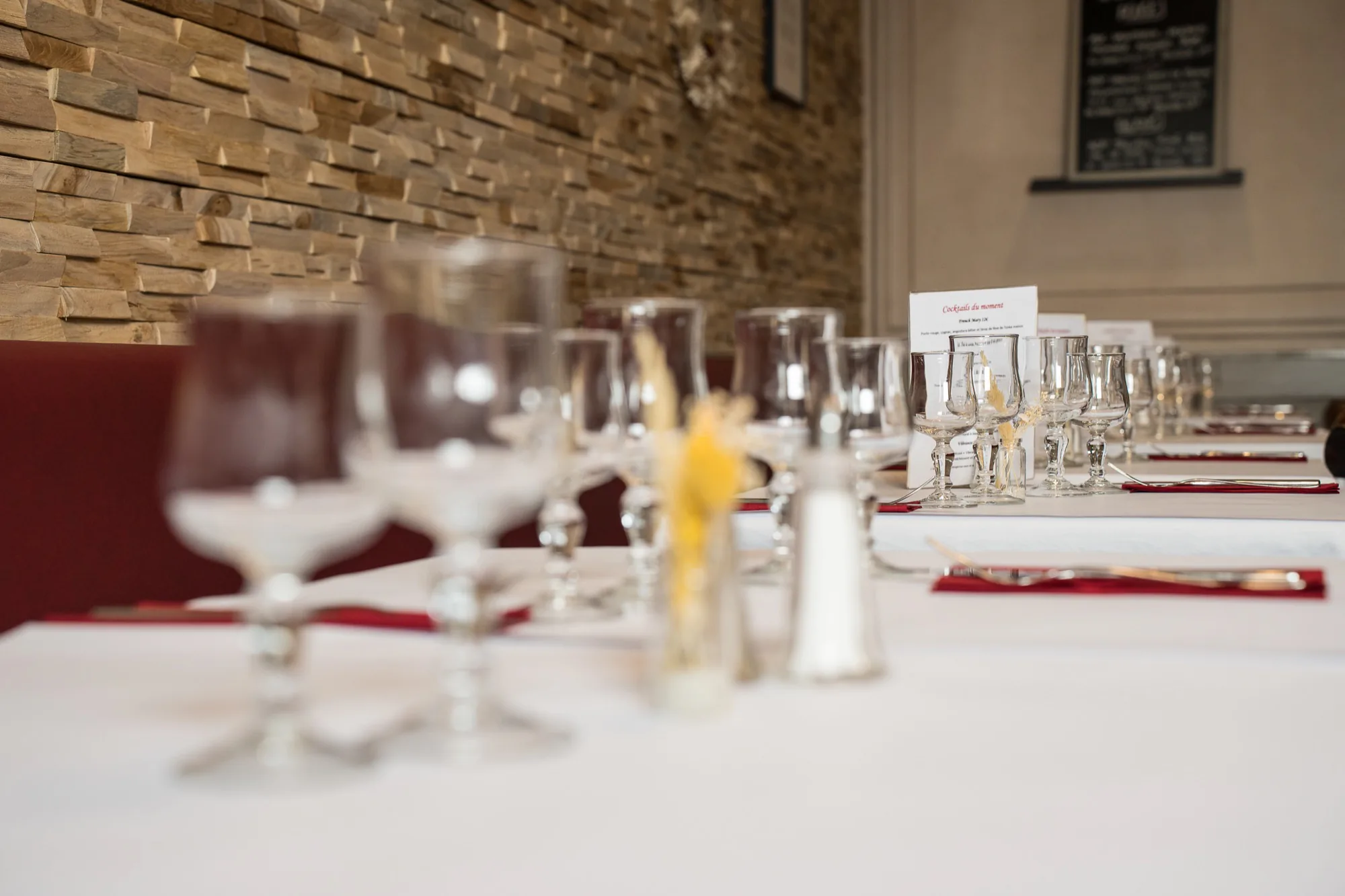
The décor follows a few recurring codes: checked or white linen, slates announcing the dish of the day, a zinc counter, a chequered floor, old posters and the famous 46-centilitre 'pot lyonnais'. But authenticity lies less in the décor than in the service: a good bouchon is an owner or team who knows the menu, tells you about their producers and takes the time to connect.
Bouchon, brasserie, bistro: what's the difference?
These three words are often confused, yet they name distinct places. The brasserie, born of beer culture, is a large establishment with continuous service and a long, often standardised menu; it favours volume and long opening hours. The bistro is a small neighbourhood café-restaurant, more general, without a strong regional anchoring.
The bouchon differs from both through its resolutely Lyonnaise identity. Its menu is short and centred on local specialities, its cooking embraces offal and charcuterie, and its spirit remains that of the mâchon: conviviality, generosity, terroir produce. Where the brasserie seeks to please the greatest number, the bouchon claims a distinctive, sometimes surprising cuisine — and that is precisely its value.
Pour ne pas confondre avec une brasserie, nous avons consacré un article complet à la distinction entre les deux établissements.
The « Les Bouchons Lyonnais » label
Faced with the spread of addresses displaying 'bouchon' without the spirit, an association created the 'Les Bouchons Lyonnais' label in 2012. It distinguishes establishments meeting a precise charter: home cooking, traditional specialities, convivial atmosphere, authentic welcome and a reasonable bill. Labelled houses display an official badge at the entrance.
The label is a useful marker, but not exhaustive: many excellent tables, often the oldest, do not carry it, by choice or by seniority. Conversely, the absence of a badge does not condemn an address. The label is therefore one clue among others — the best judge remains, always, what you find on the plate and the welcome you receive.
The right instinct
How to spot a real bouchon (and avoid the traps)
In a tourist quarter like Vieux-Lyon, not every place with 'bouchon' on the sign really is one. A few markers help tell the serious table from the tourist trap, even before sitting down. Trust the menu first: a short, handwritten or slate menu that follows the seasons is a good sign. A sprawling menu translated into eight languages and illustrated with photos is far less so.
Beware the tout who hails you on the pavement: real houses have no need for one. Look instead for a room where French is spoken, producers named on the menu, charcuterie from a recognised affineur and a quenelle that truly puffs in the oven. An owner who takes the time to explain their cooking is worth every guidebook.
Finally, let the plate speak. An andouillette that smells home-made, a gratinée served piping hot, a dessert clearly made on site: these are the real signs of a working bouchon. Dishes identical from one table to the next along the street betray reheated industrial cooking. A bill that seems abnormally low for genuine home cooking should raise suspicion.
What do you drink in a bouchon?
The bouchon has its ritual of the glass. The king wine is beaujolais — light, fruity gamay — often served in the 'pot lyonnais', that squat 46-centilitre jug with a thick base that, so they say, kept unscrupulous merchants from cheating on the measure. You will also find northern Rhône reds and Mâcon whites, which pair beautifully with charcuterie and quenelles.
Before the meal, the 'communard' or 'cardinal' — red wine with blackcurrant or blackberry liqueur — traditionally opens the appetite. The idea is never oenological showing-off, but the honest, generous pairing: a sincere thirst-quenching wine that drinks without fuss and prolongs the conviviality of the table.
Aux Trois Maries, a historic bouchon in Vieux-Lyon
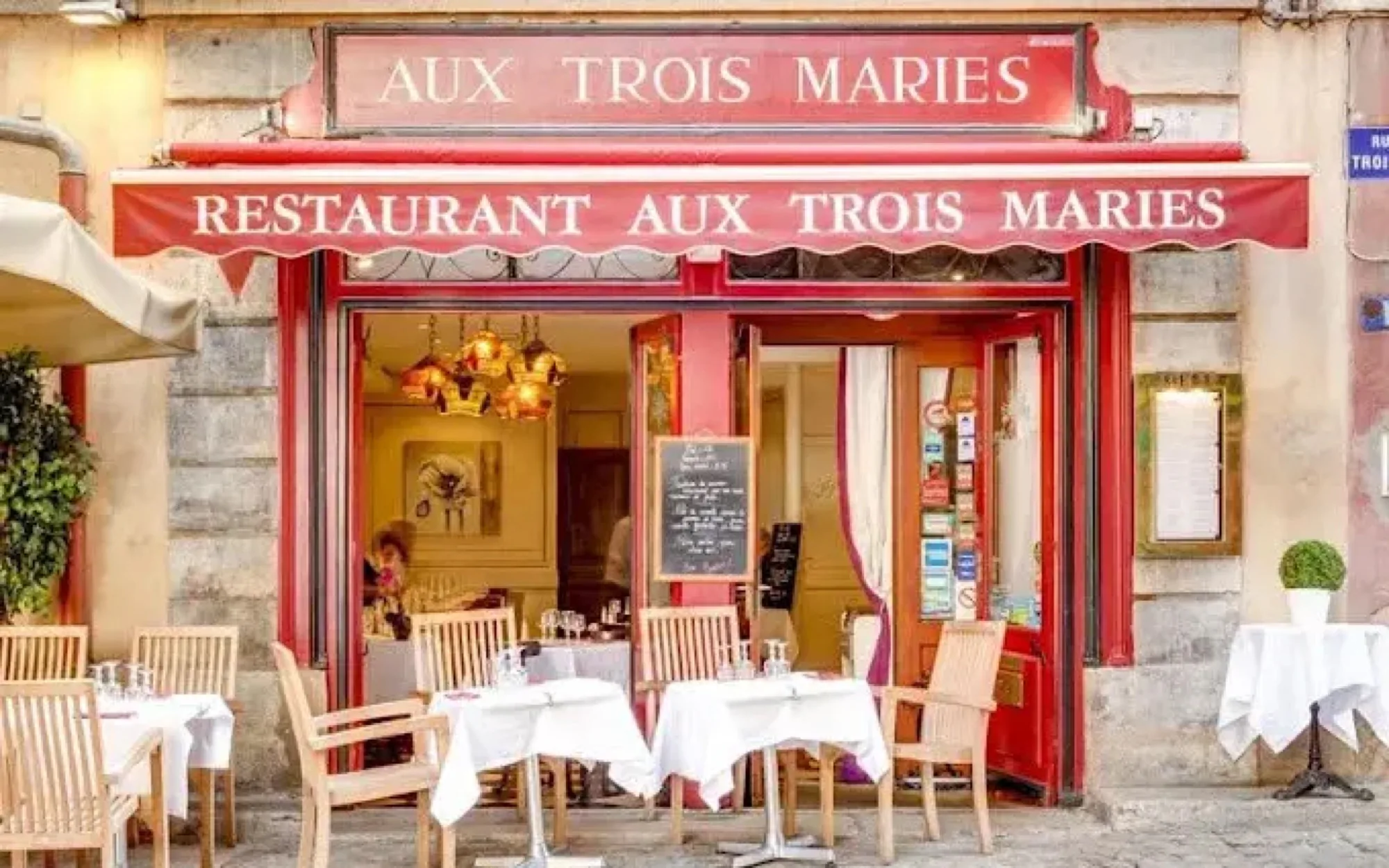
Aux Trois Maries is one of the oldest bouchons in Lyon. The house once occupied the 'café des primeurs', facing the Saône quay market, before being taken over after the war by the famous Tante Paulette, then by the Bolomier, Monnet and Fournier families. It has crossed the decades on rue des Trois-Maries, in the UNESCO-listed Vieux-Lyon, without ever losing its Lyonnaise-table spirit.
The street itself owes its name, given in the 17th century, to the three Marys of the Gospel — Marie-Salomé, Marie-Jacobée and Marie-Madeleine — echoed by the three silhouettes of our logo. Here we keep alive a home-made local cuisine, in a more contemporary yet still convivial Lyon bistro spirit, with vegetarian and gluten-free options to open the table to everyone.
Making the most of a bouchon: our tips
Come with an appetite and curiosity: the bouchon is savoured over several courses, from starter to dessert, and that is when it gives its best. Do try the offal and charcuterie that make its singularity — tablier de sapeur, gras-double, cervelle de canut — rather than falling back on familiar dishes. Better still, ask for advice: a good owner will happily point you to what is at its best that day.
Book, especially at weekends and lunch: real houses have few covers and fill up fast. Take your time over the meal — the bouchon is made for the table that lasts. And if you wander through Vieux-Lyon, push the door of an address rooted in the quarter rather than a flashy front: it is almost always the best marker.
Frequently asked
The Lyonnaise bouchon: your questions
What is a Lyonnaise bouchon in a few words?
It's a small traditional Lyon restaurant with a short, seasonal menu, centred on local specialities and conviviality. It serves home-made terroir cooking — charcuterie, quenelle, gratinée, offal — in a tight room, heir to the weavers' mâchons.
Why are these restaurants called « bouchons »?
The most accepted origin points to old inns that hung a bouchon of branches on their door to signal that food and drink were served. The term is also linked to 'bouchonner' a horse, in the relays where travellers' mounts were tended.
Which specialities do you find in a bouchon?
The pike quenelle, brioche sausage, andouillette, tablier de sapeur, Lyonnaise gratinée, cervelle de canut and affineur charcuterie are among the home-made essentials. For dessert, the pink praline tart is emblematic.
What is the difference between a bouchon and a brasserie?
The brasserie is a large establishment with continuous service and a long, often standardised menu. The bouchon is smaller, with a short menu focused on Lyonnaise specialities and a convivial spirit from the workers' mâchon: distinctive cooking, embraced offal, terroir produce.
How do you recognise a truly authentic bouchon?
By a short menu that follows the seasons, producers named on it, a room where French is spoken and home-made cooking. Beware touts on the pavement, menus in eight languages and large window photos of dishes.
Can you eat vegetarian or gluten-free in a bouchon?
Increasingly, yes. Many bouchons now offer vegetarian, vegan and gluten-free options alongside the traditional specialities. At Aux Trois Maries, just flag it when booking.
Explore the house
Also worth reading and visiting
Going further
Want to dig deeper into the Lyon table? Find all our articles on the blog cuisine lyonnaise.
Taste the real Lyonnaise bouchon
Book your table on rue des Trois-Maries, or call us directly.