
The Journal · Lyonnaise cuisine
The origin of andouillette: history, making and its place in Lyon cuisine
Often misunderstood, sometimes feared, andouillette is one of the most endearing charcuteries of the French repertoire. Where does it really come from, why does Lyon claim it, and how is it made? Here is everything to understand its origin.
In short
Andouillette is a cooked charcuterie, heir to an old cuisine that used the whole pig: it is made of cleaned, cut and cased tripe. Its bond with Lyon comes from the tradition of the bouchons and the mères lyonnaises; in Lyon it is happily made with veal, finer, where Troyes uses pork, more robust. The phrase 'tirée à la ficelle' — drawn to the string — signals hand assembly, a mark of quality, and the '5A' distinction rewards the best. Well made, it shows an honest grain and is enjoyed with a mustard sauce and a glass of red, as in a Vieux-Lyon bouchon.
Contents
What you'll discover
Where does andouillette come from? Roots of an ancestral charcuterie
Andouillette belongs to an age-old family of charcuteries found across Europe's peasant kitchens. Its principle is as old as pig farming: when the animal was slaughtered, nothing was to be wasted, and the humblest parts became a dish in their own right through patient cleaning and seasoning.
There is no single inventor. What exists is a slow charcutier's tradition, refined over centuries, that each region then adapted to its own produce and taste. To understand the origin of andouillette is to accept that it is collective, working-class and deeply tied to a cuisine that wastes nothing.
Etymology and early mentions of a popular dish
The word 'andouillette' is a diminutive of 'andouille', from a Latin root around the idea of fitting parts one into another — exactly what is done with the tripe. Language fixed the distinction early: the andouille, larger, is eaten cold; the andouillette, smaller, is meant to be cooked and served hot.
Early written mentions appear in medieval and Renaissance texts, through the guild rules that framed the charcutier's trade. Long a dish of the people, its humble origin is today its charm: it owes everything to honest, real cooking.
The 'whole pig' cuisine: waste nothing, elevate everything
To grasp andouillette you must understand its founding principle: in traditional cooking, 'everything is good in the pig'. Each part found a use, and the skill lay in making the humblest cuts desirable.
Tripe demands considerable work — long cleaning, trimming, careful seasoning. This philosophy shaped whole swathes of gastronomy: black pudding, brawn, gras-double, tablier de sapeur, andouilles and andouillettes are its direct offspring. Andouillette is a link in a coherent tradition, not an isolated curiosity.
Why is andouillette tied to Lyon and its region?
Lyon, a food capital, built its name on generous terroir cooking carried by the bouchons and the mères lyonnaises. The bouchon is andouillette's natural home: it celebrates exactly the cuisine of worked offal and hearty shared dishes that saw it born.
Over generations, Lyon's cooks and charcutiers refined a way of making and serving it. Lyon did not invent andouillette; Lyon consecrated it — here it is an expected dish, almost a rite of passage for anyone seeking the true Lyon table.
Lyon veal andouillette or Troyes andouillette?
Troyes defends a pork andouillette, robust and assertive — the classic that fixed the very idea of andouillette. Lyon happily favours veal, finer and gentler, with a rounder character often judged more accessible.
These differences come from the base product and regional know-how, not a hierarchy. Pork or veal, a worthy andouillette rests on the same demand: impeccable cuts, flawless cleaning and careful assembly. The rest is a matter of taste and terroir.
How is andouillette made?
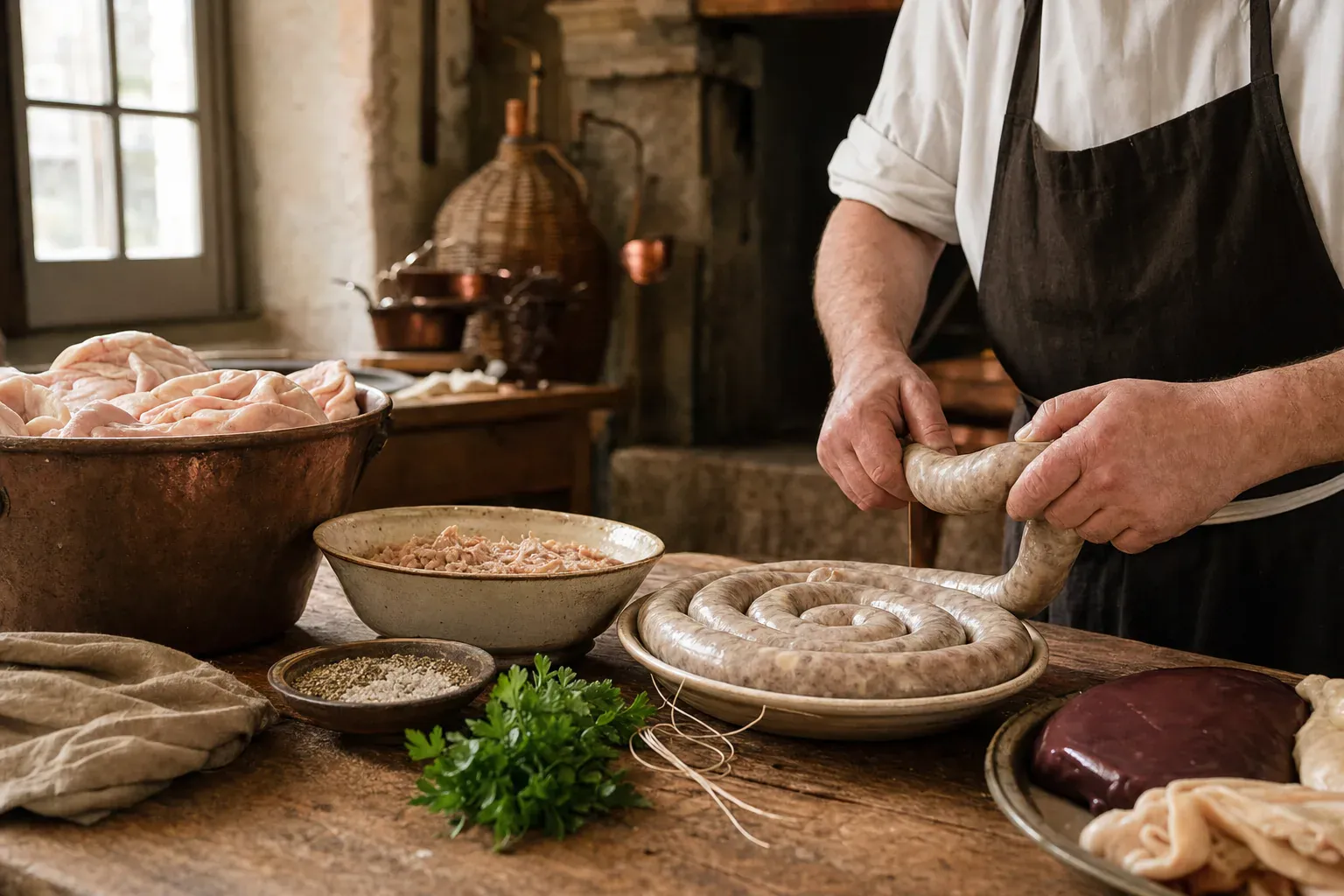
Making andouillette is precise charcutier's work. It starts with the raw material: tripe — for veal andouillette, the veal fraise — carefully selected, then long cleaned and trimmed. This trimming alone decides the cleanliness of the final flavour.
The pieces are cut, seasoned, then cased in a gut that gives their shape, and finally slow-cooked, often poached in a broth. Nothing is industrial in an artisan andouillette — it is a chain of hand gestures on which quality entirely depends, which is why flavour varies so much from one to another.
'Drawn to the string' and the '5A' distinction explained
'Tirée à la ficelle' is no flourish: it means the tripe is cut into strips then pulled and assembled by hand, one by one, rather than machine-minced. The texture is incomparable — grain, bite and honesty where the industrial settles for uniform softness.
The '5A' distinction is awarded by a club of andouillette enthusiasts to products that meet their quality and authenticity criteria. Both marks say the same thing: andouillette is, above all, a matter of craft.
How to recognise and enjoy a good andouillette?
A quality andouillette shows in the eye, the nose and the mouth, and is best savoured when accompanied properly. Three markers to choose well, whether you're a regular or curious about a first try.
Signs of quality
A clear grain and firm texture rather than a uniform paste, good colour when cooked, an honest, non-aggressive smell. The 'tirée à la ficelle' and '5A' marks are useful guides.
Pairing and presentation
In a bouchon it is served golden, coated in a mustard sauce, with pan-fried grenaille potatoes. A local red — an easy Beaujolais or a fuller Côtes-du-Rhône — completes the pairing most convivially.
For a first try
If you're discovering it, choose a veal andouillette, finer, in a trusted house. An open mind and a good sauce are enough: the 'drawn to the string' makes the first bite honest yet accessible.
Andouillette in a Vieux-Lyon bouchon
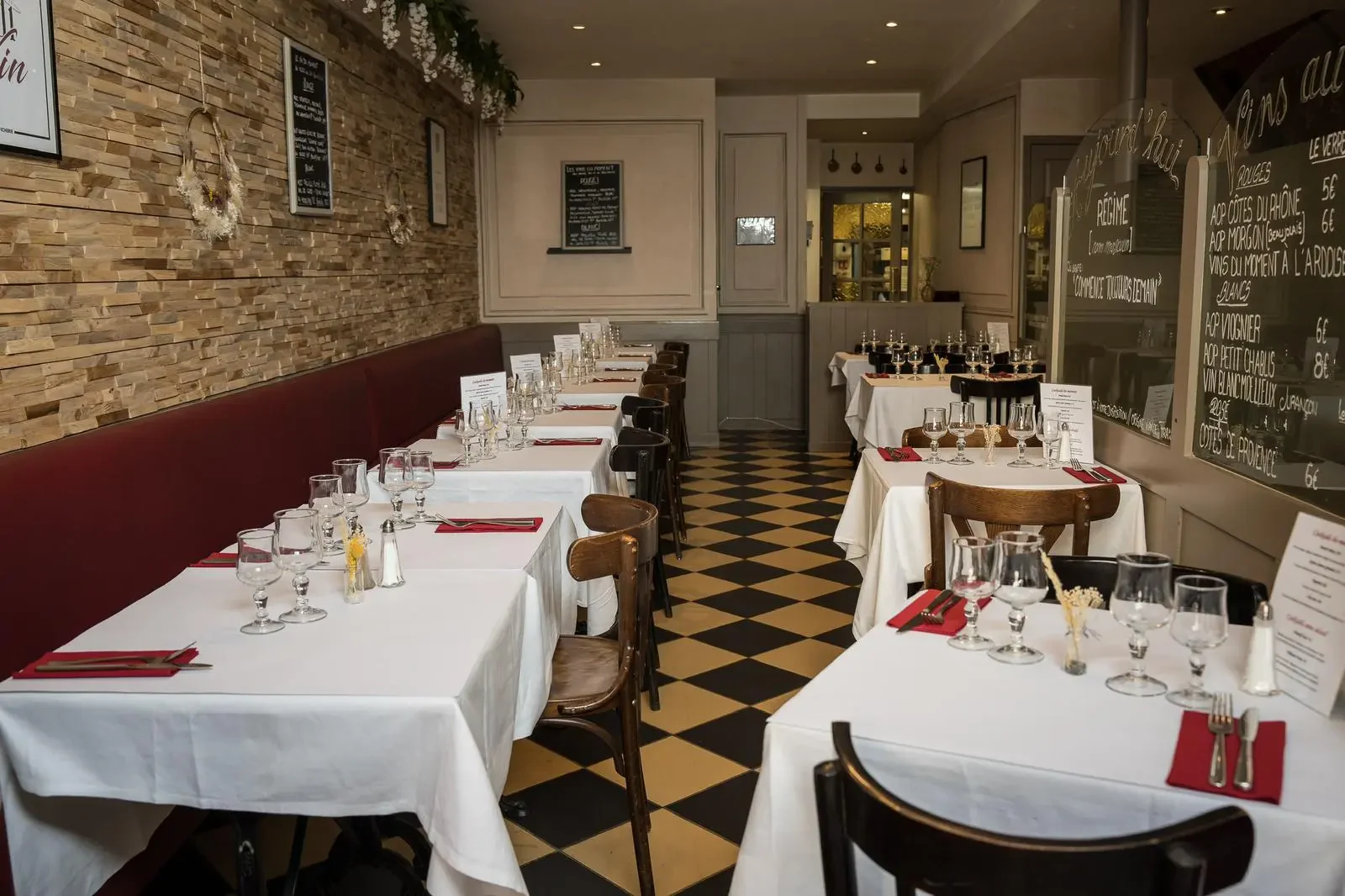
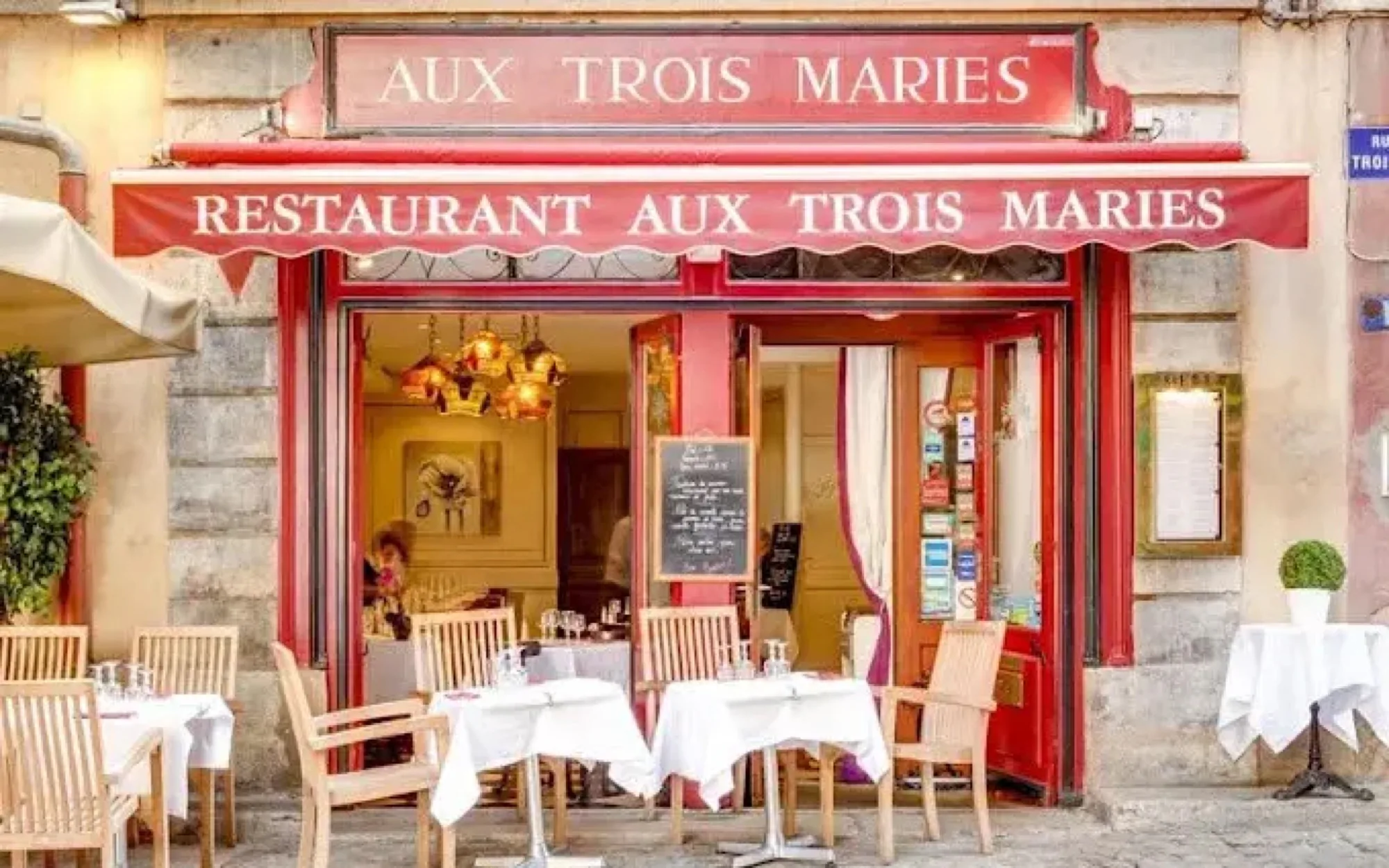
Andouillette makes full sense where it was born to be served: in a bouchon. On rue des Trois-Maries, in the heart of UNESCO-listed Vieux-Lyon, our house is among the oldest bouchons in the city — the right setting to taste it done properly.
On our menu, veal andouillette drawn to the string sits beside brioche sausage, the puffed pike quenelle and our terroir specialities. Understanding the origin of andouillette makes you want to taste it where it is understood and respected — a doorway into the whole Lyon table.
Frequently asked
The origin of andouillette: your questions
What is andouillette made of?
It's a cooked charcuterie made from parts of the pig's digestive tract — cleaned, cut, seasoned and cased in a gut. In Lyon it is happily made with veal fraise, which gives it more finesse.
What's the difference between andouille and andouillette?
Both come from the same family of tripe-based charcuteries. The andouille is larger and usually eaten cold in slices; the andouillette is smaller, meant to be cooked and served hot, often with mustard sauce.
Veal or classic andouillette: what's the difference?
The 'classic', like Troyes, is pork and more robust. The veal andouillette, dear to Lyon, is finer and gentler. Not a hierarchy but two readings of the same heritage, suited to regional tastes.
Is Lyon andouillette really different?
Yes — through its frequent choice of veal and its place in the bouchon and mères lyonnaises culture. Lyon didn't invent it but consecrated it: here it's served drawn to the string with mustard sauce and grenaille potatoes.
What does 'drawn to the string' mean?
It means the tripe is cut into strips then assembled and pulled by hand, one by one, rather than machine-minced. The result offers more grain, bite and honesty: the mark of good charcutiers.
Where was andouillette invented?
There's no single inventor: it's the heir of a very old charcutier's tradition born of whole-pig cooking. Troyes is a historic pork reference; Lyon made it an emblem with its veal version.
How to recognise a good andouillette?
By its clear grain and firm texture, good colour when cooked and an honest smell. The 'tirée à la ficelle' and '5A' marks help. The rest plays out in the cooking and sauce, ideally in a bouchon that knows how to work it.
Explore the house
Also worth reading
On the same subject
To read on about the Lyon table, see our history of the Lyon bouchons and our guide what is a Lyon bouchon.
Read on
Fancy tasting it drawn to the string, with mustard sauce and grenaille potatoes? Discover the andouillette Lyon served in our Vieux-Lyon bouchon.
Taste the andouillette on rue des Trois-Maries
Book your table online, or call us directly: we welcome you to our historic Vieux-Lyon bouchon.