
The Journal · Lyon heritage
The history of Lyon's bouchons: two centuries of conviviality at the table
From the canuts' mâchon to the mères lyonnaises, from the branches hung at an inn's door to the label that protects the tradition today — here is where the bouchon really comes from, the working-class table that became an emblem of Lyon.
In short
Lyon's bouchons emerged in the 19th century in the wake of the canuts, the silk workers who ate a hearty early-morning snack: the mâchon. The word 'bouchon' likely comes from the bundle of branches hung at an inn's door to signal wine was served, or from 'bouchonner' — rubbing down horses at coaching stops. Popularised around 1900 by the mères lyonnaises, former cooks of bourgeois households, bouchon cuisine celebrates charcuterie, offal and slow-cooked dishes served in a convivial, plainly set room. Now protected by the 'Les Bouchons Lyonnais' label, the tradition lives on in Vieux-Lyon, where Aux Trois Maries has kept it alive since the middle of the last century.
Contents
What this story tells
Where does the word 'bouchon' come from?
Despite what you might think, 'bouchon' has nothing to do with a bottle cork. Its origin is lost in old French, and two theories compete — both painting the same picture of a modest halt where you ate and drank without fuss.
The first goes back to the Middle Ages: inns showed they served wine by hanging a bundle of branches, straw or pine above the door. This fagot was called a 'bousche', then a 'bouchon' — so even an illiterate passer-by knew he could drink there. The object vanished; the word stayed.
The second comes from coaching inns, where horses were 'bouchonnés' — rubbed down with a twist of straw — while travellers ate. Whatever the exact etymology, by the 19th century in Lyon a 'bouchon' meant a small, popular table: hearty food, local wine, elbow-to-elbow warmth.
The canuts and the mâchon: the people's table
To understand the bouchon, climb the slopes of the Croix-Rousse, into 19th-century working Lyon. There toiled the canuts, the silk weavers, bent over their looms from dawn to dusk. From their daily life came the founding ritual of Lyonnaise cooking: the mâchon.
The mâchon was a snack eaten early, often before eight, after a few hours' work. It meant charcuterie — rosette, jésus, grattons — a piece of tablier de sapeur or gras-double, washed down with a jug of Beaujolais or Mâconnais. Filling, honest, no frills.
This working-class origin is the bouchon's DNA. You don't seek refinement here but the generosity of a worker's meal: humble cuts transformed by time and skill, portions that satisfy, a room where you chat table to table. The bouchon was never a rich man's cuisine — and that is still its soul.
The mères lyonnaises, founders of a cuisine
If the canuts gave the bouchon its spirit, women gave it its standing. Around 1900, a generation of cooks lifted the Lyon table from snack to gastronomy: the mères lyonnaises.
Many were former cooks of the city's bourgeois families. Let go, often during economic crises, they opened their own tables to live by their craft. La Mère Brazier, la Mère Fillioux, la Mère Guy became institutions — the first even earned three Michelin stars in two houses at once.
Their legacy is twofold: a demand for first-rate produce and patiently made sauces, and a generosity of portion and welcome. They set the codes of bouchon cooking as we know it and raised Lyon to the rank of a food capital. Thanks to them, the bouchon became heritage.
The golden age of the bouchon
The interwar years marked the bouchon's peak. In 1935, the critic Curnonsky proclaimed Lyon 'world capital of gastronomy'. The phrase spread across France and sealed a reputation that never faded. Bouchons multiplied, carried by the mères' fame and a loyal clientele.
The bouchon settled in as a pillar of Lyon's identity, alongside Guignol, the traboules and the Croix-Rousse slopes. You came with family, with colleagues, with friends; you put the world to rights over a jug of wine; you ate well for little, in a cheerful din. That conviviality, as much as the plate, still tells a real bouchon from an ordinary restaurant.
The specialities that tell this story
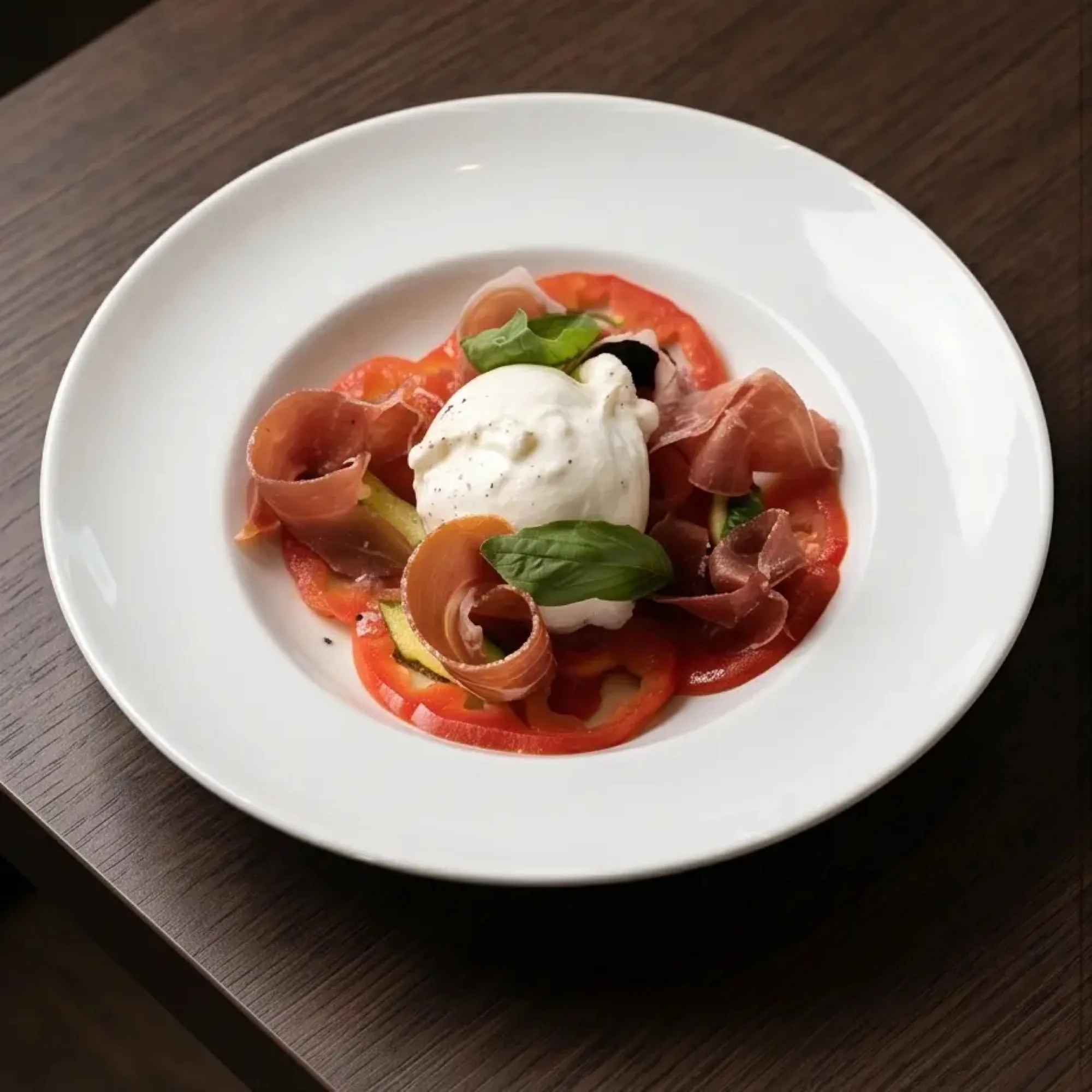
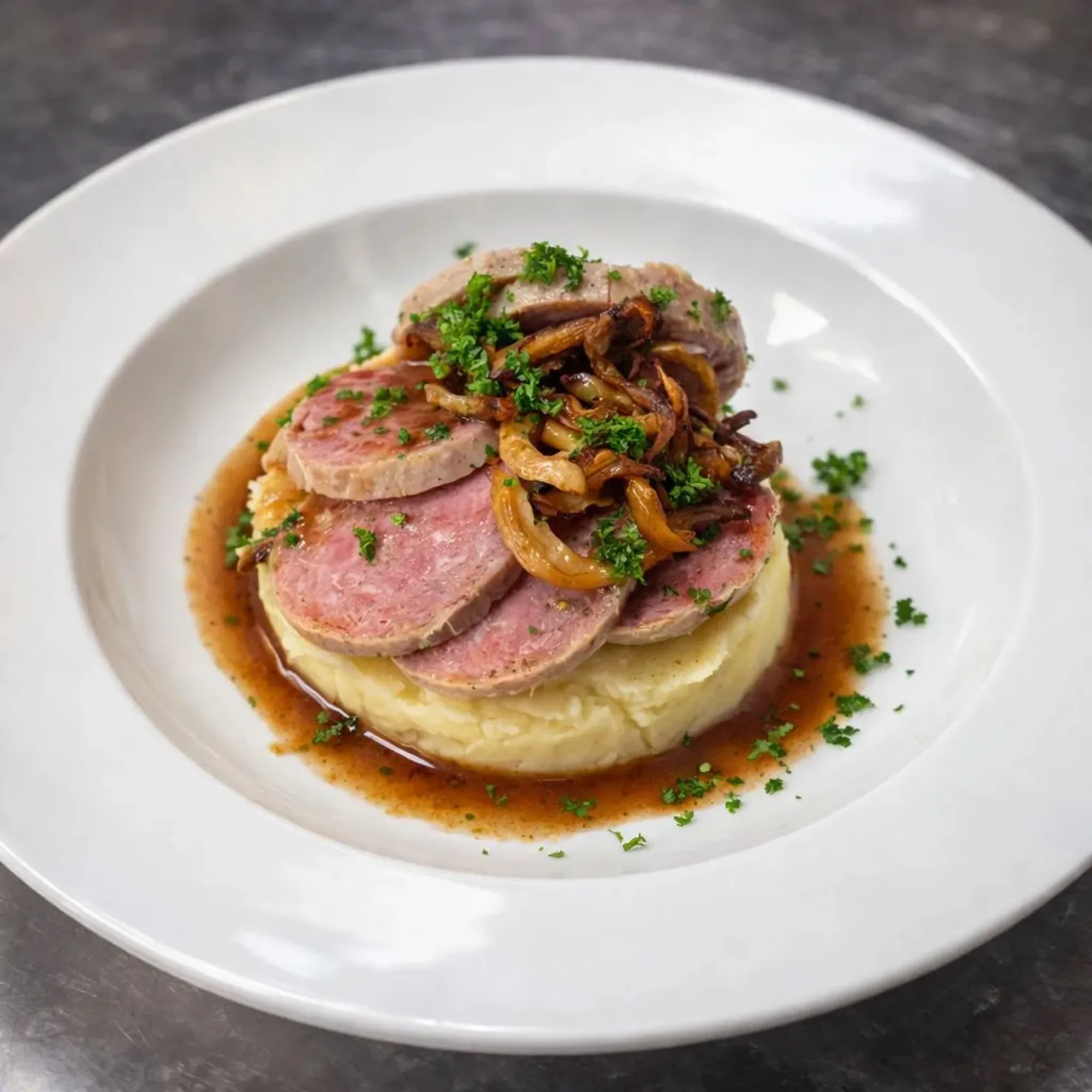
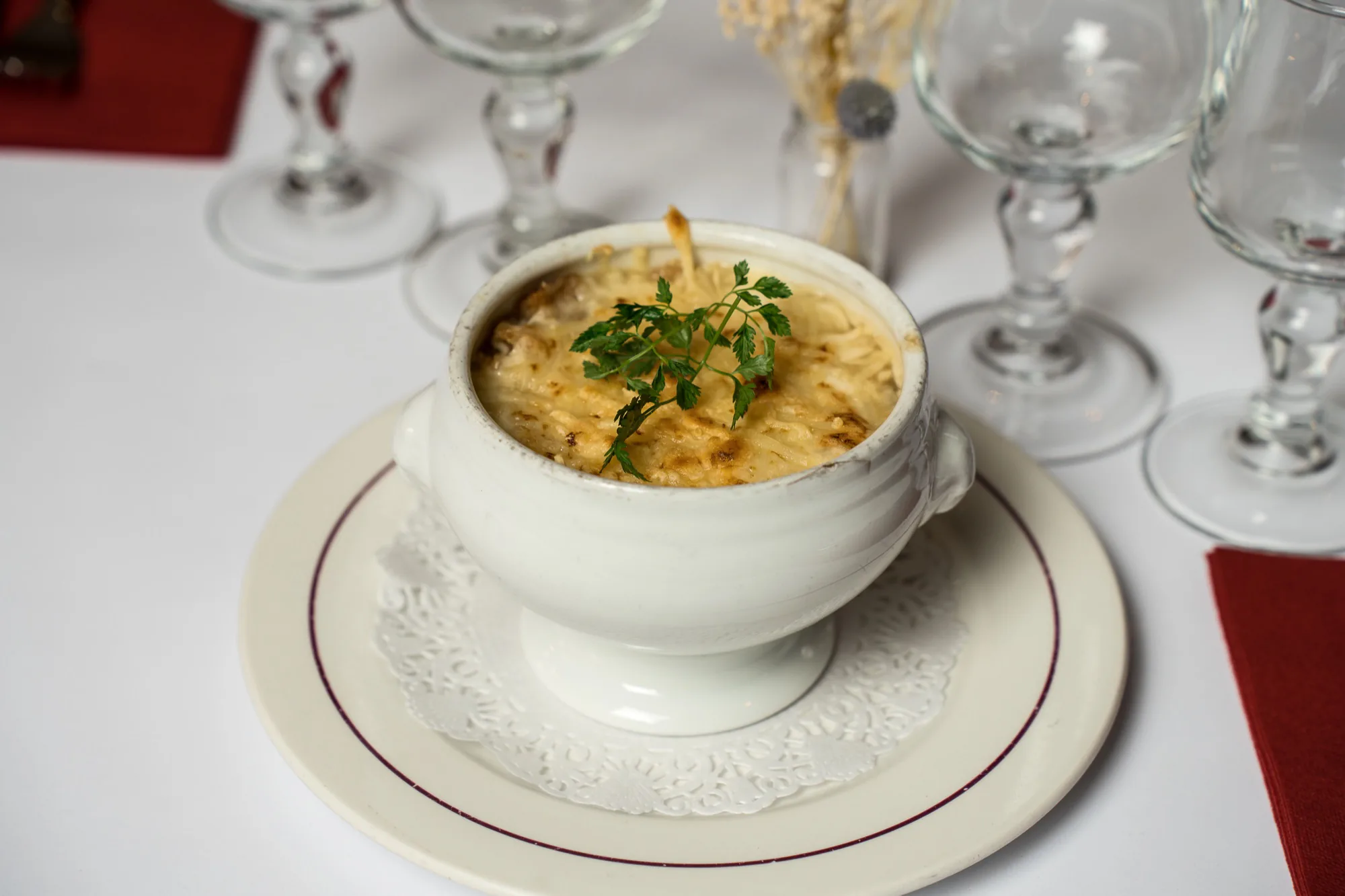
The bouchon's history is read first on the plate. Each speciality is an inheritance from the workers' table and the mères: nothing is wasted, everything is transformed. Here are the three families of dishes that make up a real bouchon's repertoire.
The décor and codes of the bouchon
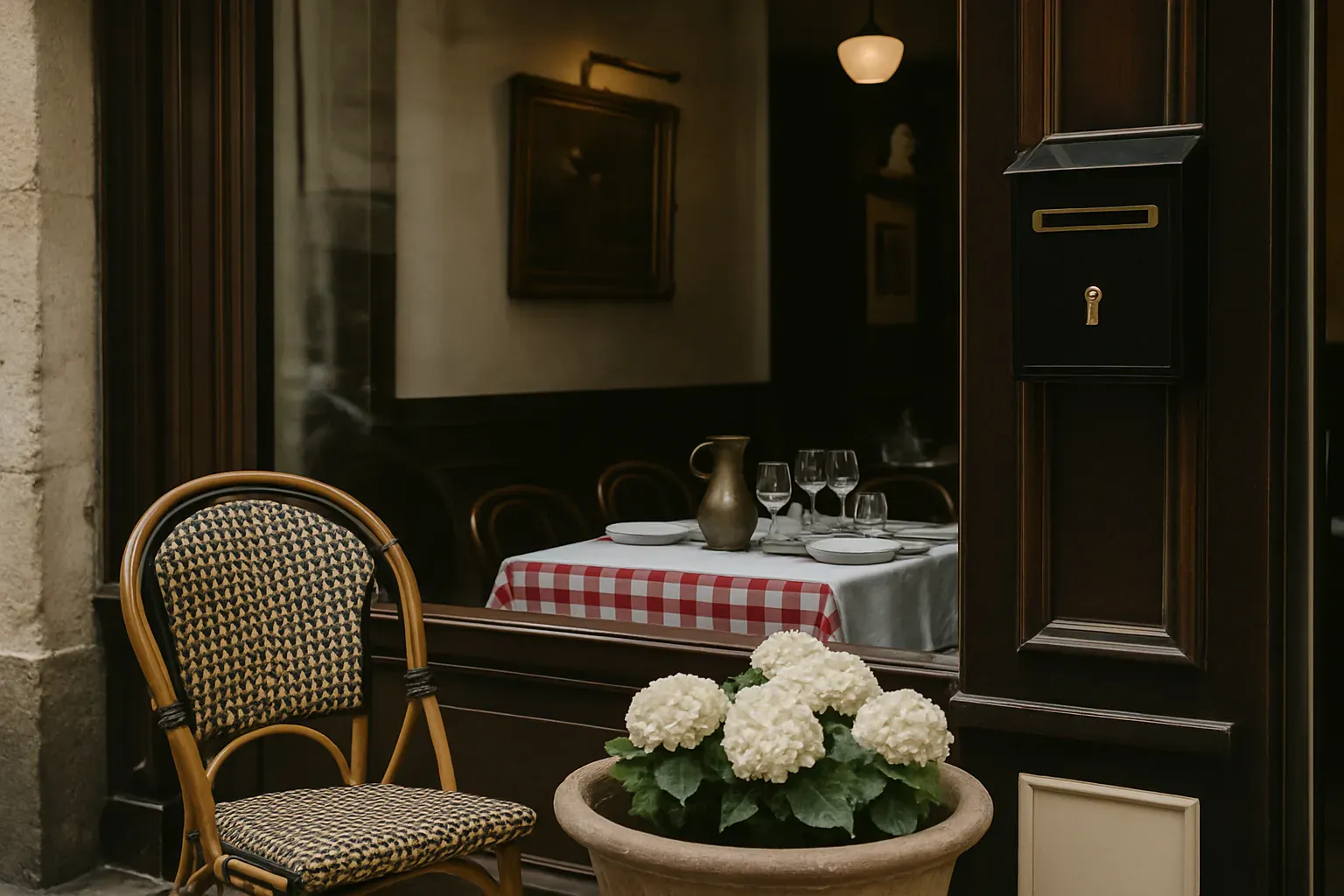
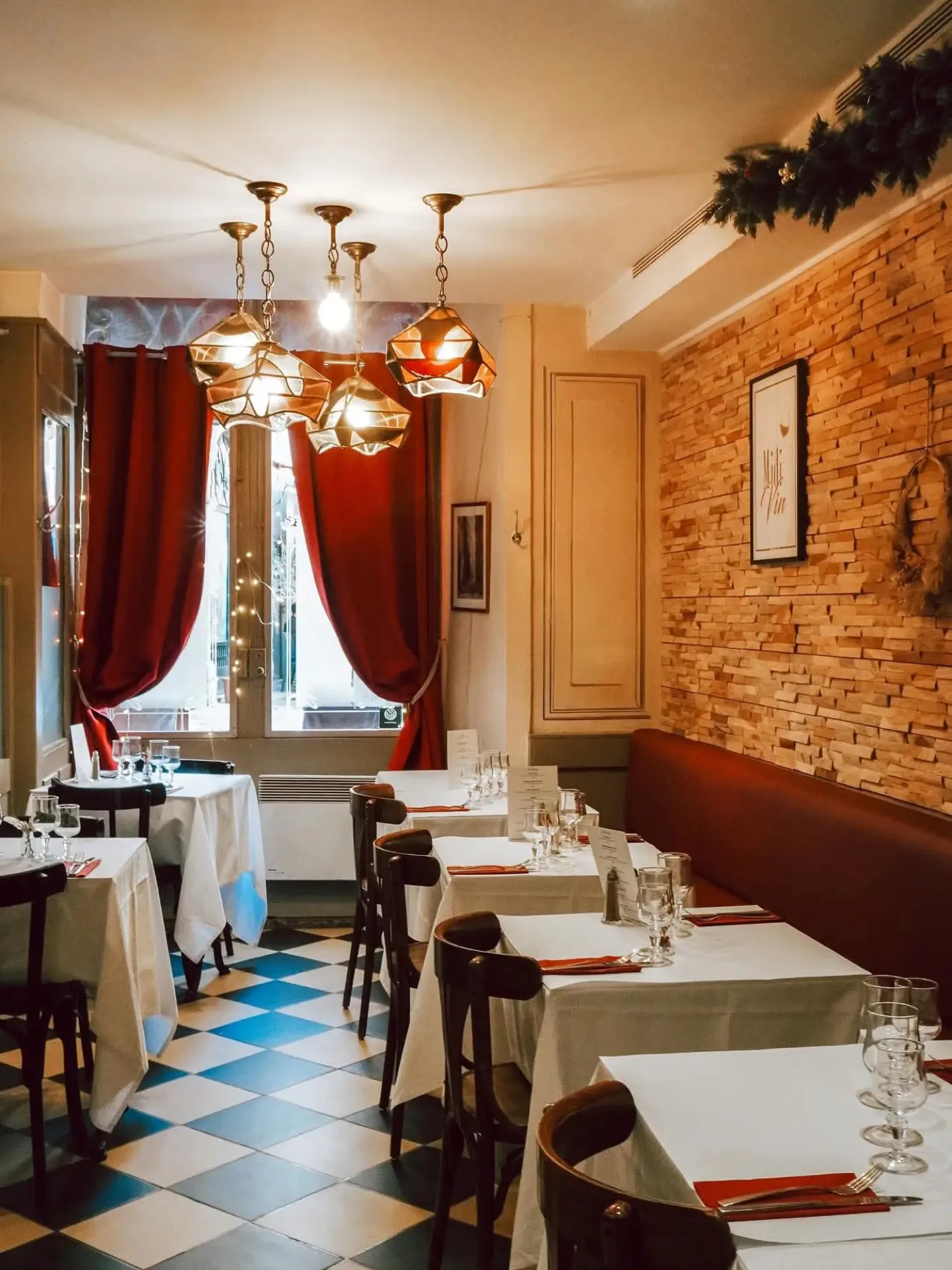
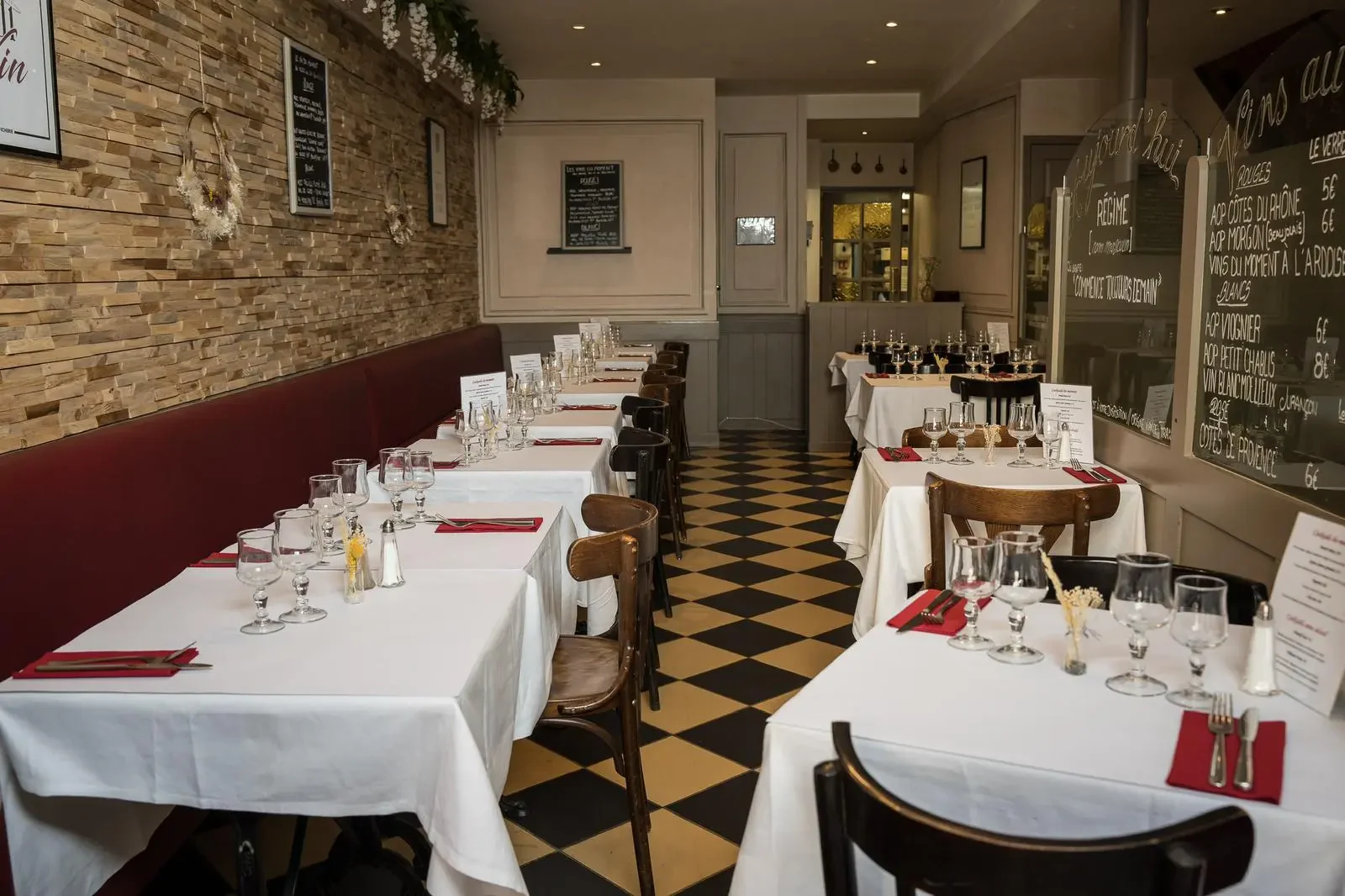
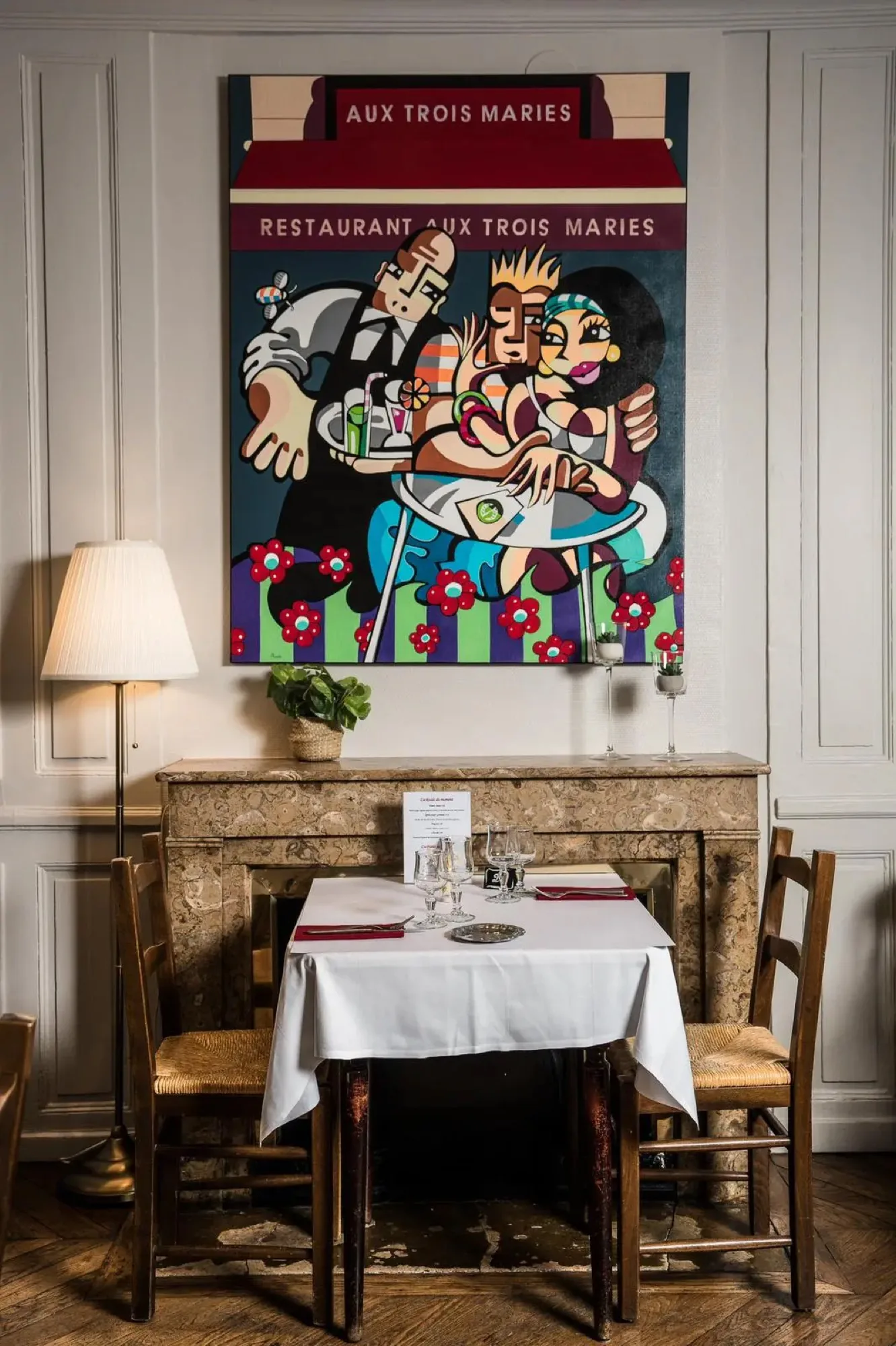
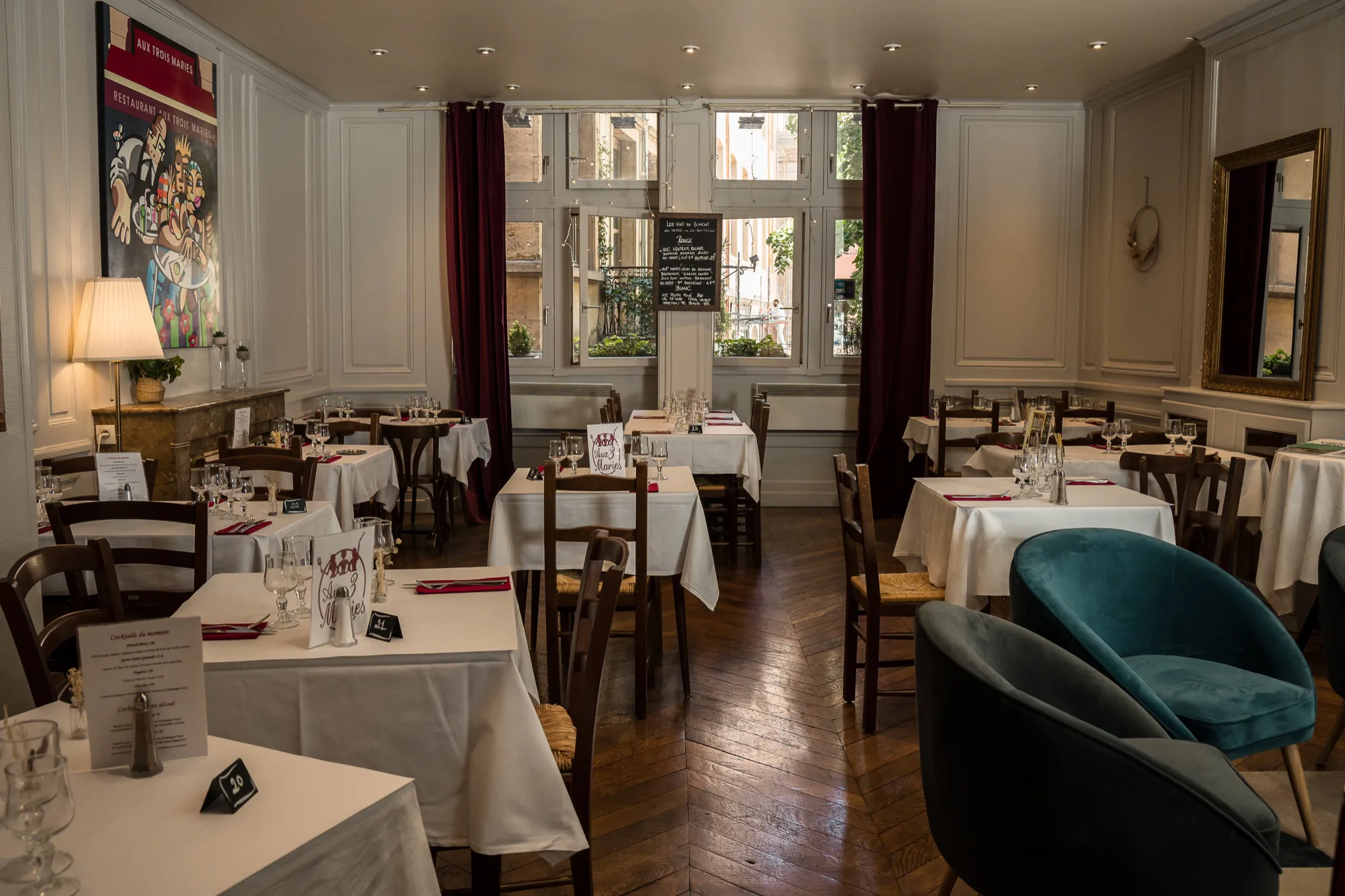
A bouchon is known by its décor, still faithful to its working roots. Small-checked or white linen, a zinc counter, closely set tables, walls covered in posters, naïve paintings and faded photos: nothing luxurious, everything warm. Atmosphere over display.
Certain objects are identity markers. The pot lyonnais, that thick 46 cl bottle with a reinforced base, for the house wine. The daily board, chalked and changing with the deliveries. Tea towels for napkins in the most traditional houses.
Finally the codes of welcome, the least visible and most precious. The owner moving between tables, on first-name terms with regulars, advising without a menu, telling the story of a dish. A generous, familiar service — never stiff. That conviviality is why you aren't merely served in a bouchon: you're received.
The 'Les Bouchons Lyonnais' label
Lyon's tourist success had a downside: the spread of addresses borrowing the name 'bouchon' without its cooking or spirit. To protect the tradition, an association of restaurateurs created an official label in 2012, marked by a Guignol puppet in the window.
The label sets a demanding charter: home cooking, a grounding in the Lyonnaise repertoire, identified quality produce, a décor and atmosphere true to the bouchon. Each labelled house is visited and checked — it's about perpetuating a way of cooking and welcoming, not just serving an andouillette.
Beware, though: not every good table carries it, and its absence doesn't mean a lack of authenticity. Many old houses, sure of their name, never applied. The label is a useful marker, especially for visitors; but nothing replaces what you see on the plate, what neighbouring tables order, and the visible care of a kitchen that takes its time.
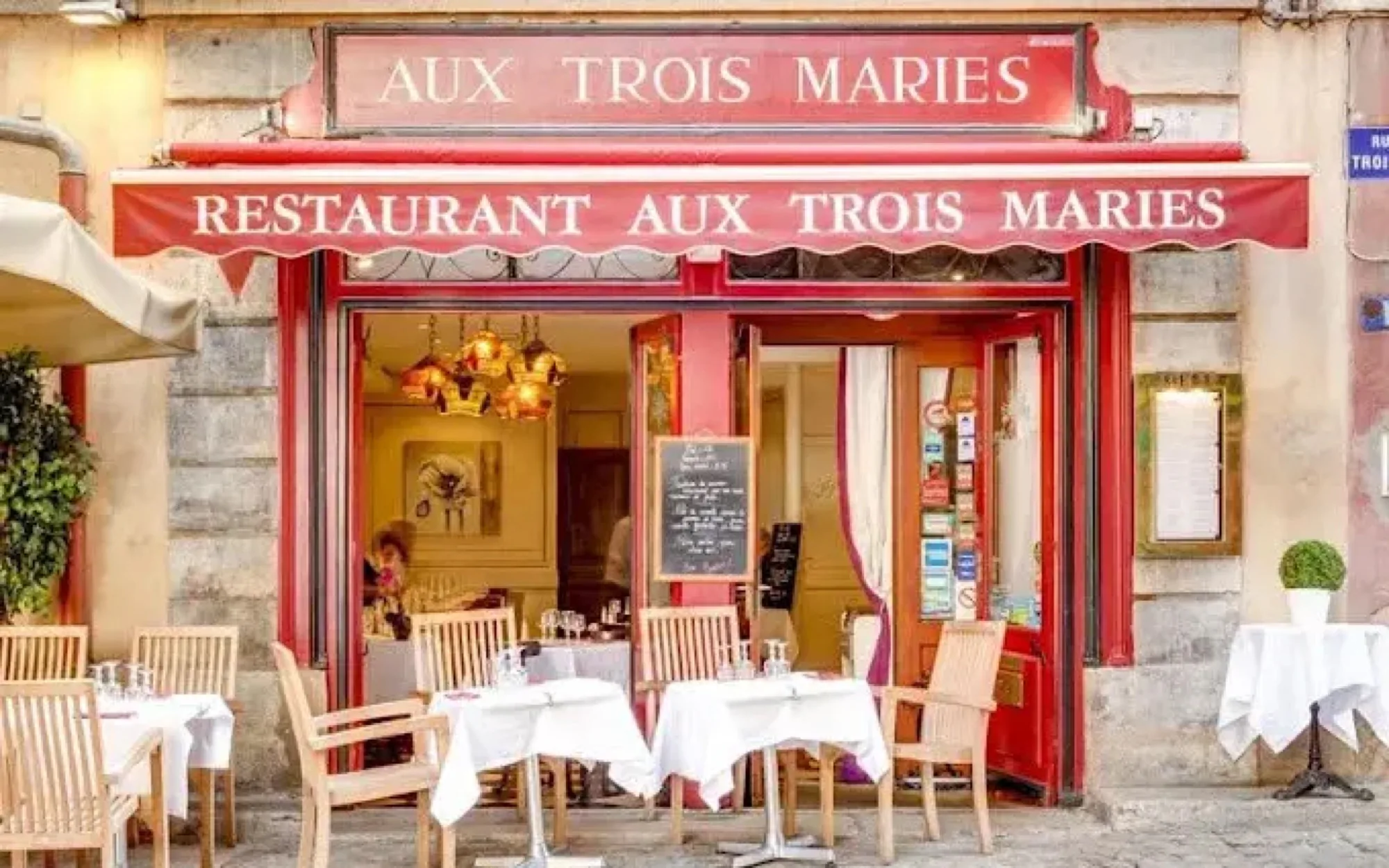
Aux Trois Maries, a living witness to this history
Our house carries this history in its name and its walls. Aux Trois Maries is one of the oldest bouchons in Lyon, born in the middle of the last century where the 'café des primeurs' once stood, facing the Saône quay market. The street itself owes its name to a 17th-century sign honouring the three Marys of the Gospel: Marie-Salomé, Marie-Jacobée and Marie-Madeleine.
The place has crossed the century and many hands. Taken over after the war by the famous Tante Paulette, then by the Bolomier, Monnet and Fournier families who gave it its standing, it was also, they say, a meeting point where Éluard and Aragon gathered on place de la Baleine. Since 2012 Clémentine Roure has held the reins, in the same convivial, more contemporary bistro spirit.
The bouchon today: tradition and modernity
The bouchon is no museum piece. To last, it evolves — and the best houses grasped this long ago. They keep the repertoire and the codes but open up to today's expectations: produce sourced from named local suppliers, honest seasonality, lighter cooking when needed without ever betraying flavour.
The clearest opening is on diets. Long thought reserved for lovers of charcuterie and offal, the bouchon now offers vegetarian, vegan and gluten-free options — a butternut velouté, a seasonal mushroom risotto that also comes in a vegan version without cheese. Cervelle de canut, that herbed fresh cheese, is itself a naturally vegetarian Lyon speciality.
The challenge is balance: welcoming Vieux-Lyon's many visitors without slipping into the fixed menu and reheated cooking. The houses that hold this course — short menu, genuinely changing daily dishes, sincere welcome — keep the tradition alive rather than putting it in a window. That is the bet we hold on rue des Trois-Maries.
Passing on the heritage
The bouchon's history isn't written in the past tense. It continues every service, in the cook who mounts a homardine sauce as it was done a century ago, in a quenelle that truly puffs, in a jug of wine shared between strangers made table-neighbours for a meal.
Passing it on is first a matter of cooking: keeping the recipes, training the young, refusing the industrial shortcut. It's also a matter of welcome: perpetuating the conviviality that, from the canuts' mâchon to today's tables, makes a bouchon like no other restaurant. Heritage lives not in walls but in the hands that carry it.
The best way to understand the history of Lyon's bouchons, in the end, is to sit down in one. To taste the charcuterie and the quenelle, to feel a humming room, to meet the eye of an owner who loves the work. That's where two centuries of history are given to savour.
Frequently asked
The history of Lyon's bouchons: your questions
What are the origins of Lyon's bouchons?
Bouchons emerged in 19th-century Lyon, in the wake of the canuts, the silk workers. Their cooking comes from the mâchon, an early-morning snack of charcuterie and hearty dishes. The mères lyonnaises, around 1900, turned it into a true gastronomy.
Where does the word 'bouchon' come from?
Two origins coexist. The most common points to the bundle of branches, the 'bousche', that medieval inns hung at their door to show wine was served. The other comes from 'bouchonner' — rubbing down horses at coaching stops. It has no link to a bottle cork.
Who were the mères lyonnaises?
They were cooks, often former employees of bourgeois families, who opened their own tables around 1900. La Mère Brazier, la Mère Fillioux and la Mère Guy set the codes of bouchon cooking and raised Lyon to the rank of a gastronomic capital.
What is the Lyonnaise mâchon?
The mâchon is a hearty early-morning snack once eaten by the canuts, built on charcuterie, offal and a jug of local wine. It is the founding ritual of bouchon cuisine: filling, honest and convivial.
How do you recognise a real bouchon?
By a short menu focused on local specialities, a tight, warm room, identified home-made produce and a familiar welcome. The 'Les Bouchons Lyonnais' label is a useful marker, but the plate and the atmosphere remain the best judges.
What is the 'Les Bouchons Lyonnais' label?
Created in 2012 by an association of restaurateurs, it protects authenticity against tourist imitations. It requires home cooking, a Lyonnaise repertoire, quality produce and a true bouchon spirit. Not every good house carries it, however.
How old is Aux Trois Maries?
Aux Trois Maries is one of the oldest bouchons in Lyon, born in the middle of the last century on the site of the former 'café des primeurs', on rue des Trois-Maries in Vieux-Lyon. Taken over by Tante Paulette after the war, then by several families, it has been run since 2012 by Clémentine Roure.
Explore the house
Also worth reading and visiting
Read on
Want to dig deeper into the Lyon table? Find all our articles in our blog cuisine lyonnaise.
Live the history at the table, rue des Trois-Maries
Book online, or call us directly.