
The Journal · Vieux-Lyon guide
What to visit in Vieux-Lyon: our guide to the not-to-be-missed sights
Cathedral and astronomical clock, secret traboules, Fourvière hill, cobbled lanes and Renaissance courtyards: here, quarter by quarter, is everything to see in the city's finest Renaissance ensemble.
In short
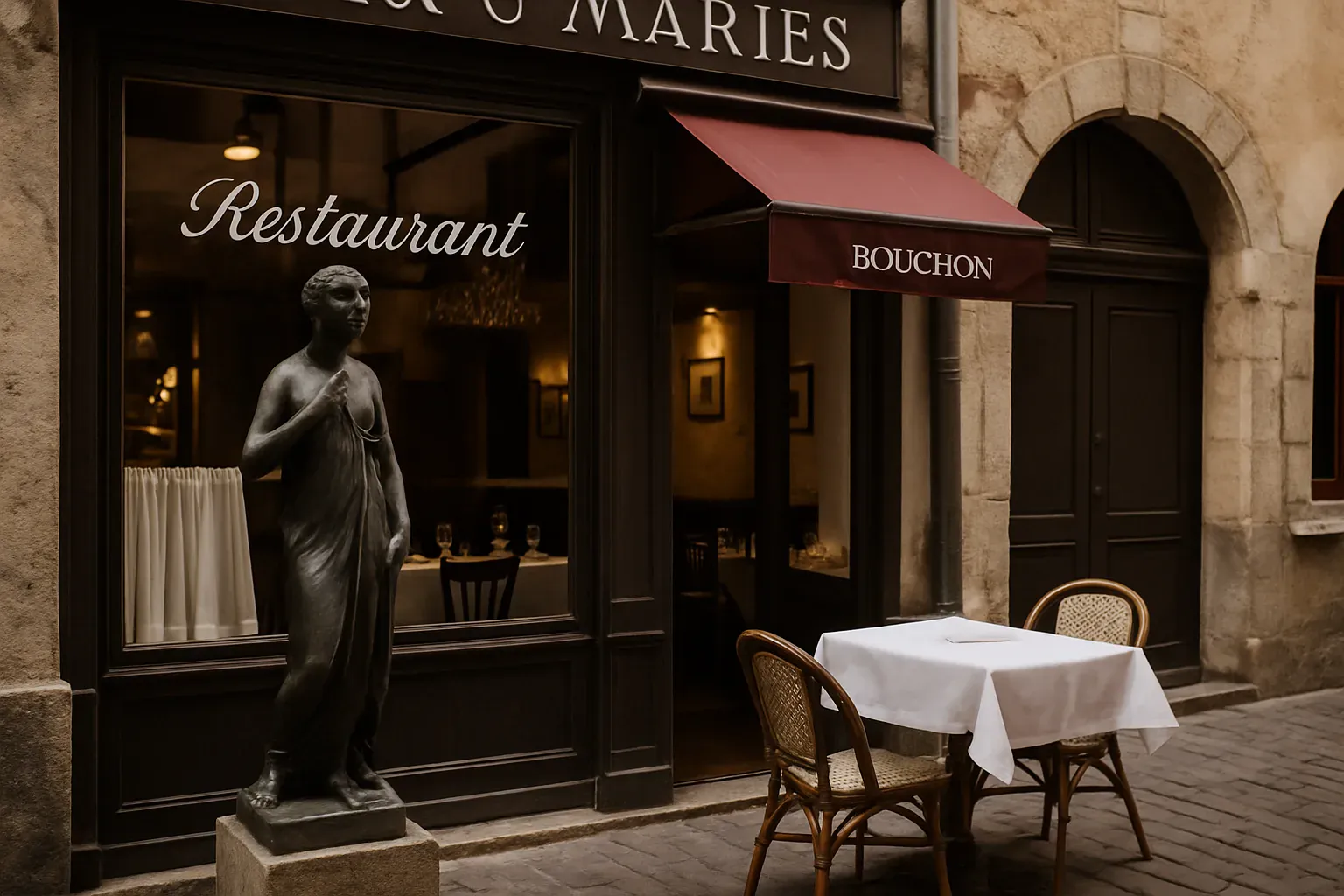
Vieux-Lyon, Europe's largest Renaissance quarter and a UNESCO World Heritage site, is best explored on foot: Saint-Jean cathedral and its astronomical clock, the famous traboules threading through the buildings, Fourvière hill and its panorama, and a maze of lanes, squares and Renaissance courtyards. Allow at least half a day, climb Fourvière by the funicular or on foot, respect the quiet of the traboules, and book a table in a local bouchon — such as Aux Trois Maries, on rue des Trois-Maries — for a food stop between sights.
Contents
What you'll find in this guide
Understanding Vieux-Lyon: three Renaissance quarters
Vieux-Lyon stretches below the Fourvière hill, along the right bank of the Saône. It's one of Europe's largest Renaissance ensembles, a UNESCO World Heritage site since 1998, and it splits into three historic quarters, each with its own character.
Saint-Jean, in the centre, is the beating heart: the cathedral, the pedestrian rue Saint-Jean, the terraces and most of the crowds. Saint-Paul, to the north, is quieter and more residential. Saint-Georges, to the south, is more low-key and almost deserted once you leave the main axis.
Our local tip: don't stay on rue Saint-Jean alone. The finest surprises — an open Renaissance courtyard, a square shaded by a lime tree, a stairway up to Fourvière — are earned a turn or two away. Allow a good half-day to wander, more if you enter the museums.
Saint-Jean cathedral and its astronomical clock
The natural starting point, the Saint-Jean-Baptiste cathedral — the primatiale des Gaules — rises over its square. Built across nearly three centuries, from the 12th to the 15th, it blends a Romanesque apse with a Gothic façade. Entry is free, and the medieval stained glass alone is worth the visit.
Its hidden jewel sits in the transept: a 14th-century astronomical clock, one of the oldest in Europe. At set times, a small automaton stages the Annunciation in a mechanical ballet unchanged in seven hundred years. Check the animation times before you arrive — there are only a few each day.
In front, take time to watch the square: it's where the quarter's pulse beats. Steps away, the lanes close in and calm returns — a very Lyonnaise contrast between stage and wings.
The traboules, Vieux-Lyon's best-kept secret
If you keep one curiosity, make it the traboule. These covered passages cut through the buildings, linking one street to another via private courtyards. The word comes from the Latin trans-ambulare, 'to pass through'. Lyon has several hundred, some forty open to the public in Vieux-Lyon alone.
First used to reach the Saône for water, they later served the Croix-Rousse silk weavers, who carried bolts of silk through them, sheltered from the rain. The most famous, the Longue Traboule, links 54 rue Saint-Jean to 27 rue du Bœuf through four courtyards and four buildings.
A word of courtesy: these passages run through people's homes. Open the door gently, keep your voice down, don't photograph windows and close up behind you. Spot the open traboules by the small round plaque bearing a lion's head — the route's official key.
Avant de vous lancer, consultez notre guide complet pour savoir comment emprunter les traboules en respectant les usages des habitants du quartier.
Climbing Fourvière for the panorama
No visit to Vieux-Lyon is complete without climbing Fourvière, the hill above the quarter. Two ways up: on foot through the Rosaire gardens and their flights of steps, or by the funicular from the Vieux-Lyon metro station, in just a few minutes.
At the top stands the Notre-Dame de Fourvière basilica, a late-19th-century neo-Byzantine building rich in mosaics and gilding. Its terrace offers one of the city's finest panoramas: on a clear day, the view takes in the roofs of Vieux-Lyon, the Presqu'île and even the Alps.
Beside it, the remains of the Roman theatre recall that Lyon was Lugdunum, capital of Roman Gaul. Bring good shoes and water: between the climb, the basilica and the theatres, the hill deserves a full hour or two.
Squares and lanes not to be missed
Vieux-Lyon's charm lies as much in its monuments as in its quiet detours. Place du Change, once Lyon's financial hub, keeps its Loge du Change by Soufflot. Nearby, the montée des Chazeaux — a steep flight of steps — climbs towards Fourvière between old façades.
Look too for place de la Baleine, a small cobbled square shaded by a lime tree, and rue du Bœuf with its carved corner sign and the famous Tour rose, a Renaissance stair-tower tucked in a courtyard. Each street reveals a coat of arms or a mullioned window from the merchant Renaissance.
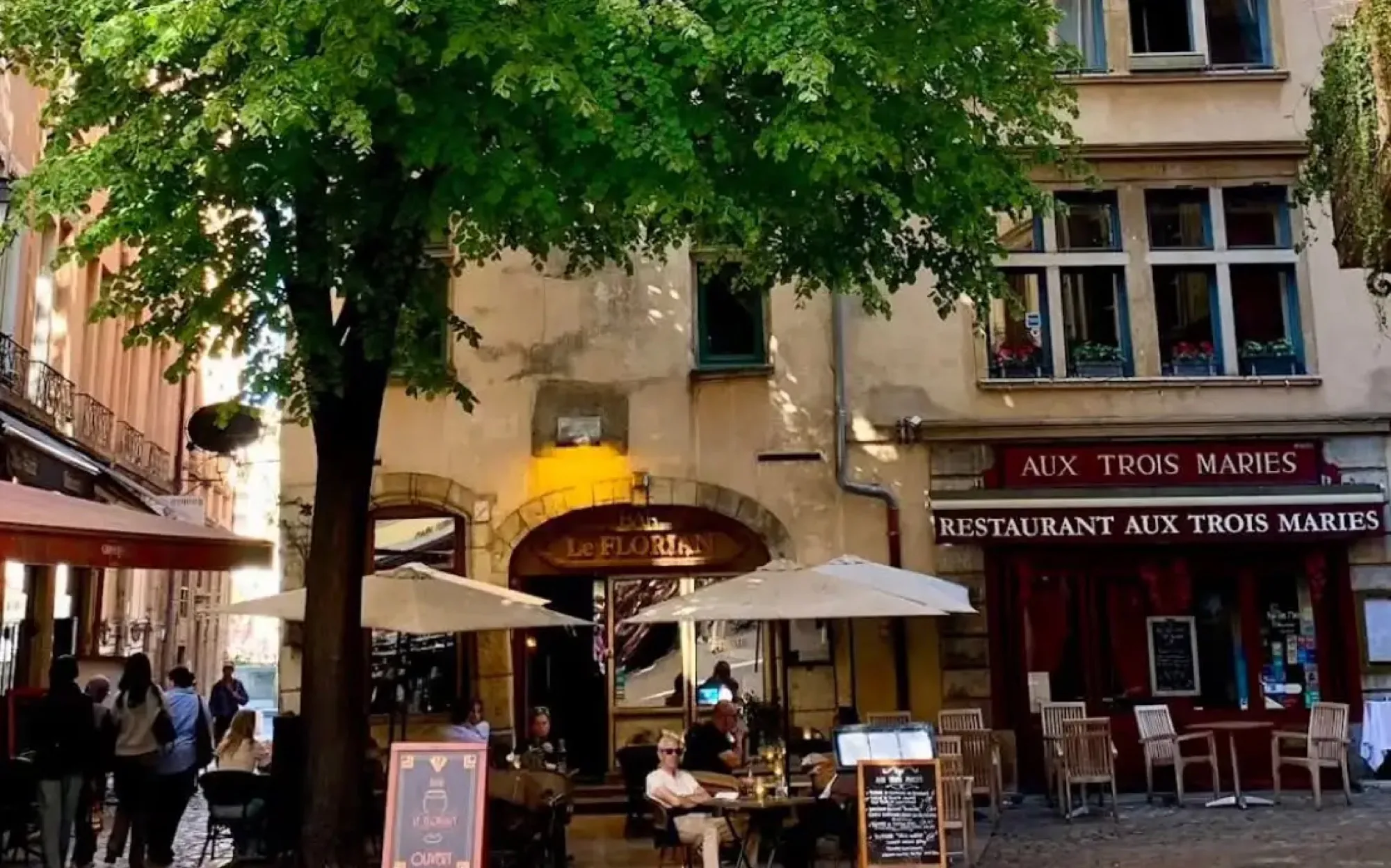
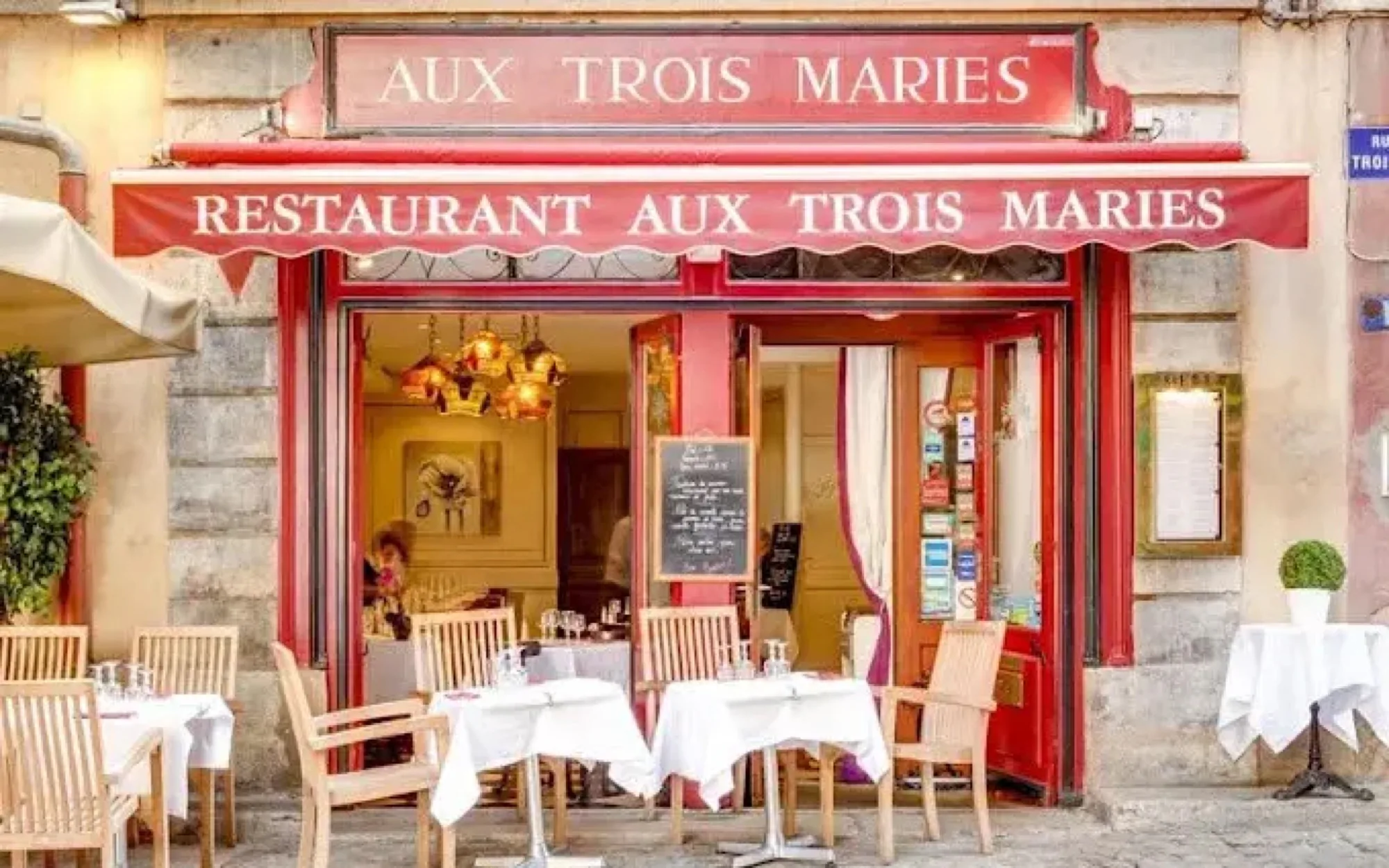
Among these lanes, rue des Trois-Maries — a quiet parallel to rue Saint-Jean — owes its name to a 17th-century sign honouring the three Marys of the Gospel: Marie-Salomé, Marie-Jacobée and Marie-Madeleine. Here our house, Aux Trois Maries, has stood since the middle of the last century, steps from the bustle.
A food stop between sights
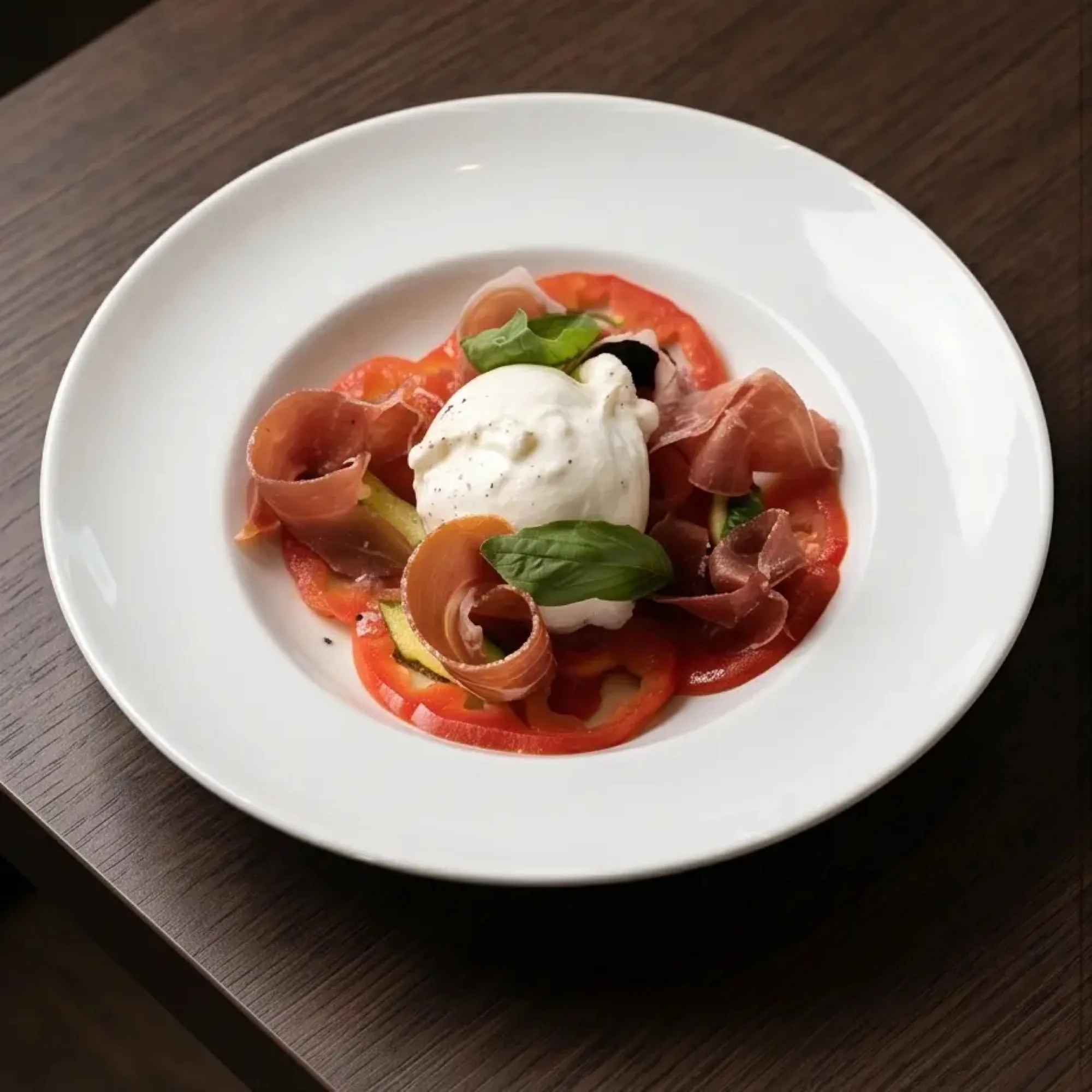
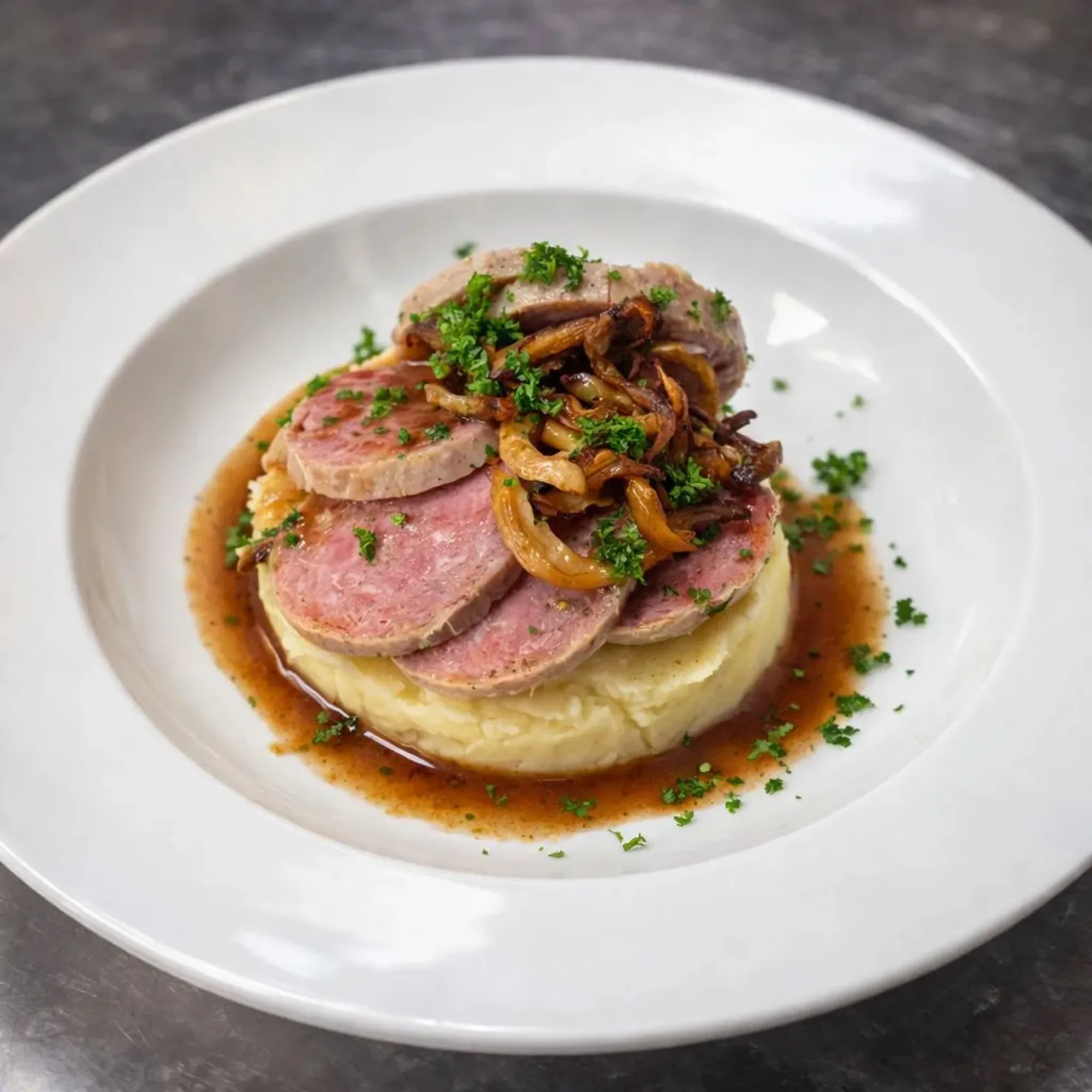
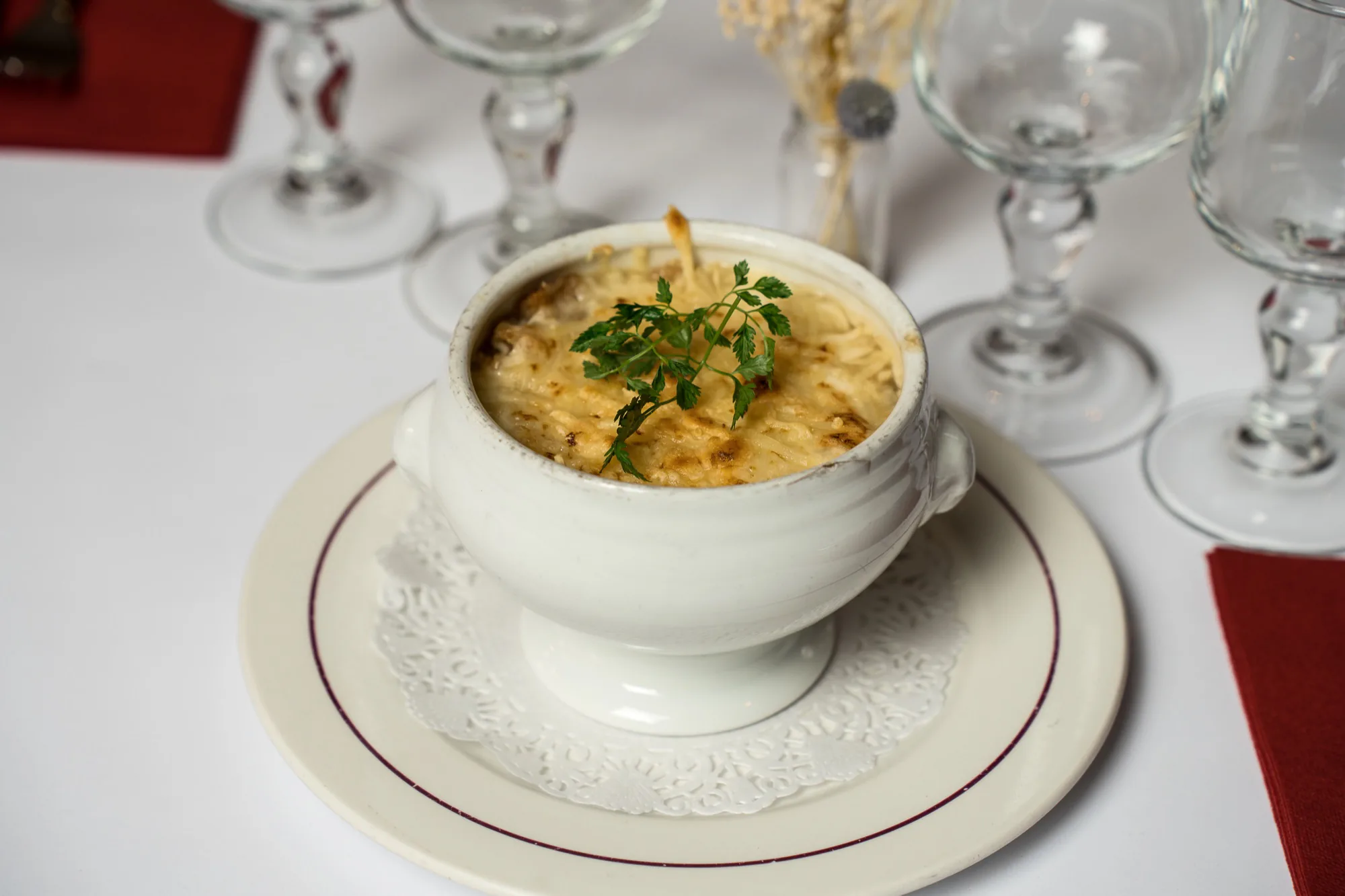
To visit is also to sit down. Vieux-Lyon is the birthplace of the bouchon, the convivial Lyonnaise table where you regain your strength without fuss. Here, without leaving the quarter, are three tasty moments to slot into your route.
A terrace along the lanes
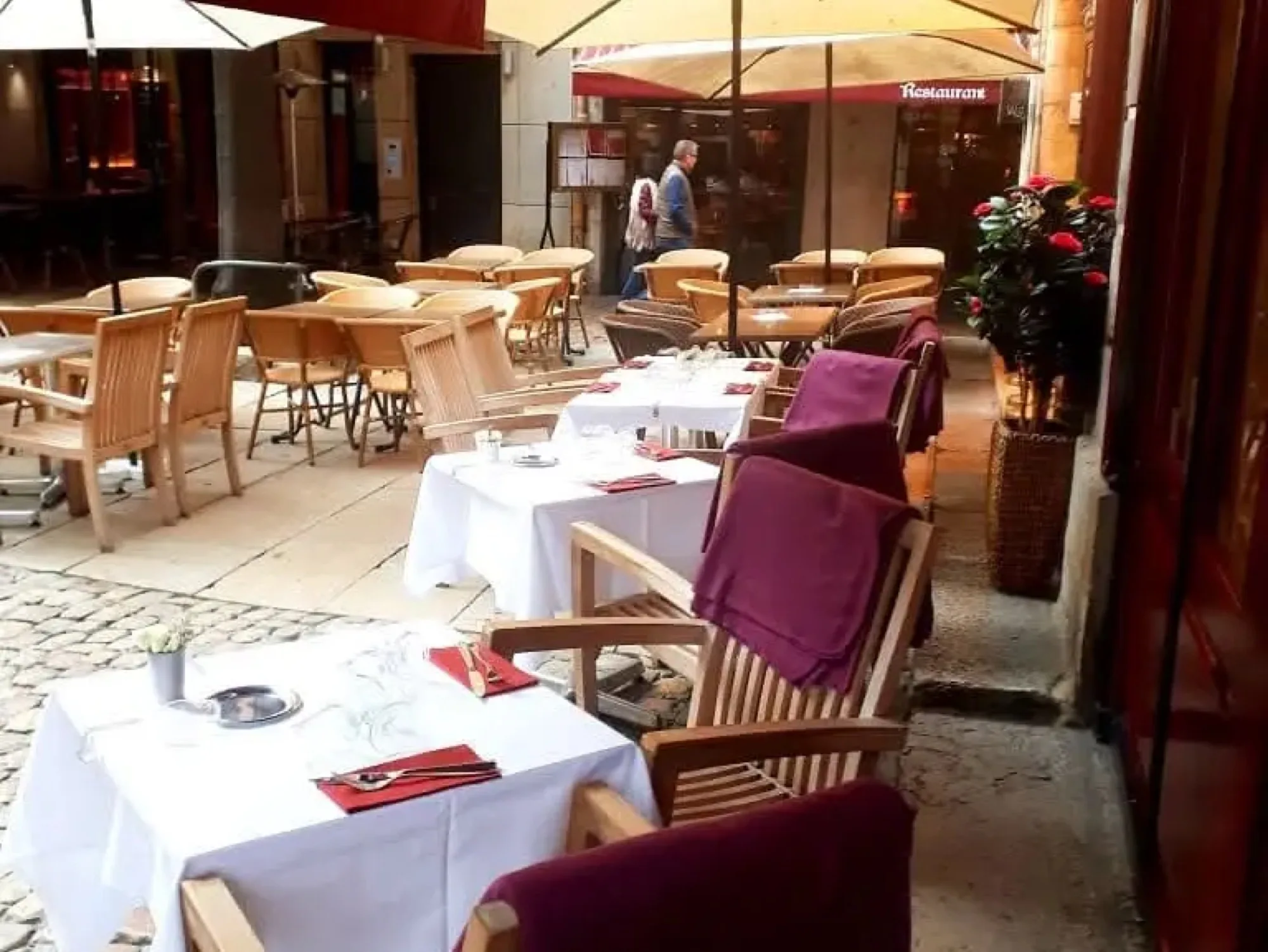
In fine weather, Vieux-Lyon lives outdoors. Terraces spread over the cobbles, but not all are equal: the best tuck into small squares away from the flow of rue Saint-Jean, cooler and calmer. Place de la Baleine, steps from rue des Trois-Maries, is one of those precious spots, where you settle in at sunset without the roar of the main street.
Prefer a terrace facing a pedestrian lane, away from traffic, and check it's shaded from the midday sun. White linen, a burgundy napkin, a shared jug of wine: that's how, between two sights, the quarter is best savoured.
Museums, courtyards and curiosities
Vieux-Lyon isn't only for wandering: several museums extend the visit when it rains or when you want to dig into history. The Gadagne museum, in a splendid Renaissance mansion, houses both the history museum of Lyon and the museum of puppet arts — a chance to meet Guignol, born in Lyon in the early 19th century.
Lovers of the unusual shouldn't miss the Miniature and Cinema museum on rue Saint-Jean, with its detailed sets and film props. And to grasp the city from above, the Lugdunum museum, near the Roman theatres, tells of Roman Lyon through mosaics and everyday objects.
Between museums, push open the doors of the courtyards: the Tour rose, those of rue du Bœuf, the Italianate galleries of the quarter. These light wells, spiral stairs and stacked loggias are Vieux-Lyon's true architectural treasure — and entry is often free.
When to come and how to plan your day
Vieux-Lyon can be visited year-round, but each season has its colour. Spring and autumn bring the softest light on the golden stone and the gentlest crowds. Summer stirs the terraces and the Nuits de Fourvière but draws the masses. In December, the Fête des Lumières transforms the city, while winter suits museums and long meals.
For the ideal day, start early with the cathedral and the still-empty traboules, climb Fourvière late morning for the panorama, then come down for lunch. The afternoon suits museums, courtyards and window-shopping, before a last drink on a terrace at sunset.
If you can, avoid long weekends and the height of summer for calm. On weekdays out of school holidays, Vieux-Lyon regains a village feel where locals mingle with visitors — that's when it's at its best.
Access and practical tips
Reaching Vieux-Lyon couldn't be simpler. The Vieux-Lyon metro station, on line D, serves the heart of the quarter and links it to the rest of the city in minutes. It's also where the funicular up to Fourvière departs. By car, park on the Presqu'île or on the edge of town: the lanes are pedestrian and parking is scarce.
The quarter is walked entirely on foot — the only good way to discover it. Wear comfortable shoes: the cobbles and climbs test the calves. A water bottle, a hat in summer and something to cover your shoulders in the churches complete the walker's kit.
Finally, book your highlights: a table for lunch, especially at weekends, and any guided traboule tours, which are popular. A little planning spares you wandering from door to door at peak time, and leaves all the room for strolling.
End the visit at the table, rue des Trois-Maries
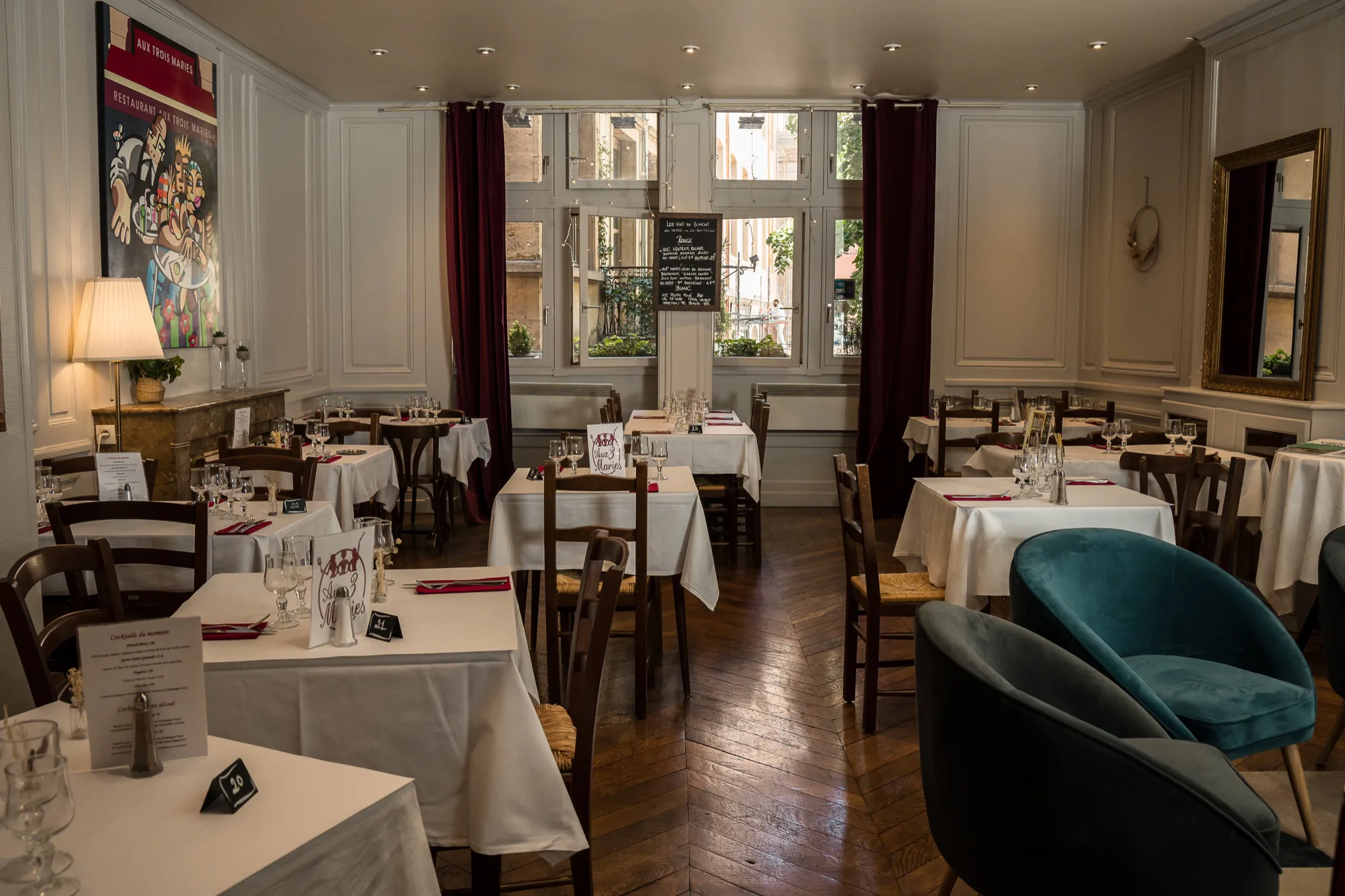
A fine day in Vieux-Lyon calls for a table to match. Steps from the cathedral, on the street that gives it its name, Aux Trois Maries has kept the bouchon tradition alive since the middle of the last century, where the 'café des primeurs' once stood, facing the Saône quay market.
It serves generous local cooking, without folklore but with the care of a house that lasts: the ideal way to close a visit, or to gather strength for the next. Book your table, let the walk's fatigue dissolve into a slow-cooked dish, and set off again light of step.
Frequently asked
What to see in Vieux-Lyon: your questions
What must you see in Vieux-Lyon?
Saint-Jean cathedral and its astronomical clock, the traboules threading through the buildings, Fourvière hill and its panorama, place du Change, rue du Bœuf with its Tour rose, and the Gadagne museum. These are the essentials of a first visit.
How long do you need to visit Vieux-Lyon?
Allow at least half a day to wander between the cathedral, the traboules and the lanes, and a full day if you climb Fourvière and visit a museum or two. The quarter is explored entirely on foot.
What is a traboule and can you visit them?
A traboule is a covered passage cutting through a building to link two streets via courtyards. Some forty are open to the public in Vieux-Lyon, marked by a round plaque with a lion's head. You visit them while respecting the residents' quiet.
How do you climb Fourvière from Vieux-Lyon?
Two options: on foot through the Rosaire gardens, or by the funicular from the Vieux-Lyon metro station. At the top await the Notre-Dame de Fourvière basilica, the Roman theatres and a panorama over the whole city.
How do you get to Vieux-Lyon?
The easiest way is metro line D, Vieux-Lyon station, in the heart of the quarter. As the lanes are pedestrian, park on the Presqu'île or the edge of town rather than looking for a spot on site.
When is the best time to visit Vieux-Lyon?
Spring and autumn offer the finest light and the fewest people. Summer stirs the terraces but draws crowds, and December brings the magic of the Fête des Lumières. On weekdays out of holidays, the quarter is calmest.
Where can you eat in Vieux-Lyon after the visit?
In a local bouchon, to taste Lyonnaise cooking on the spot. Aux Trois Maries, at 1 rue des Trois-Maries, is one of the oldest tables in Vieux-Lyon, steps from Saint-Jean cathedral.
Explore the house
Also worth reading and visiting
Read on
Want to dig deeper into the Lyon table? Find all our articles in our blog cuisine lyonnaise.
Your table is waiting on rue des Trois-Maries
Book online, or call us directly.