
The Journal · Lyonnaise craft
How pike quenelle is made: a guide to a Lyonnaise classic
Finely ground pike, a panade to bind it, a gentle poaching, then a bake in its sauce where it puffs and browns. Here, step by step, is how Lyon's airiest speciality comes to life.
In short
The pike quenelle is a fine forcemeat, born in 19th-century Lyon, made from ground and sieved pike flesh bound with a panade (a base of flour, milk and butter, or choux pastry), enriched with butter and eggs, then seasoned. It is shaped with spoons, a piping bag or by hand, first poached in barely simmering water to firm it, then baked in its sauce — Nantua with crayfish or homardine with lobster — where it doubles in volume and browns. This double cooking gives the famous 'soufflée' quenelle, soft inside and puffed on top, served with pilaf rice.
Contents
What this guide covers
The pike quenelle, a Lyonnaise invention
Some dishes sum up a whole city. The pike quenelle is one: say 'quenelle' anywhere in France and Lyon comes to mind. Yet the word is older than its noble form — since the Middle Ages it meant a simple bound dumpling of minced meat, cooked in broth, a thrifty way to use up leftovers across Europe.
It was in 19th-century Lyon that the quenelle rose in rank. The city sits amid rich waters — the Saône, the Rhône and above all the nearby Dombes ponds, full of pike. Around the 1830s, a Lyon pastry cook is said to have applied pastry techniques — the panade, choux — to this fish, turning a modest dumpling into a light, almost soufflé preparation. The pike quenelle was born.
From the canuts' table to the kitchens of the mères lyonnaises, it climbed every rung of local gastronomy, served in Nantua sauce and sold as a delicatessen speciality. No self-respecting bouchon does without it: it links popular cooking to Lyon's high tradition.
What is a real pike quenelle?
Before making one, you must know the goal. A real pike quenelle is no dense dumpling: it is a fine forcemeat, almost a baked mousse, firm under the fork yet melting in the mouth. Its texture must be airy — never rubbery. That is the whole art of the dish.
It differs from the plain 'quenelle nature', made of semolina or flour without fish, denser and cheaper. The pike quenelle draws its flavour from the fish and its lightness from the panade and eggs. It is a cook's preparation, not an industrial product.
You recognise it by its shape: a long oval, made between two spoons or with a piping bag, from small aperitif size to a large individual quenelle that puffs to fill its dish. 'Soufflée' names exactly this rise in the oven: a quenelle that does not puff has failed.
Pike, a fish of character
It all starts with the fish. Pike is a freshwater predator with white, lean, firm flesh and an honest, faintly iodised taste. Long abundant in the Dombes and the region's rivers, it is the historic fish of the quenelle, giving it both its name and its character.
Its flesh, though, hides fine Y-shaped bones almost impossible to remove one by one. This shaped the whole recipe: since pike can't be served as a clean fillet, it is ground at length then pushed through a fine sieve, so the bones vanish and only a silky pulp remains. The constraint created the technique.
As pike is lean, the recipe makes up for it with the butter and cream of the panade — the added fat brings the softness. Some houses now replace part of the pike with pike-perch or another white fish, easier to source, but the authentic pike quenelle keeps this fish to the fore.
The panade, secret of an airy texture
If pike gives the flavour, the panade gives the texture. It is a binding paste, cousin to béchamel and choux, that carries the forcemeat. Its role is twofold: to bind the fish so it holds, and to trap the air and water that will make the quenelle puff.
Two schools exist. One makes a flour panade: milk and butter are heated, flour is added at once and the paste dried on the heat, just like choux. The other, richer, starts from a true choux pastry with eggs, for even more lightness. Either way, the base is cooked, smooth and supple.
The key point is cooling: the panade must be fully cold before it meets the fish, or the butter melts, the emulsion breaks and the forcemeat turns greasy. The balance between fish, panade, butter and eggs is everything — too much panade and it's stodgy, too little and it falls apart when cooked.
The ingredients of a proper quenelle
A pike quenelle needs only a few elements, but each plays a precise role. Nothing superfluous: finesse comes from proportion and care, not from a long list.
The pike
The flesh, ground then sieved to remove bones. It gives the taste and the name. A lean, firm freshwater fish, to be worked very fresh.
The panade & butter
Flour, milk and butter — or choux pastry — form the binder. Generous butter offsets the lean fish and brings the softness that melts in the mouth.
Eggs & seasoning
Eggs (often whites and yolks separated) give structure and air. Salt, pepper, nutmeg and sometimes a little cream round off a forcemeat that never masks the pike.
Shaping: spoon, piping bag, hand
Once the forcemeat is smooth, comes the gesture that gives the quenelle its shape. The most traditional method is shaping with two spoons: a portion is passed and smoothed from one spoon to the other, forming that neat three-sided oval. It is a cook's knack that takes practice.
Busy kitchens prefer a piping bag: a long roll of forcemeat is piped, then cut to length — quick and even, ideal for small quenelles. Some houses roll the forcemeat by hand on a floured surface for large individual pieces.
Whatever the method, two rules hold: the forcemeat must be cold and firm, or it sticks and loses shape; and you allow for the puffing to come. A quenelle shaped too big may overflow, since it will double or triple in the oven. So you shape 'small', thinking of the result.
Poaching, the step that brings softness
Poaching is the first of two cookings, and the trickiest. The raw quenelles go into barely simmering salted water — never a rolling boil, which would burst them. In the heat the forcemeat firms, the proteins set, and the quenelle takes shape while already starting to swell.
A few minutes suffice, until the quenelle rises and turns in the water. It is lifted out with a slotted spoon, drained and left to cool. Many recipes stop here for storage: once poached and cooled, quenelles keep in the fridge and wait for the final assembly — as Lyon's delicatessens do, selling them ready to gratin.
This pre-cooking is vital, for it sets the forcemeat before the dry heat of the oven. An unpoached quenelle would fall apart in the sauce. It is also the moment of truth: if poaching goes wrong, the forcemeat balance or the water temperature were off.
The sauce, soul of the quenelle: Nantua and homardine
A quenelle without sauce is a sentence without a verb. The sauce is no side dish: it cooks with the quenelle, feeds and flavours it, and is partly absorbed as the quenelle puffs. The historic match is Nantua sauce, creamy and deep pink, built from crayfish butter, tomato and cream.
Beside Nantua, homardine sauce reigns: made from lobster shells, it offers the same iodised family of flavours, a touch bolder. This is what the best bouchons serve, often with pilaf rice that soaks up the sauce and balances the richness.
Other versions exist — white wine, ceps for a plain quenelle, a simple beurre blanc — but the spirit is the same: a smooth, generous sauce that envelops the quenelle. Which is why it is served as a main, brimming with sauce, never dry.
The oven gratin: when the quenelle puffs
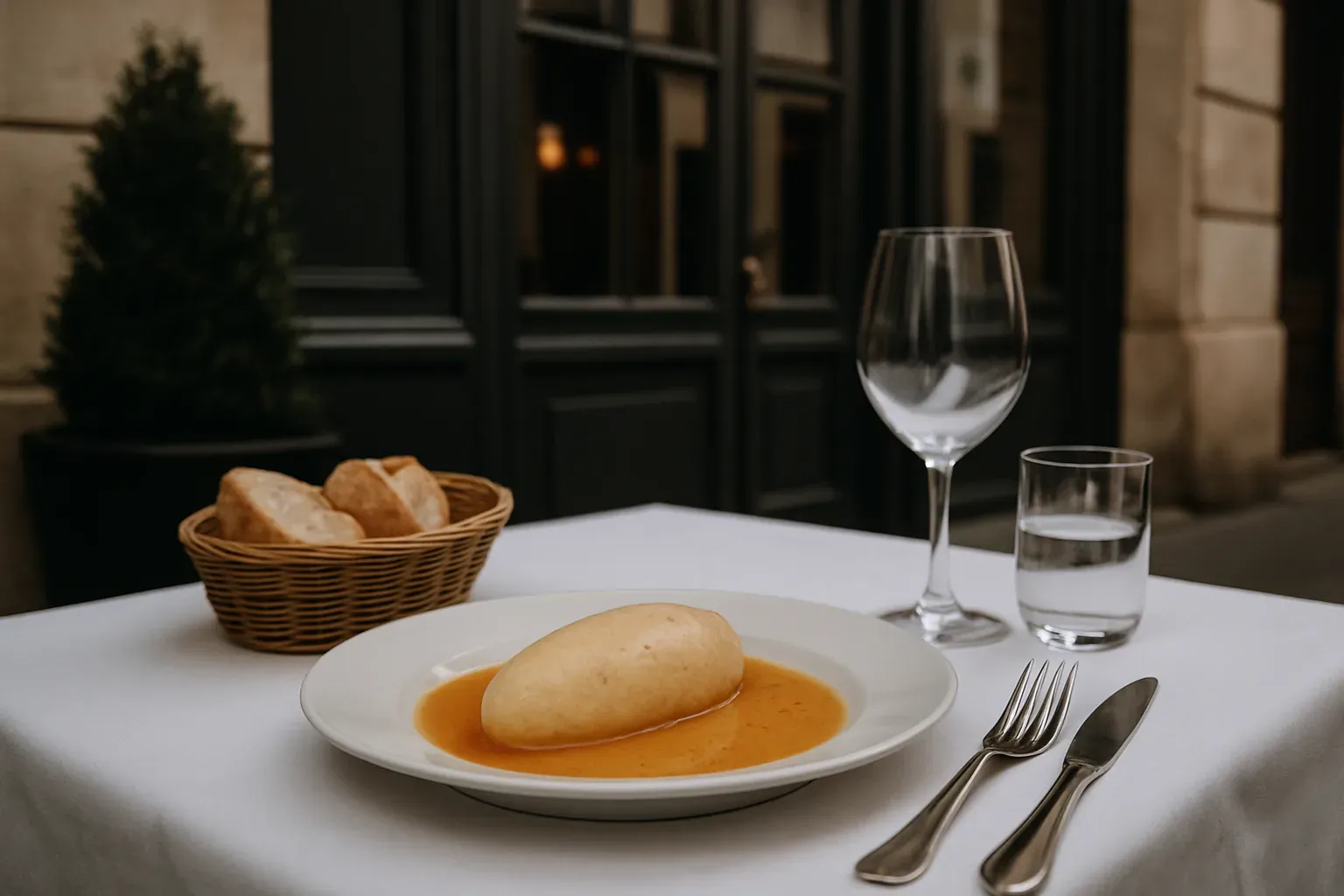
Then comes the second, most spectacular cooking. The poached quenelles are set in a dish, generously napped with hot sauce, and baked. In the heat, the trapped air and water expand: the quenelle swells, lifts and doubles — sometimes triples — until it fills the dish in a golden, supple mass.
This rise is what 'soufflée' means. It needs room: space is always left around each quenelle, for crowded together they would not puff. The oven must be hot and steady, the sauce plentiful so the surface browns without drying. Served piping hot, the result is a quenelle as light as a cloud, soaked in sauce, barely gratinéed on top.
The Maison Bonhomme soufflé quenelle, our signature
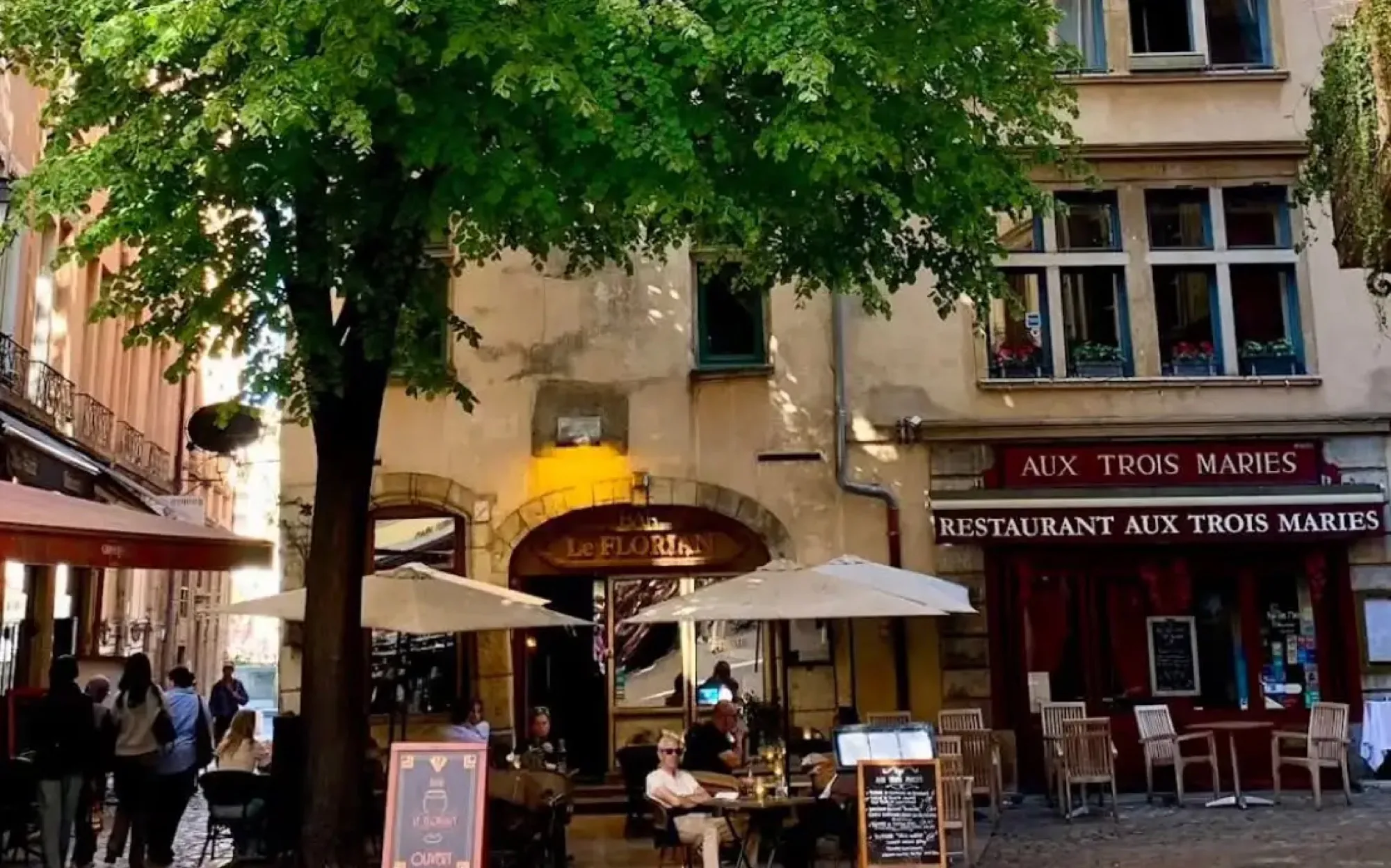
At Aux Trois Maries, the quenelle is no ordinary dish: it is a house signature. We serve a Maison Bonhomme soufflé pike quenelle, a homardine sauce and pilaf rice — the classic trio of the great Lyonnaise tables. Maison Bonhomme is one of the city's renowned quenelle workshops, a craft we chose over the industrial shortcut.
This choice sums up our way of running a bouchon: keep the gesture and the produce true, serve a quenelle that really puffs in the oven, napped with its sauce, as it was done a century ago on place de la Baleine. A dish that takes time and care — and rewards both the cook and the guest who comes to enjoy it in the heart of Vieux-Lyon.
Our tips for a successful homemade quenelle
Making pike quenelle at home is a fine challenge for a patient cook. First rule: freshness and cold — very fresh fish, a fully cooled panade, a forcemeat worked chilled. Temperature holds the emulsion; the moment the butter warms and melts into the mix, the texture breaks.
Second: don't overwork the forcemeat. Mix just until smooth, no more, or it turns rubbery. When poaching, watch the water: it should shiver, never boil. Test a single quenelle before poaching the whole batch — if it falls apart, adjust the panade / egg balance before going on.
Finally, care for the sauce and the gratin. A thin sauce leaves the quenelle dry; a generous one makes it puff and keeps it soft. Leave space around each piece, and serve at once: a soufflé quenelle sinks as it cools. And if it all feels daunting, taste it first where it's a craft — often the best way to learn what you're aiming for.
Frequently asked
Pike quenelle: your questions
What is pike quenelle made of?
Ground and sieved pike flesh, a panade (a base of flour, milk and butter, or choux pastry), butter, eggs and seasoning — salt, pepper, nutmeg. The fish gives the taste, the panade and eggs the lightness, the butter the softness.
Why is the pike ground and sieved?
Because its flesh is riddled with fine Y-shaped bones, impossible to remove one by one. Grinding the fish at length and pushing it through a sieve removes the bones and leaves a silky pulp — the base of a fine, safe forcemeat.
Why does the quenelle puff when cooked?
Because the panade and eggs trap air and water. In the oven's heat these expand, so the 'soufflée' forcemeat lifts and doubles — even triples. It needs space in the dish to rise.
Must quenelles be poached before gratinéeing?
Yes. The quenelle cooks in two stages: first a poach in barely simmering water that firms the forcemeat, then a bake in the sauce where it puffs and browns. Without poaching first, it would fall apart in the sauce.
What sauce goes with pike quenelle?
Traditionally Nantua sauce, creamy and pink, from crayfish butter, or homardine from lobster. It is usually served with pilaf rice that soaks up the sauce. The quenelle gratins in its sauce, which it partly absorbs as it puffs.
What's the difference between pike quenelle and plain quenelle?
The plain (Lyonnaise) quenelle is made of semolina or flour without fish — denser and cheaper. The pike quenelle contains fish flesh, making it finer, tastier and lighter. It is a cook's preparation, not a bagged product.
Can you make pike quenelle at home?
Yes, with patience. The keys: very fresh fish, a fully cooled panade, a lightly worked forcemeat, poaching in barely simmering water, a generous sauce and space in the dish to let it puff. Test one quenelle to adjust the balance before poaching the rest.
Explore the house
Also worth reading and visiting
Read on
Want to dig deeper into the Lyon table? Find all our articles in our blog cuisine lyonnaise.
Taste our soufflé quenelle, rue des Trois-Maries
Book online, or call us directly.