
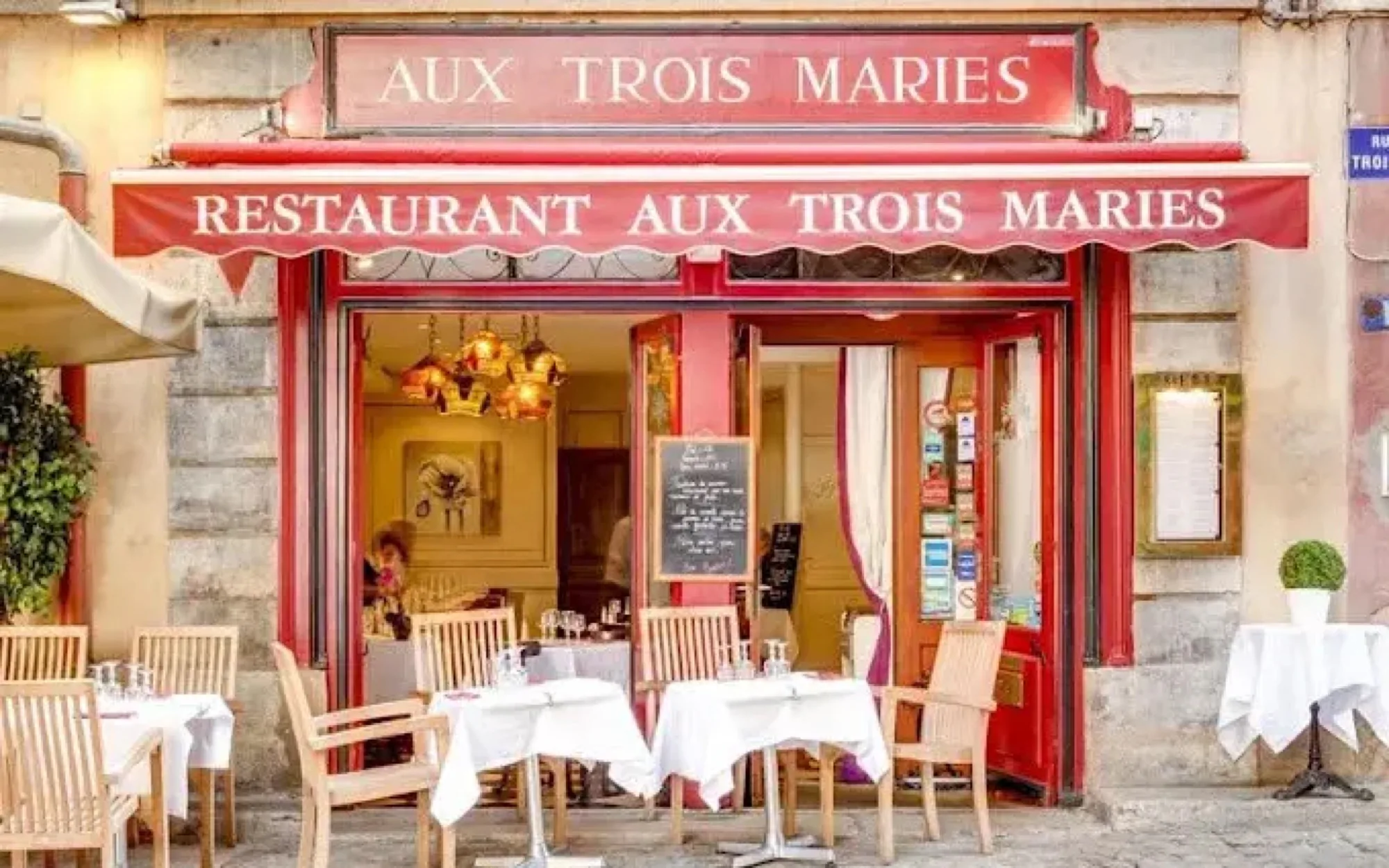
Lyon speciality · The bouchon
Cervelle de canut: the herbed fresh cheese of Lyon
Fromage blanc whipped to a cream, lifted with fresh herbs, shallot and garlic: beneath its playful name, cervelle de canut is one of the freshest Lyonnaise specialities. Here's what it really is, and how we serve it on rue des Trois-Maries.
In short
Cervelle de canut — also called 'claqueret' — is a Lyonnaise cheese speciality: fresh fromage blanc whipped at length, seasoned with fresh herbs, shallot, garlic, salt, pepper, a drizzle of oil and vinegar. Its teasing name goes back to the canuts, the silk workers of the Croix-Rousse. Neither brain nor offal: it's a fresh, vegetarian cheese, served well chilled with bread or warm potatoes. At Aux Trois Maries, it sits among our cheeses, in the purest bouchon tradition — to be discovered in our historic Vieux-Lyon house.
Contents
What you'll find on this page
What is cervelle de canut?
Cervelle de canut is a fresh cheese preparation emblematic of Lyon. At its base, a well-drained fromage blanc whipped vigorously until smooth and creamy — hence its other name, 'claqueret', from 'claquer', to beat the cheese. It is then seasoned with fresh herbs, chopped shallot and garlic, salt, pepper, a drizzle of oil and vinegar.
Despite its name, it contains no brain of course: it's a vegetarian speciality, light and refreshing, worlds away from the offal dishes the bouchon has accustomed us to. It plays on contrast — the freshness of the herbs and the measured tang of the cheese — amid a generous, long-simmered cuisine.
It is served cold, as a starter, with the aperitif or alongside a cheese board. Simple in appearance, it nonetheless demands care: too wet a cheese and it turns to sauce, too little whipped and it stays lumpy. Done well, it's one of the most honest and most Lyonnaise mouthfuls there is.
Where does the name 'cervelle de canut' come from?
The name sounds like a provocation, and it rather was one. The canuts were Lyon's silk workers, crowded onto the slopes of the Croix-Rousse in the 19th century. Legend has it that the bourgeoisie of the time, scorning these rebellious craftsmen, compared their intelligence to this beaten, formless cheese: 'no more brain than in that dish there'.
The story is perhaps embellished, but it captures the spirit of the Lyon table: working-class, cheeky, never fooled. The canuts themselves turned the mockery into pride — cervelle de canut became one of the symbols of their everyday cooking, that of the mâchon shared between two weaving looms.
It is also found under its more neutral name of 'claqueret', which simply describes the gesture: to 'claquer' is to whip the fresh cheese to the desired texture. Two names for one dish, and all the working memory of Lyon in a small jar served on the cloth.
What's really in it
The recipe rests on a few simple ingredients, but everything hinges on balance. A well-drained fresh fromage blanc, whipped at length; fresh herbs — chives, parsley, chervil, sometimes tarragon — finely chopped; shallot and garlic, in moderation; salt, pepper, a drizzle of oil, a dash of vinegar, and depending on the house a touch of white wine or cream.
Each kitchen has its own dosage, jealously kept. Too much garlic and the freshness of the herbs vanishes; too much vinegar and the cheese hardens. A successful cervelle de canut keeps its suppleness, a green flecked with herbs, and that lively taste that wakes the palate — the mark of a cheese worked the very same day, as it should be.
Cervelle de canut at the table, Aux Trois Maries
In our house, cervelle de canut sits among the cheeses, alongside the Saint-Marcellin from Mère Richard and the assortment of aged dry cheeses from Renée Richard. It's the fresh note of the meal, the one that extends the pleasure without ever weighing it down — a herbed fresh cheese, whipped in-house, served well chilled.
It converses with the whole bouchon repertoire: after a brioche sausage or a puffed pike quenelle, its liveliness falls just right. Some prefer it at the end of the meal, others from the aperitif, spread on a piece of country bread — both are right, it's a dish without ceremony.
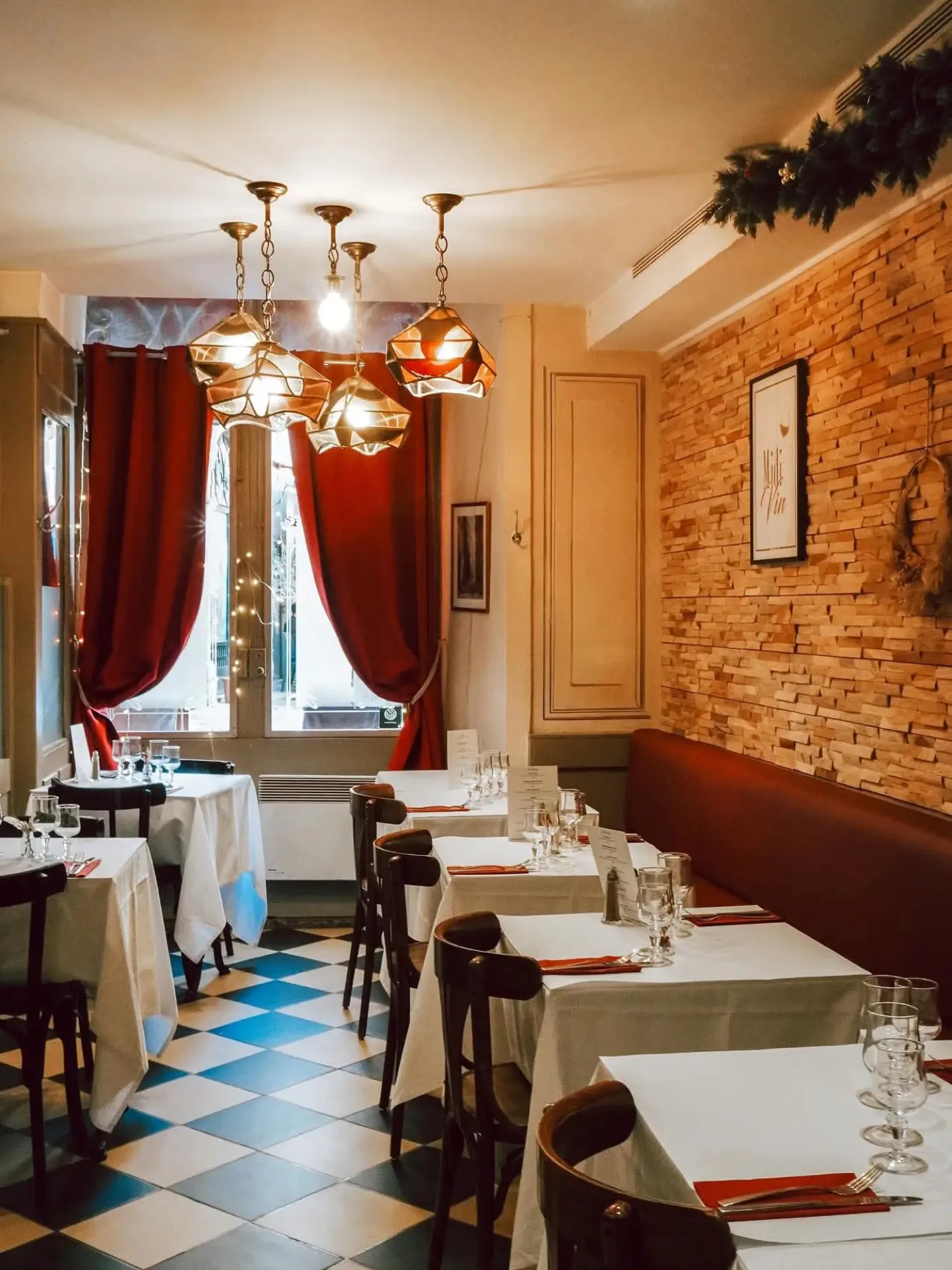
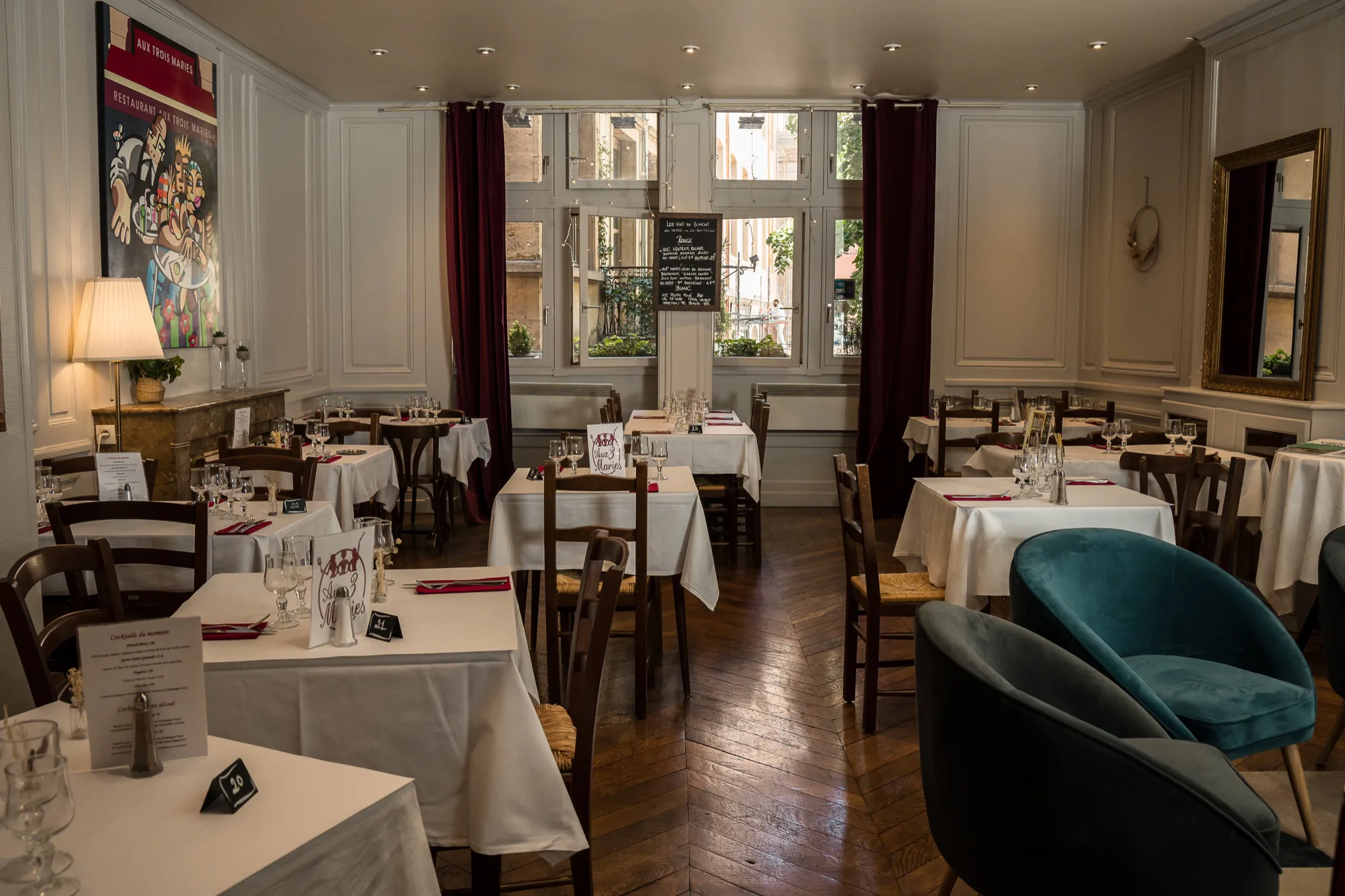
Served in our rooms with their chequered floor or upstairs beneath the mouldings, it tells in its own way what a real bouchon is: a sincere cuisine, rooted in the Lyon terroir, that needs no artifice to convince. To be savoured unhurried, a jug of wine on the cloth.
How to enjoy your cervelle de canut
Fresh and lively, cervelle de canut lends itself to several uses depending on the moment of the meal. Three markers to appreciate it fully, whether you're a bouchon regular or curious about a first time.
With bread or grenaille potatoes
Spread on a good crusty country bread, or served next to warm potatoes: the contrast of cool and warm is the most classic way to savour it.
The wine pairing
A crisp, dry local white — a Mâcon, a Saint-Véran — marries its freshness. On the table, the shared pot lyonnais remains the most convivial way to accompany it.
As a starter or a cheese
With the aperitif, as a light starter or at the end of the meal in place of an aged cheese: cervelle de canut fits anywhere. Our team will gladly advise the best moment.
Where to taste cervelle de canut in Vieux-Lyon
Vieux-Lyon, a UNESCO-listed Renaissance quarter, is one of the cradles of the Lyon table. On rue des Trois-Maries, steps from place de la Baleine and Saint-Jean cathedral, our house is among the oldest bouchons in the city: just the place to discover a cervelle de canut made properly.
We recommend booking, especially at weekends and in high tourist season: the room is convivial but tables go fast. A simple call is enough and we'll keep your place — time to sit down and taste, among other things, this freshness from the Croix-Rousse slopes carried down to the Saône.
Keen to extend your discovery of Lyon cooking? The tablier de sapeur, the puffed pike quenelle and our other terroir specialities await on the same menu, in the same spirit of a bouchon true to its roots.
Frequently asked
Cervelle de canut: your questions
What is cervelle de canut?
It's a Lyonnaise cheese speciality: fresh fromage blanc whipped at length, seasoned with fresh herbs, shallot, garlic, salt, pepper, a drizzle of oil and vinegar. It's served cold, as a starter, with the aperitif or as a cheese. It is also called 'claqueret'.
Why the name 'cervelle de canut'?
The name comes from the canuts, Lyon's silk workers on the Croix-Rousse in the 19th century. Legend has it the bourgeoisie scornfully compared their intelligence to this beaten, formless cheese. The canuts made it a symbol of their working-class cooking.
Does cervelle de canut really contain brain?
No, absolutely not. Despite its name, it contains no offal: it's a preparation of fresh fromage blanc and herbs. The name is an image, born of a historical jibe, not a description of the recipe.
Is cervelle de canut vegetarian?
Yes. Made of fromage blanc, fresh herbs, shallot, garlic and seasoning, it's a vegetarian speciality, fresh and light. It suits those looking for a meat-free option within the bouchon repertoire well.
What's the difference between cervelle de canut and claqueret?
They are two names for the same dish. 'Claqueret' comes from 'claquer', to whip the fresh cheese to the desired texture; 'cervelle de canut' refers to Lyon's working-class history. The recipe is the same.
What do you eat cervelle de canut with?
Traditionally with country bread or warm potatoes, as a starter, with the aperitif or at the end of the meal. A crisp, dry local white — Mâcon, Saint-Véran — accompanies its freshness beautifully.
Explore the house
Discover on the site
Read on
Curious about the other treasures of the Lyon terroir? Find them all on our Lyon specialities page.
Taste cervelle de canut on rue des Trois-Maries
Book your table online, or call us directly: we welcome you to our Vieux-Lyon bouchon.