
The Journal · Vieux-Lyon guide
Where to eat in Vieux-Lyon: our guide to choosing the right table
Between the cobbled lanes of the Renaissance quarter and the dozens of signs along rue Saint-Jean, finding the right table can be a quest. Here are our markers for eating well, without picking the wrong address.
In short
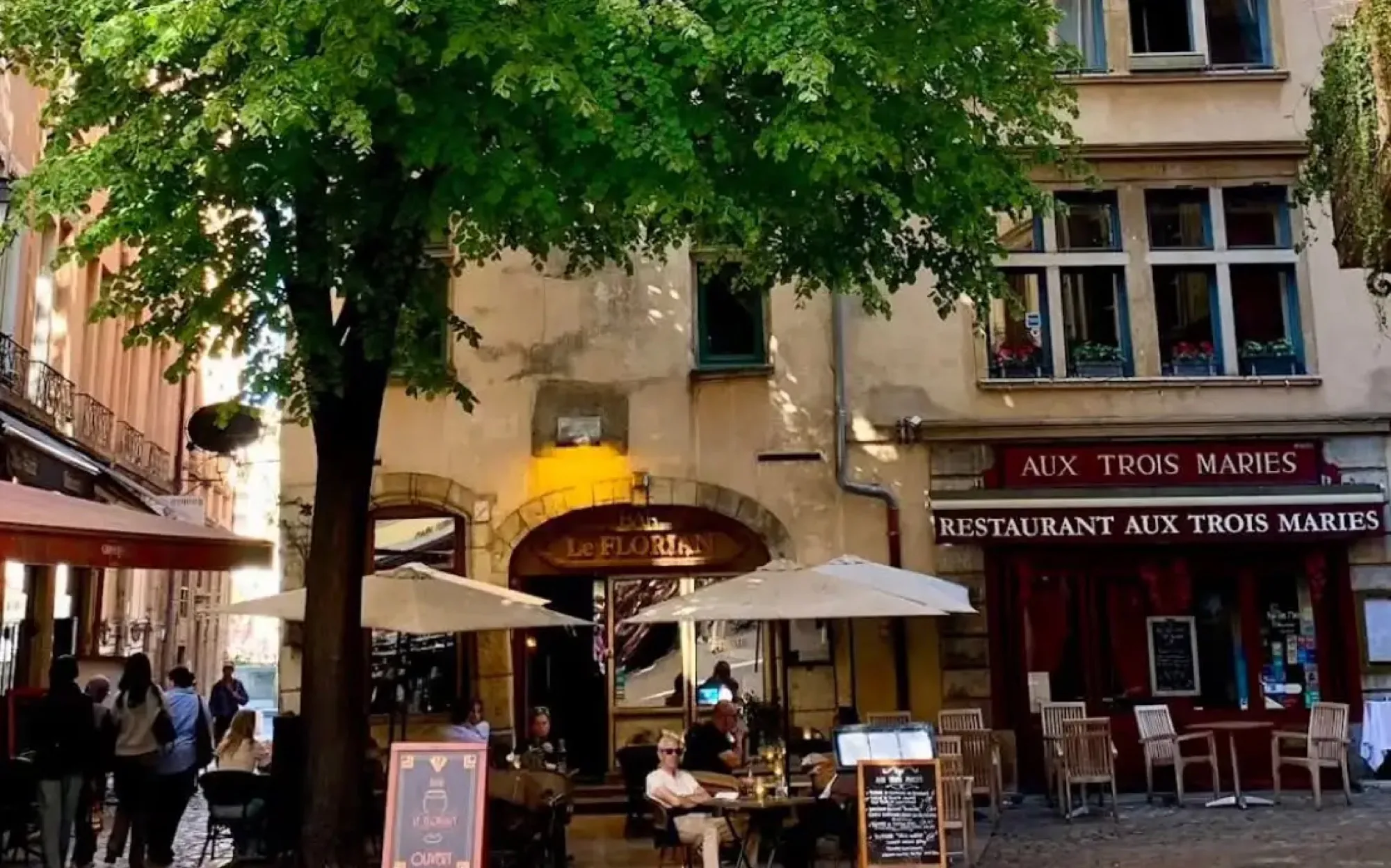
Vieux-Lyon holds one of the highest restaurant densities in France, from the traditional bouchon to the passing crêperie. To eat well, step a street or two away from the Saint-Jean axis, spot real bouchons by their short, seasonal menu, look for authentic Lyonnaise specialities — pike quenelle, brioche sausage, gratinée, cervelle de canut — and book ahead, especially at weekends. Aux Trois Maries, on rue des Trois-Maries, has kept this Lyonnaise table alive since the middle of the last century.
Contents
What you'll find in this guide
Getting your bearings in the Renaissance quarter
Vieux-Lyon stretches below the Fourvière hill, along the Saône, across three Renaissance quarters: Saint-Jean in the centre, Saint-Paul to the north, Saint-Georges to the south. It's one of Europe's largest Renaissance ensembles, a UNESCO World Heritage site since 1998 — so you don't sit down entirely at random.
The main artery, rue Saint-Jean, gathers most of the tourist flow and the terraces. It's lively, but it's also where the most opportunistic addresses slip in. Step one block away — rue des Trois-Maries, rue de la Bombarde, place de la Baleine — and the crowd changes, often the cooking with it.
Our first tip fits in a sentence: walk five minutes more. The tables that live on local loyalty, not just passing trade, are rarely right in front of the cathedral. They're earned a turn or two away, in a quieter lane where the daily board really changes from week to week.
How to spot a real bouchon
A real bouchon shows first in its menu: short, often handwritten or printed daily, built around a handful of local specialities. Beware the sprawling menus promising pizzas, burgers, pasta and Lyonnaise cooking on the same page — no one cooks thirty dishes well at once.
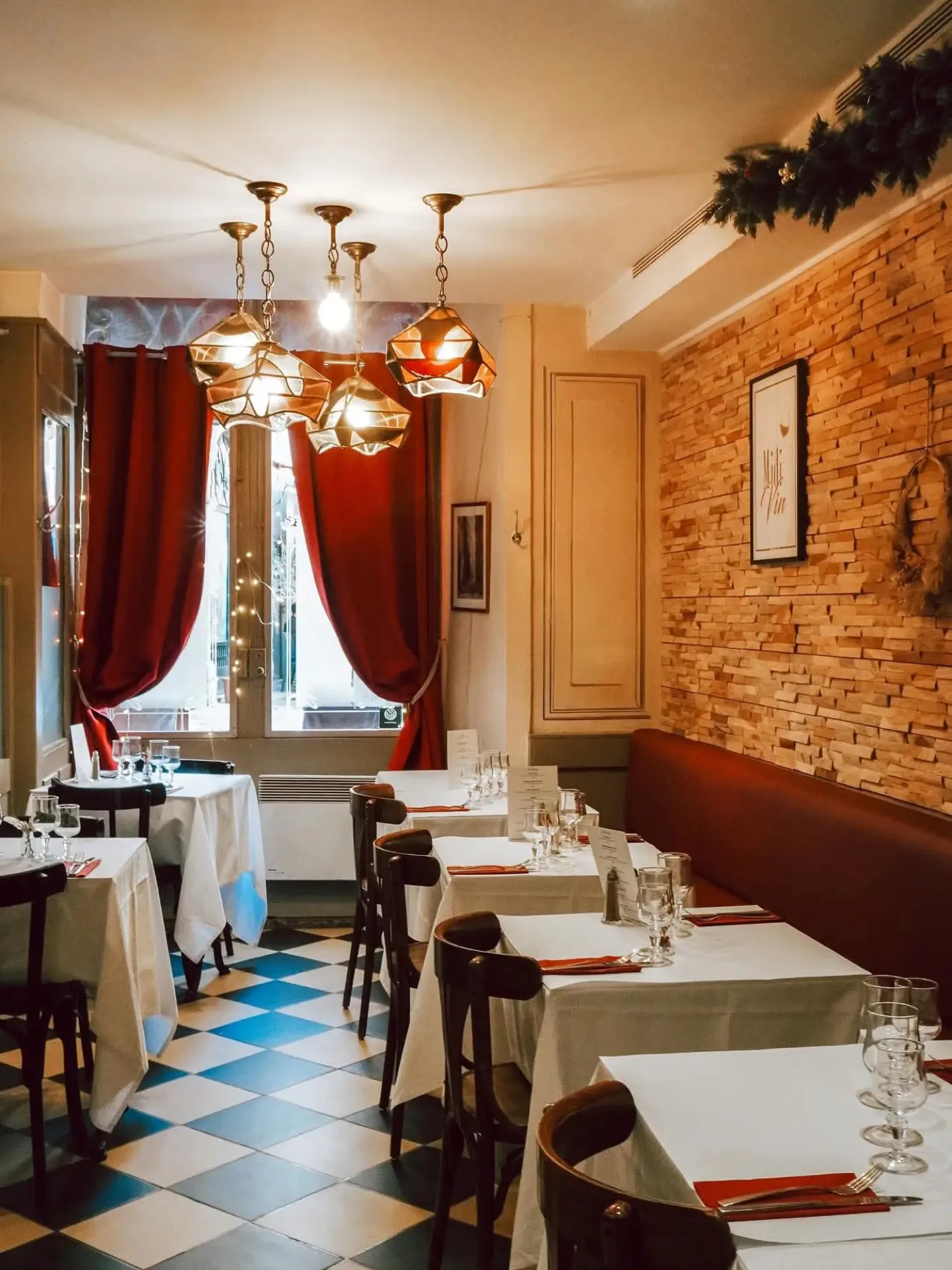
Then the room. The historic bouchon is a tight space, tables close together, often a chequered floor, plain linen and a service on first-name terms with the regulars. You eat elbow to elbow, in a cheerful hum — the Lyonnaise 'mâchon' spirit, inherited from the silk weavers.
Finally, the marks of care: producers named on the menu, charcuterie and cheeses from recognised Lyon affineurs, a quenelle that truly puffs in the oven. The official 'Les Bouchons Lyonnais' label exists, but not every good house carries it — trust above all what you see on the plate, and what the neighbouring tables order.
Avoiding the tourist traps
Vieux-Lyon is a tourist quarter, and like all of them it has its share of places built for passing trade rather than for the table. A few signals should catch your eye before you even sit down.
First red flag: the tout on the pavement waving a laminated menu. A house that has to hustle to fill its room rarely needs to do so for the quality of its cooking. Second signal: the large, faded photos of dishes in the window, which betray a fixed, industrial menu.
Be wary too of menus translated into eight languages, 'tourist set menus' served at speed, and huge terraces running three sittings at lunch. Conversely, a room a little full of French-speaking guests, a menu that follows the seasons and an owner who takes the time to explain the dishes are excellent omens.
One last habit: read the recent reviews, but read them in full. A flattering overall score matters less than a few detailed comments describing specific dishes, a named waiter, a real atmosphere.
The specialities to look for on the plate
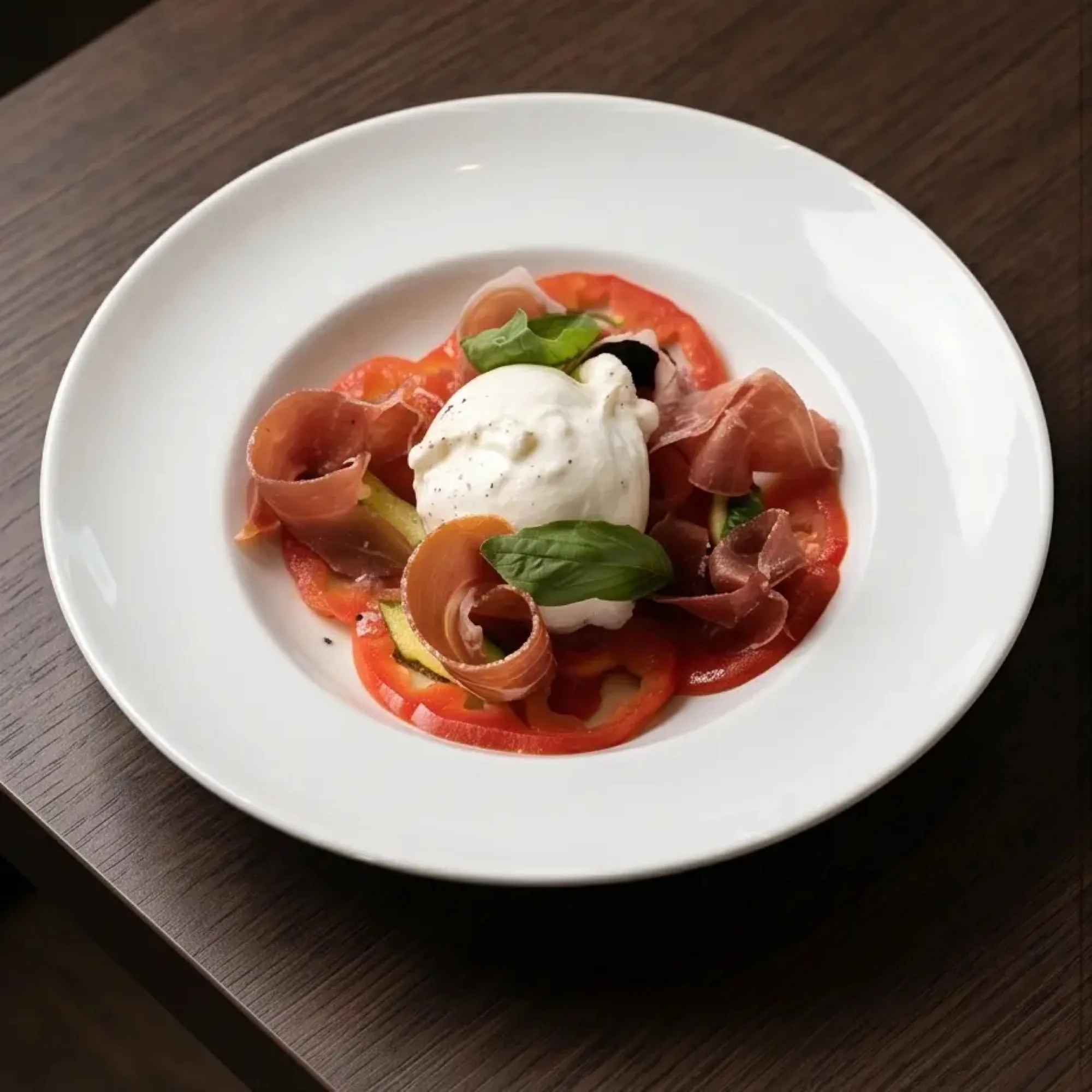
Lyonnaise cuisine has its classics, and a good meal in Vieux-Lyon often means finding these staples well executed. Here are the ones to look for on a menu worthy of the name.
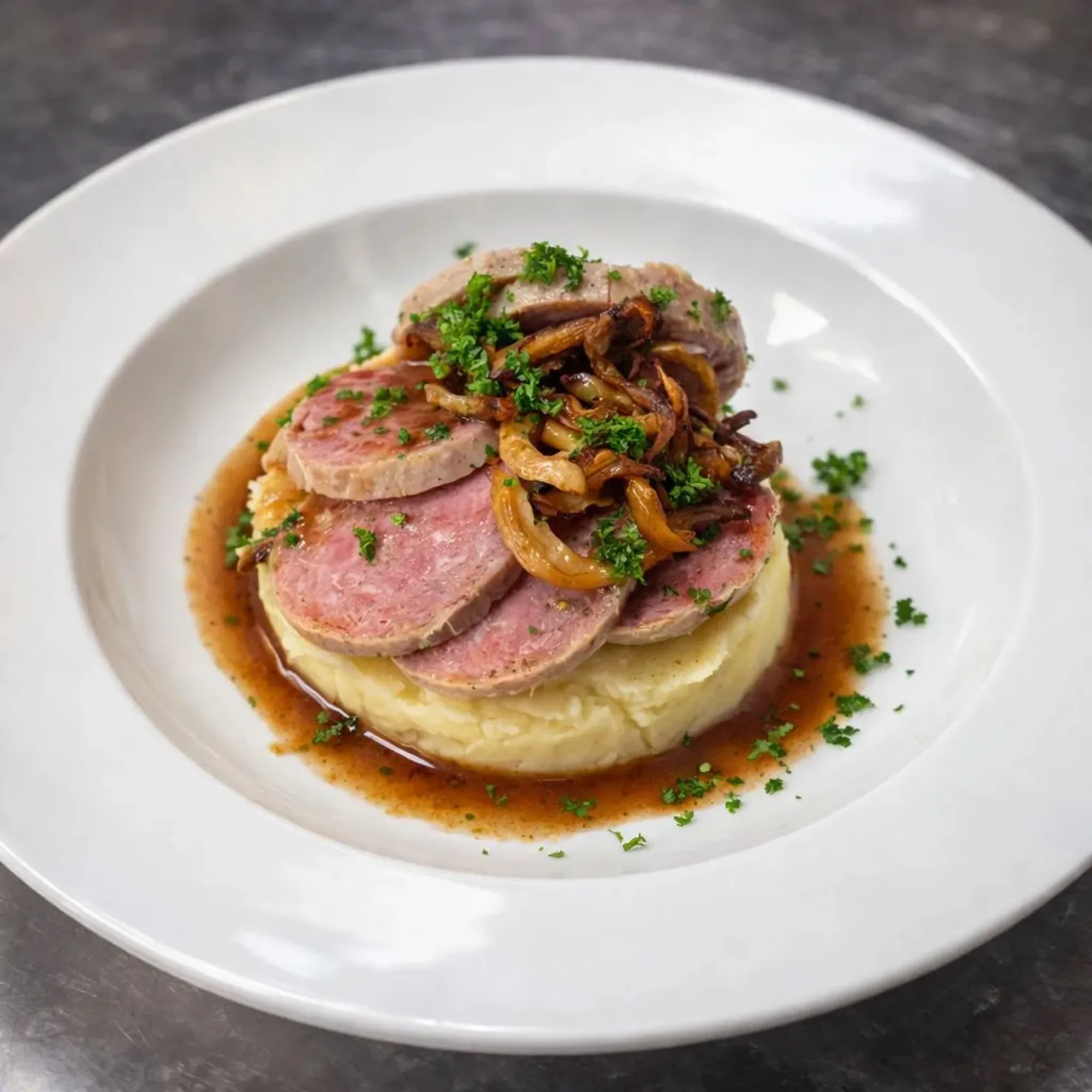
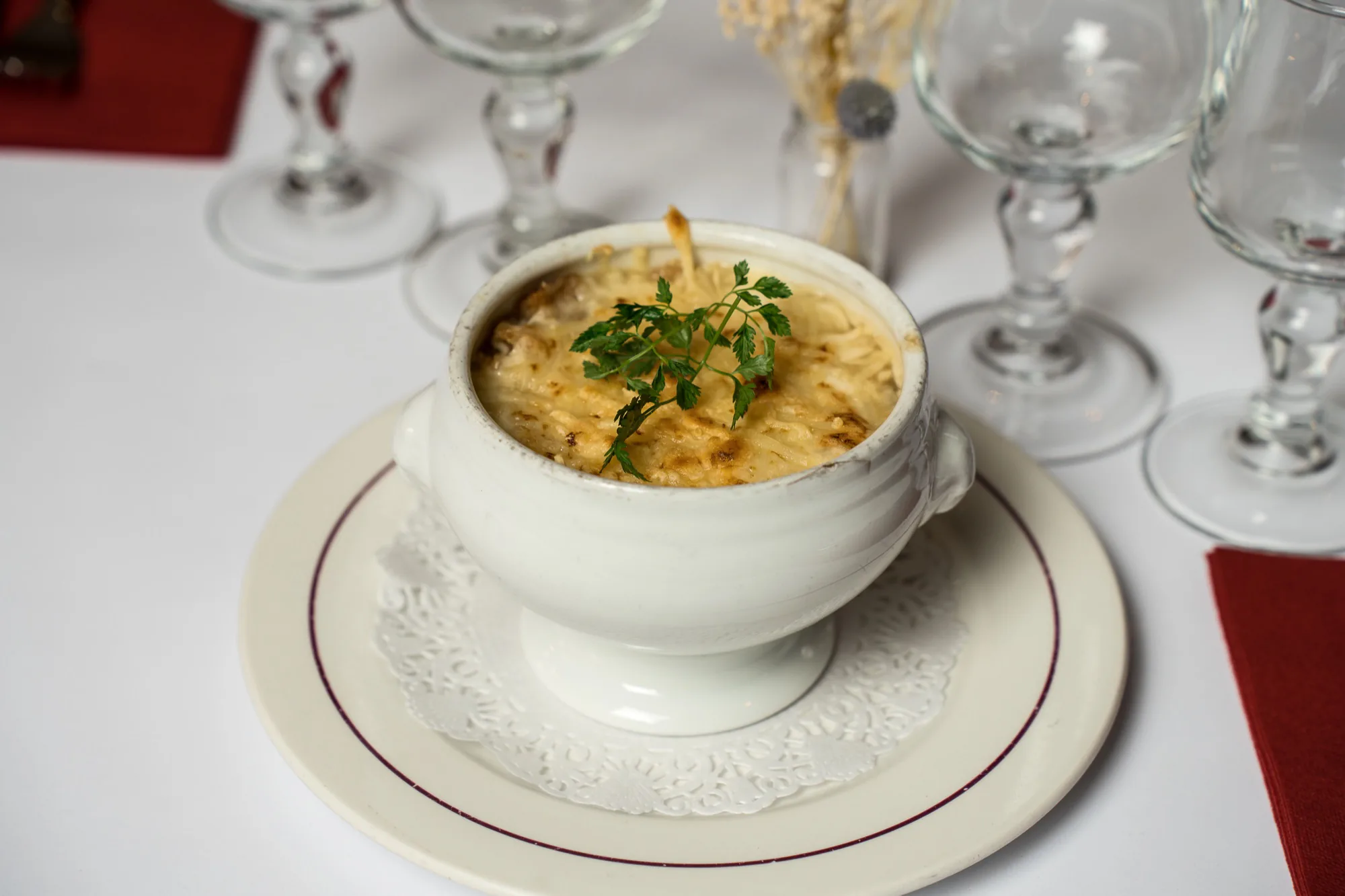
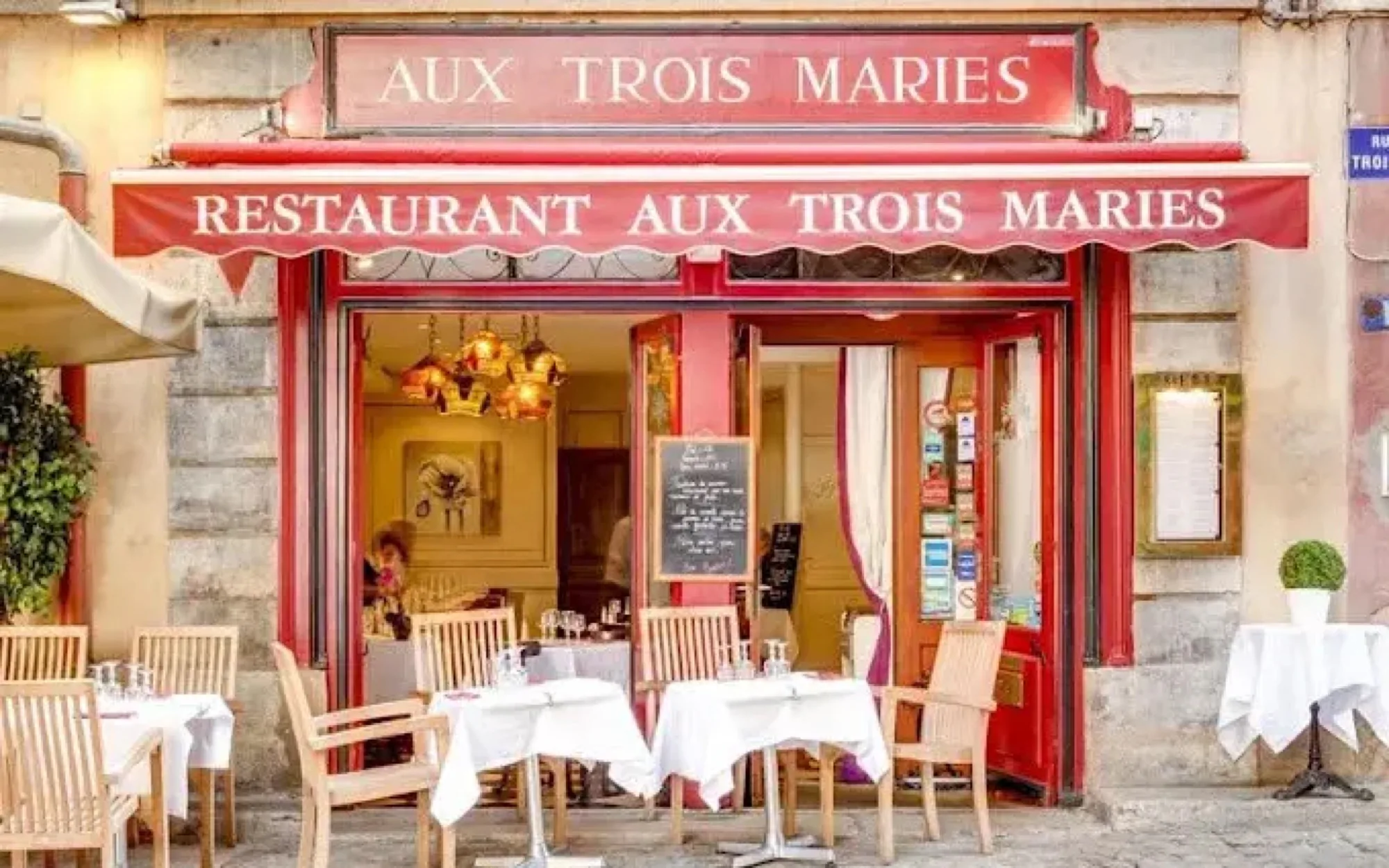
Rue des Trois-Maries, a street for food lovers
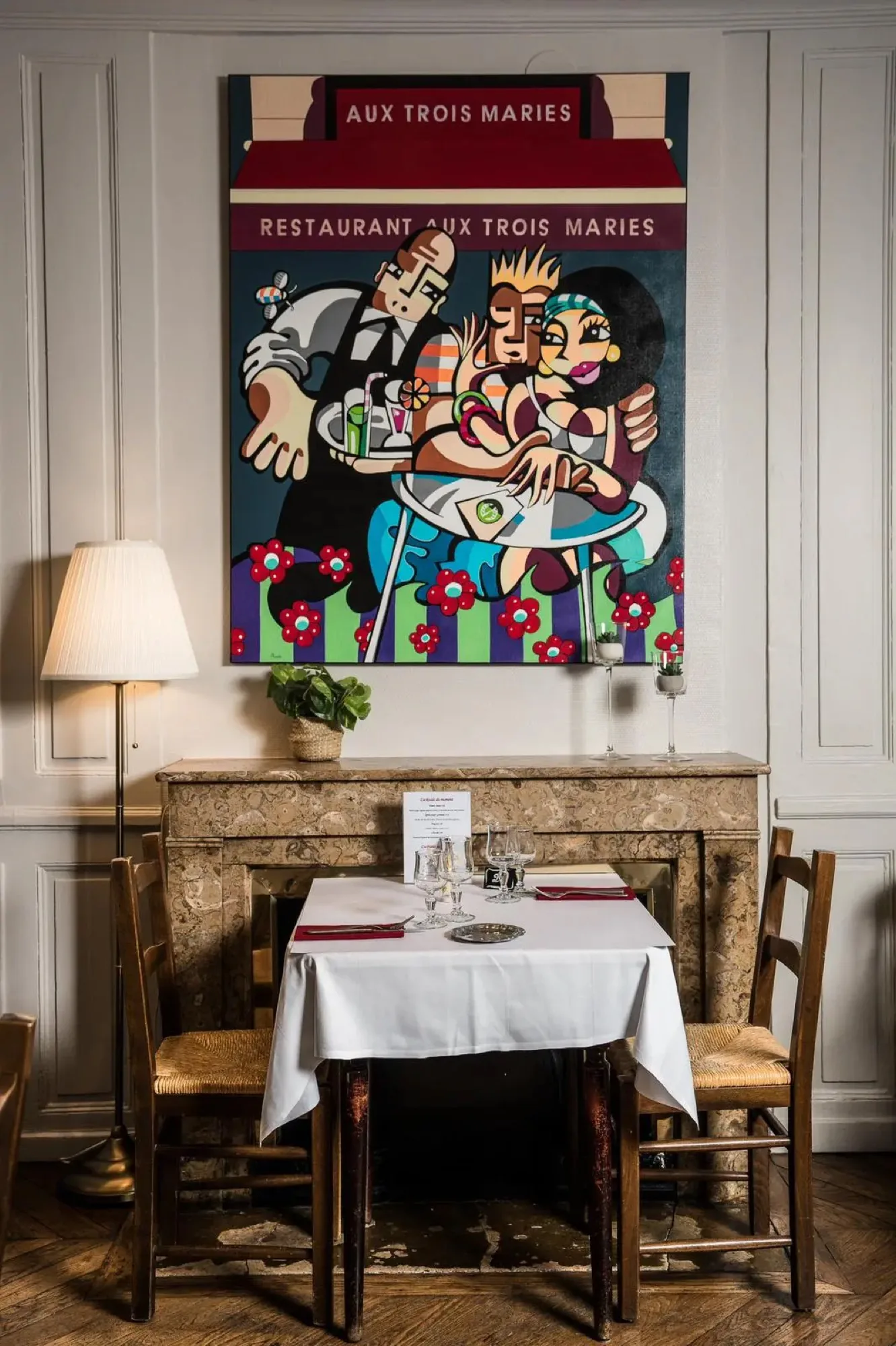
If we had to pick a street here, it would be the one that gives our house its name. A quiet parallel to rue Saint-Jean, rue des Trois-Maries owes its name to a 17th-century sign honouring the three Marys of the Gospel: Marie-Salomé, Marie-Jacobée and Marie-Madeleine.
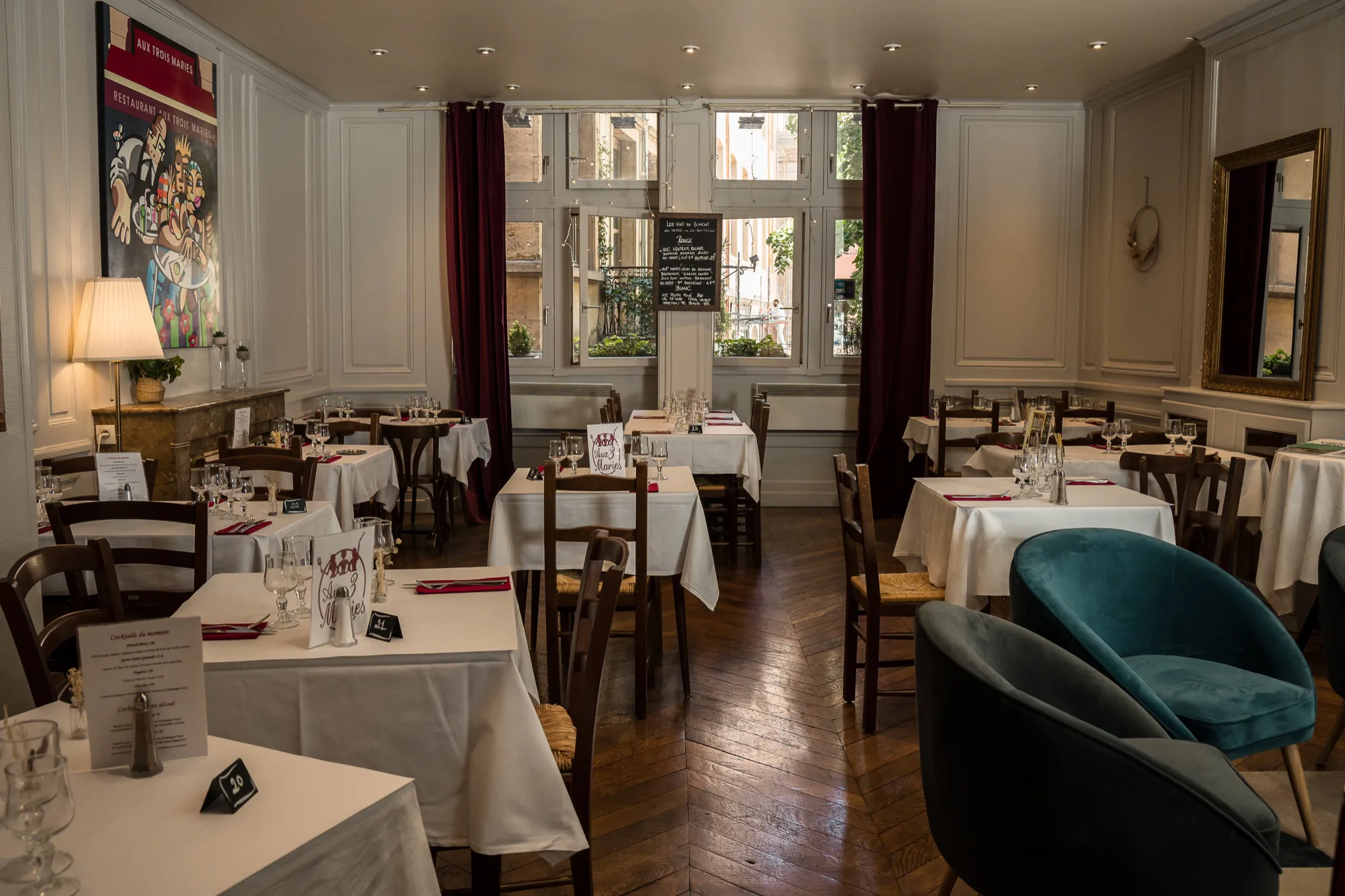
There you'll find Aux Trois Maries, one of the oldest bouchons in the city, born in the middle of the last century where the 'café des primeurs' once stood, facing the Saône quay market. A neighbourhood table, steps from the bustle, where Lyonnaise cooking is served without folklore but with the care of a house that lasts.
Where to sit on a terrace
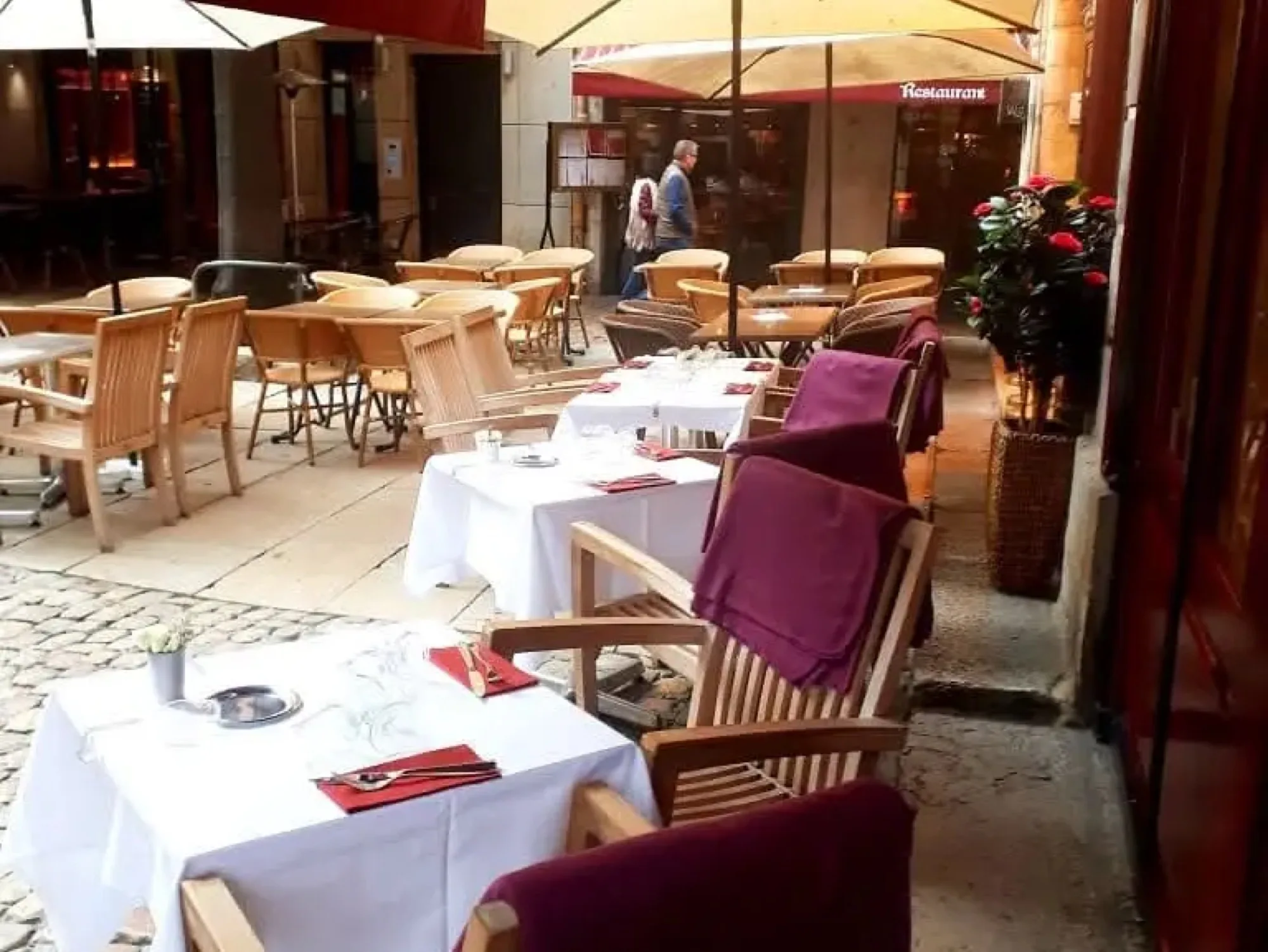
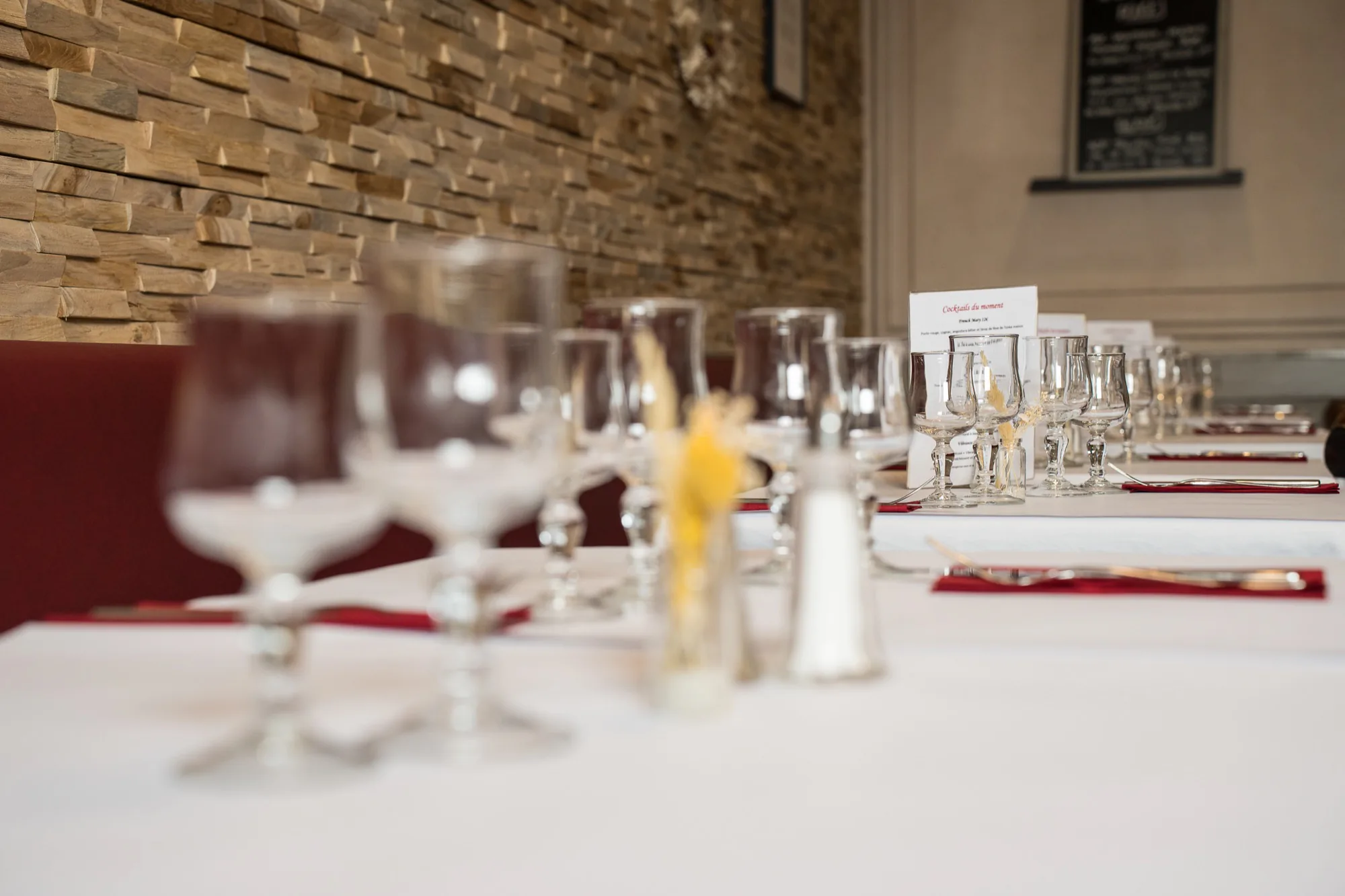
In fine weather, Vieux-Lyon lives outdoors. Terraces spread over the cobbles, but they aren't all equal: some spill onto the visitor flow of rue Saint-Jean, others tuck into small squares away from it, cooler and calmer.
Place de la Baleine, steps from rue des Trois-Maries, is one of those precious spots: a cobbled square shaded by a lime tree, where you settle in at sunset without the roar of the main street. Prefer a terrace facing a pedestrian lane, away from traffic, and check it's shaded from the midday sun.
A telling detail: a fine terrace never excuses the cooking. The best houses look after the plate as much outside as in — the white linen and burgundy napkin aren't just there for the photo.
Lunch or dinner: when to come
Vieux-Lyon isn't eaten the same way at every hour. At lunch, most bouchons offer a quick, good-value set menu, designed for the quarter's workers and visitors keen to move on to traboules and museums. It's often the best pleasure-to-time ratio for discovering a house.
In the evening, the pace eases. Sittings lengthen, the full menu opens, and you take your time over several courses. It's the ideal moment for the quenelle, the brioche sausage and a Lyonnaise dessert, in a room that regains its intimacy once the daytime crowd has thinned.
On timing: avoid the 1pm and 8.30pm peaks if you want space and attention. Arriving a little before noon, or around 7.30pm, often secures a better table and a less rushed service. Keep in mind, too, that many bouchons close on Sunday evening and Monday.
Do you need to book?
Do you need to book to eat in Vieux-Lyon? In most cases, yes — and increasingly so. The quarter is one of the busiest in Lyon, and the good houses, with limited seating, fill up well before service, especially at weekends and in peak season.
Booking also spares you wandering from door to door late in the morning, when every room fills at once. A call the day before, or the same morning for lunch, is usually enough. For a group of more than six or eight, give more notice: long tables are rare and go fast.
Many addresses take online bookings, but a phone call remains the safest channel to flag an allergy, a pushchair, a wheelchair or a special occasion. It's also a way to sense, by voice, how serious a house is.
Eating vegetarian or gluten-free
The bouchon is often thought reserved for lovers of charcuterie and offal. That's less and less true. Houses that have modernised now offer vegetarian, vegan and gluten-free options without abandoning their Lyonnaise roots.
Look for a butternut velouté, a seasonal mushroom risotto that can be made vegan without cheese, or a cervelle de canut — that herbed fresh cheese, naturally vegetarian, is itself a pure local speciality. For gluten-free, flag it when booking: the kitchen will adapt its sides.
The right instinct: don't settle for a single vegetarian dish tucked at the bottom of the menu. A house that takes the subject seriously offers real choice, starter included, and knows how to advise you. It's one more way to tell an attentive table from a kitchen on autopilot.
Eating well without breaking the bank
Eating well in Vieux-Lyon doesn't require breaking the bank, provided you choose your moment and your set menu. Lunch, as noted, almost always offers the best value: a starter and a main, sometimes a dessert, in a far gentler version than the evening menu.
Multi-course menus — often named 'menu lyonnais' or after the house — remain the most generous way to discover a bouchon: starter, main and cheese or dessert together. For families, many addresses also offer a children's menu. À la carte, you keep control by building a lighter meal of a starter and a main rather than a full feast.
The real budget trap isn't the posted rate but the wrong address: paying for reheated industrial cooking always costs too much, even cheaply. Better one course fewer in a serious house than a full meal in a tourist trap. Quality, here, is the best investment.
After the meal: wandering Vieux-Lyon
A meal in Vieux-Lyon calls for a walk. The quarter lends itself to after-table strolling: cobbled lanes, Renaissance courtyards, and above all the famous traboules, those covered passages linking streets through the buildings — a legacy of the weavers and merchants, unique to Lyon.
Steps from the tables: Saint-Jean cathedral and its astronomical clock, the montée des Chazeaux and its flights of steps, place du Change, then the Fourvière hill, reached on foot or by the 'ficelle', the Lyon funicular. From up there, the view takes in the whole city and its two rivers.
Our advice: book your table at lunch, take the time for a proper meal, then let digestion carry you into the traboules and up to the Fourvière belvedere. That's how Vieux-Lyon is best savoured — the plate first, the stone after.
Frequently asked
Where to eat in Vieux-Lyon: your questions
Which is the best area to eat in Vieux-Lyon?
The Saint-Jean area has the most addresses, but also the most tourism. For a more authentic table, step a street or two away — towards rue des Trois-Maries, place de la Baleine or the Saint-Paul district — where local custom is stronger.
How do you recognise a real bouchon?
By its short, seasonal menu focused on local specialities, a tight room often with a chequered floor, producers named on the menu and French-speaking guests. Avoid menus in eight languages and touts on the pavement.
Do you need to book to eat in Vieux-Lyon?
Yes, it's strongly advised, especially at weekends and in high season. Good houses have limited seating and fill up fast. A call the day before, or the morning for lunch, is usually enough.
Where do you find authentic Lyonnaise specialities?
Look for pike quenelle, brioche sausage, Lyonnaise gratinée, andouillette and cervelle de canut. A menu offering them house-made, with identified suppliers, is a mark of seriousness.
Can you eat vegetarian or gluten-free in a bouchon?
Yes, increasingly so. Modernised houses offer butternut velouté, mushroom risotto, salads or cervelle de canut, and adapt dishes gluten-free if you flag it when booking.
Is Vieux-Lyon expensive to eat in?
Not necessarily. Lunch often offers the best value, and multi-course menus remain a generous way to discover a bouchon. The real budget trap is the wrong address, not the posted rate.
Where is Aux Trois Maries?
At 1 rue des Trois-Maries, in Vieux-Lyon (Lyon 5th), a few steps from Saint-Jean cathedral and the Vieux-Lyon metro station. It's one of the oldest bouchons in the city.
Explore the house
Also worth reading and visiting
Read on
Want to dig deeper into the Lyon table? Find all our articles in our blog cuisine lyonnaise.
Before or after the meal, what should you visit in Vieux-Lyon? Our guide avant ou après le repas, que visiter in the Renaissance quarter.
Your table is waiting on rue des Trois-Maries
Book online, or call us directly.