
The Journal · Lyon cuisine
Cervelle de canut: where the name comes from, the silk weavers and the 'claqueret' recipe
A dish called 'brain' that holds nothing but fresh cheese and herbs: behind the paradox lies Lyon's working-class history.
Order a cervelle de canut and you get no brain at all: just fresh fromage blanc, herbs and shallot. This piece explains the dish, the story behind its name, the basic recipe and how it is eaten in a Lyon bouchon.
In short
Cervelle de canut is drained, whipped fromage blanc seasoned with shallot, chives and herbs, garlic, oil and vinegar. It contains no brain and is vegetarian; it is also called 'claqueret'. Its name refers to the canuts, the 19th-century silk weavers of the Croix-Rousse, though the exact origin remains uncertain. It is served cold, with bread or potatoes, as a starter or instead of cheese.
Contents
The story, step by step
What is cervelle de canut? A simple definition
A cold preparation of whipped, seasoned fromage blanc — a Lyon-style herbed fresh cheese.
The basic ingredients
Drained fromage blanc, shallot, chives and fine herbs, garlic, salt, pepper, oil and vinegar, sometimes cream.
Starter or cheese course?
Both: it opens the meal with bread or replaces the cheese board, always served cold.
The origin of cervelle de canut: Lyon's silk workers
The story begins on the Croix-Rousse hill, 'the hill that works'.
Who were the canuts?
19th-century silk weavers of the Croix-Rousse, known for the revolts of 1831 and 1834.
A poor man's dish
Meat was rare; cheap, filling fromage blanc took its place.
Theories about the name
Mockery by the silk merchants, or a jab at the lamb brains served on wealthy tables — neither is certain.
Claqueret and cervelle de canut: one dish, two names?
Essentially yes: the same preparation, told two ways.
'Claquer' the cheese
Claqueret comes from 'claquer', to beat the cheese until smooth.
Family variations
More or less herbs, garlic or cream: every household has its own balance.
The traditional recipe, step by step
The basic method; quantities are indicative, taste as you go.
I
Choose and drain
Drain whole fromage blanc for several hours.
II
Chop, season, beat
Beat the cheese smooth, then add seasoning, herbs, shallot and a little garlic.
III
Common mistakes
Runny cheese, too much garlic, dried herbs.
IV
Storing and serving
Rest one hour, serve cold, keep one or two days.
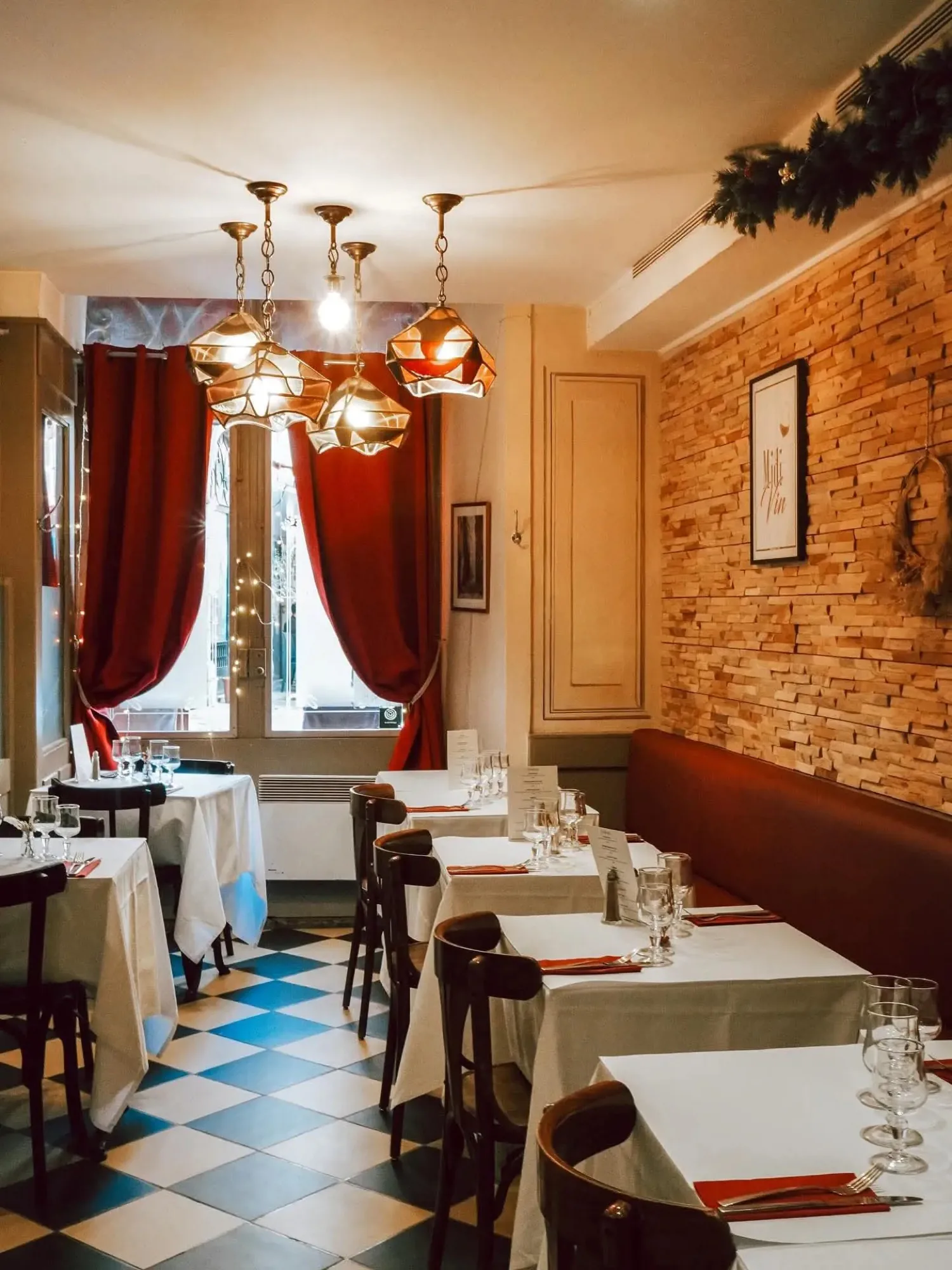
Cervelle de canut at the bouchon: how to enjoy it
It arrives simply, in a bowl, with bread.
What to eat it with
Bread or hot potatoes, at the end of a meal or at a mâchon.
Which wine
As a general suggestion: a dry white or a light Beaujolais.
Naturally vegetarian
Its basic recipe has no meat or fish.
Read what is a Lyon mâchon, our vegetarian restaurant in Vieux-Lyon page and our vegetarian bouchon guide.
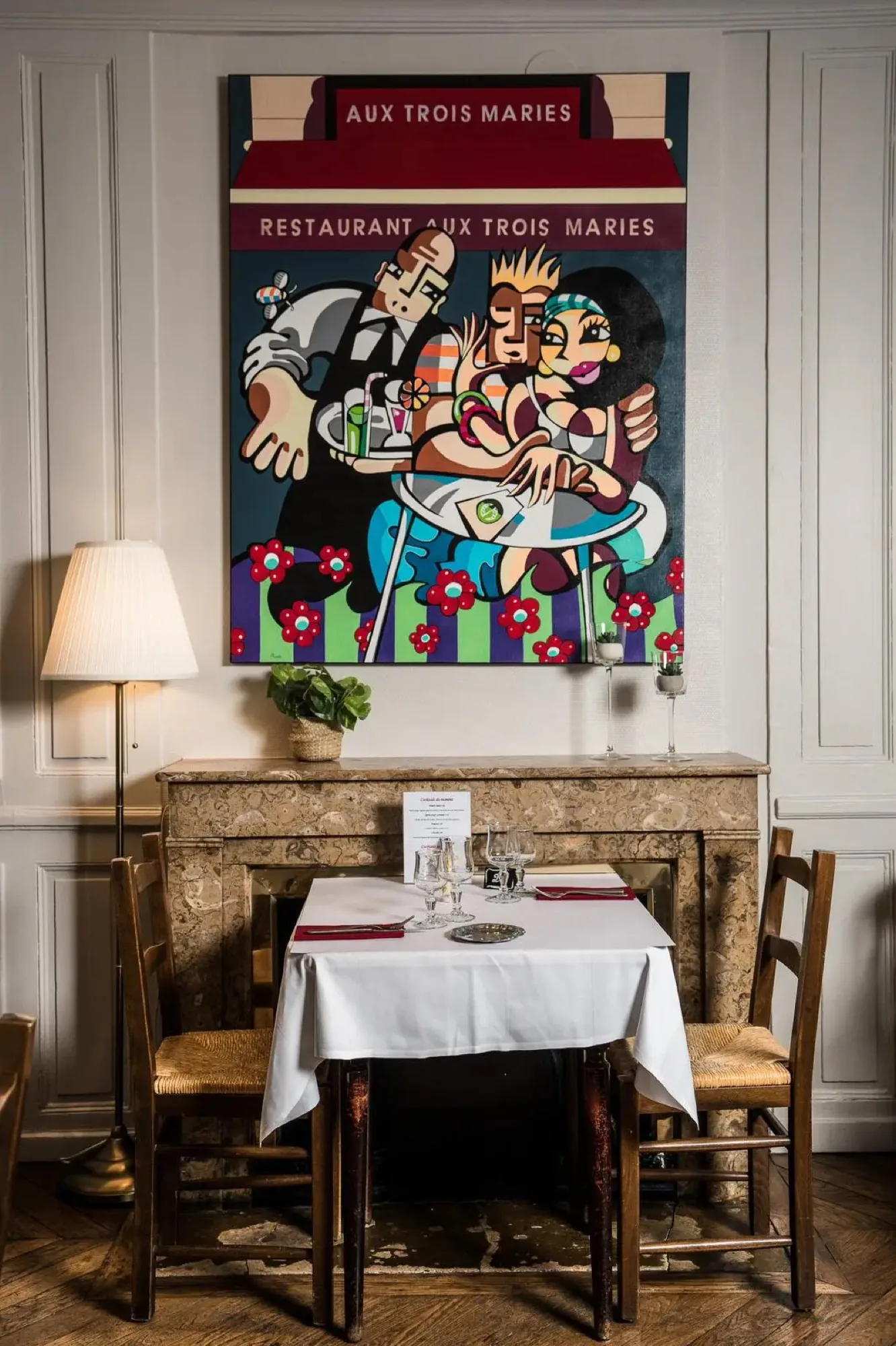
Where to taste real cervelle de canut in Vieux-Lyon
Aux Trois Maries, on place de la Baleine, is one of Lyon's oldest bouchons, born in the middle of the last century, in the Renaissance quarter.
Discover the cervelle de canut at Aux Trois Maries and our other Lyon specialities.
Frequently asked
Cervelle de canut: your questions
Why is it called cervelle de canut?
It refers to the Croix-Rousse silk weavers; the name may come from mockery or from a contrast with lamb brains. Neither theory is certain.
Does cervelle de canut contain brain?
No. It is fresh cheese with herbs and seasoning.
Cervelle de canut or claqueret: what's the difference?
Two names for the same dish; claqueret refers to beating the cheese.
Is it vegetarian and gluten-free?
The basic recipe is vegetarian and its ingredients contain no gluten, but it is served with bread: tell the team about any allergy.
Starter or cheese course?
Either: it opens the meal or replaces the cheese board, always cold.
How to make it at home?
Drain and beat fromage blanc, season with shallot, fresh herbs, garlic, oil and vinegar, then chill.
Read on
From history to the plate: discover our page on cervelle de canut Lyon, as served in our Vieux-Lyon bouchon.
Taste cervelle de canut under the lime tree of place de la Baleine
Book online or call us: we welcome you to our Vieux-Lyon bouchon.