Lyon tradition · Vieux-Lyon
The Lyonnaise mâchon, the canuts' spirit on rue des Trois-Maries
Hearty, honest, shared: the mâchon is the morning feast of the Croix-Rousse silk weavers and the bouchon's gourmet ancestor. Aux Trois Maries keeps its generosity alive, in the heart of Vieux-Lyon.
The ritual
A snack that became an institution
The Lyonnaise mâchon is nothing like a sweet breakfast. It is a real morning spread — charcuterie, a saucy dish, cheese and wine — meant to sustain those who had started work long before daybreak.
The word comes from the verb 'mâcher', to chew: the moment you eat to regain strength. Today 'faire un mâchon' means any hearty, joyful meal around Lyonnaise specialities. The hour has changed, the spirit has not: a mâchon is about eating together, not eating fast.
The origins
From the Croix-Rousse canuts to the first bouchons
In the 19th century the Croix-Rousse was 'the working hill': thousands of canuts set their silk looms clattering from dawn. Mid-morning, they went down to a small room nearby for a warm meal. Those rooms, run by cooks skilled at making the most of simple produce, are the direct ancestors of the bouchons. The word 'mâchon' tells the gesture; the word 'bouchon' tells the place that took it in.
The ritual, step by step
A mâchon in five stages
No fixed menu, but an order of service found from one table to the next. The pace is that of the conversation.
I · The cochonnailles
A board set in the middle — rosette, jésus, terrine, grattons — that everyone starts with a piece of bread.
II · The saladiers lyonnais
Served cold and shared: lentils, museau vinaigrette, calf's feet, cervelas salad.
III · The hot dish
The heart of the meal, from Lyon's working-class kitchen: cooking sausage, andouillette in mustard sauce or breaded tablier de sapeur.
IV · The cheese
It ends on a runny Saint-Marcellin or a herby cervelle de canut, rather than on a dessert.
V · The pot
Throughout the meal, a pot of beaujolais circulates around the table, enjoyed in moderation.
To go further: our saladiers lyonnais, the cervelle de canut and all our Lyonnaise specialities.
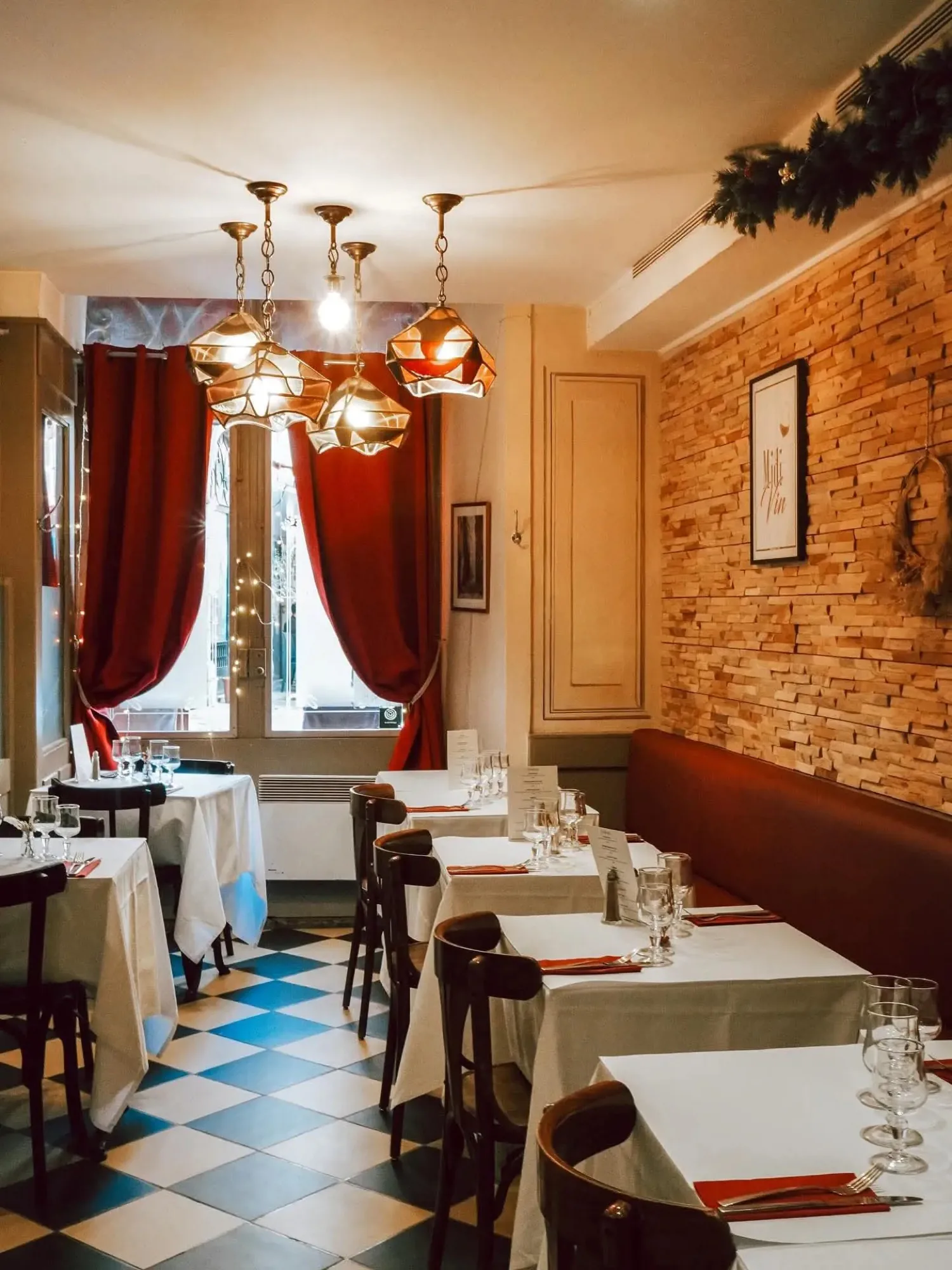
Mâchon & bouchon
From the source to the river
The mâchon is the gesture: a generous, shared workers' meal rooted in the terroir. The bouchon is the place that took in that gesture and made it last. Understand one and you understand why the other is like no other restaurant.
That heritage shows in every detail: the tight elbow-to-elbow table, the short seasonal menu, produce from affineurs and local growers, a welcome that recognises the regular.
This spirit is what makes an authentic Lyonnaise bouchon, without folklore or artifice.
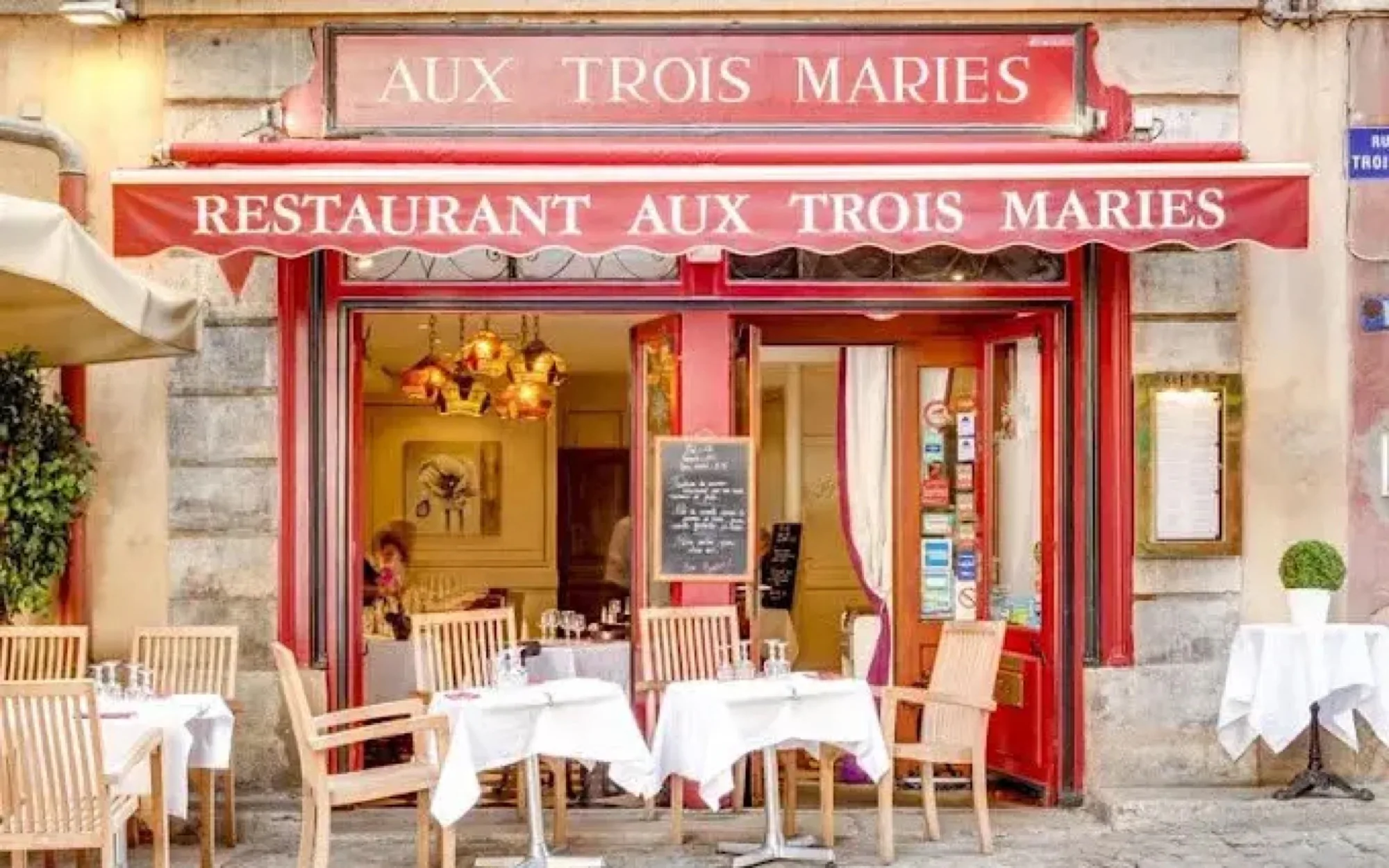
Rue des Trois-Maries
Build your mâchon, at lunch or dinner
We don't serve at dawn like the canuts, but the menu lets you find every stage of the mâchon. To open, the Assiette des Canuts — country pâté, cervelle de canut, toasted bread — set in the middle of the table.
Then come the bouchon's hot charcuteries: the saucisson chaud in Vigneronne sauce with its mash, the veal andouillette drawn to the string in mustard sauce, or the breaded tablier de sapeur. To finish, half a Saint-Marcellin from La Mère Richard. The menu follows the seasons: ask the team for advice on building a meal to share.
The pot lyonnais
The glass of conviviality
A mâchon is hard to imagine without its pot lyonnais: a thick forty-six centilitre bottle with a reinforced base, holding the house wine — usually a beaujolais. Neither glass nor bottle, it circulates, sits in the middle and accompanies the conversation: a sign of convivial measure, not an invitation to excess.
Read on
Also worth reading and tasting
Frequently asked
The Lyonnaise mâchon: your questions
What is a Lyonnaise mâchon?
A hearty, convivial morning snack inherited from the Croix-Rousse canuts: cochonnailles, saladiers lyonnais, a hot dish, cheese and a pot of beaujolais, shared at the table.
At what time do you have a mâchon?
Traditionally between dawn and mid-morning. Today the mâchon spirit is mostly enjoyed over a generous lunch or a meal among friends.
Where does the word 'mâchon' come from?
From the verb 'mâcher', to chew: the moment you eat to regain strength. It named the canuts' break, then any hearty meal around Lyonnaise specialities.
Are mâchon and bouchon the same thing?
No, but one comes from the other. The mâchon is the meal; the bouchon is the place that took in the tradition and made it last. The mâchon's spirit is the bouchon's soul.
Can you have a mâchon at Aux Trois Maries?
Yes, at lunch and dinner: the Assiette des Canuts to open, a hot charcuterie such as the saucisson in Vigneronne sauce or the andouillette, then a Saint-Marcellin. The menu changes with the seasons.
Do I need to book?
It is strongly recommended, especially at weekends and in peak season. You can book online or by phone.
Your mâchon awaits, on rue des Trois-Maries
Book your table, or call us directly.